When Steven R. Gullberg began exploring the night sky, he couldn’t have imagined it would lead to a global career uncovering how cultures - past and present - have understood the cosmos.
Now a Professor at the University of Oklahoma, Steve is a leading figure in the emerging field of cultural astronomy, an interdisciplinary area that connects astronomy with anthropology, archaeology, Indigenous knowledge and the arts. His work spans archaeoastronomy, ethnoastronomy and the role of the night sky in culture, from ancient civilisations to contemporary storytelling.
Steve is currently the global President of the Cultural Astronomy Commission within the International Astronomical Union (IAU), helping elevate the field to sit alongside traditional branches of astronomy.
He also serves as Editor-in-Chief of the Journal of Astronomy in Culture, supporting research and collaboration across a growing international community of scholars.
A field shaped by curiosity
Steve’s passion lies in cultural astronomy, a field exploring how humans have understood and engaged with the cosmos across time and place.
“My passion is for cultural astronomy, which includes archaeoastronomy, ethnoastronomy, and creative astronomy in culture,” he says. “Creative astronomy in culture captures the ways that astronomy appears in (areas) such as art, film, literature, music, and poetry.”
It is a field that brings together astronomy, anthropology, archaeology and Indigenous knowledge systems - one that, when Steve began, was still emerging.
“I always say: ‘To know the astronomy of a culture, you must first know the culture.’
“I never foresaw the day where I would serve as a global president representing it,” he reflects.
Foundations at JCU
Steve credits his time at James Cook University as the starting point for everything that followed.
“JCU gave me the start for my research of the Incas in the Andes,” he says. “That set the stage for all of the subsequent successes in my life with the university, the IAU, the journal, and my many publications.”
What began as an interest soon became a defining direction, setting him on a path that would take him far beyond the classroom and into some of the world’s most significant cultural and historical landscapes.
Unlocking the astronomy of the Inca
For his doctoral research, Steve travelled to the Peruvian Andes to study the astronomy of the Inca civilisation.
Over five expeditions, he documented how light and shadow were deliberately used in temples, shrines, and caves across 29 sites, revealing sophisticated astronomical knowledge embedded in architecture and sacred landscapes.
One expedition in particular remains vivid.
While researching the Q’espiwanka site of the palace of Wayna Qhapac, Steve spotted something unusual atop Cerro Unoraqui through a pair of binoculars. The site appeared to align with the December solstice sunrise, warranting closer investigation.
Reaching it, however, proved far more difficult than expected.
After hiring a cab to take his team up the 4377m mountain, Steve discovered the driver’s promise of reaching “two-thirds of the way up” was optimistic at best.
“It was more like a quarter,” he recalls.
The remainder of the climb took hours. By the time the team reached the summit at dusk, they had no flashlights, no cold-weather gear, and no plan to descend in the dark.
Guided only by moonlight, they navigated rocky slopes and thorny brush through freezing temperatures before finally locating the trails below.
“As it turns out, all electrical power was cut to the village each night at 9pm,” Steve says.
Against the odds, the cab driver was still waiting for them when they finally reached the road hours later.
“It was a valuable expedition that collected great data,” he says, “but it also was an unexpected ordeal.”
Today, Steve’s work continues to resonate globally, with his thesis downloaded thousands of times in more than 100 countries. Peru’s Ministry of Education has incorporated his research into public schooling, and local leaders near Machu Picchu have invited him to share his expertise with tour guides, enriching understanding of the region’s cultural heritage.
Learning from cultures, past and present
While much of Steve’s work focuses on ancient civilisations, his research also extends to living knowledge systems.
This includes Aboriginal Australian astronomy, where he has learned directly from Indigenous knowledge holders during fieldwork in Central Australia.
Experiences like these, he says, reinforce the enduring connection between people and the night sky - one that transcends geography and time.
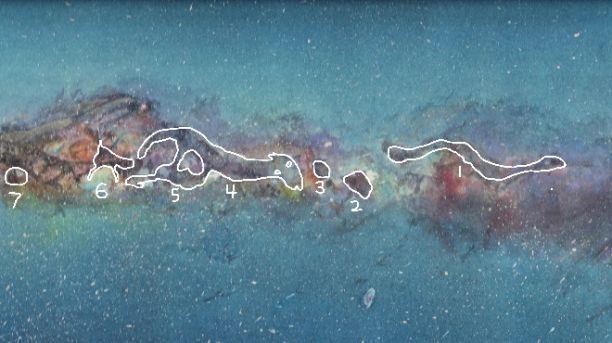
Across continents and cultures, astronomy has always been more than science - it has shaped calendars, guided harvests, informed ceremonies and helped communities understand their place in the world.
“As the field evolves, we learn and understand more and more of the world around us,” Steve says.
A global voice for a growing field
As a Professor at the University of Oklahoma, Steve has played a leading role in shaping cultural astronomy as a recognised discipline.
“Cultural astronomy is still a new and evolving field,” he explains. “Since the field is new and emerging, there haven't really been positions advertised for employment as of yet. Those who are paid in the field have largely created their own positions once having first been hired for a different field.”
A life shaped by exploration
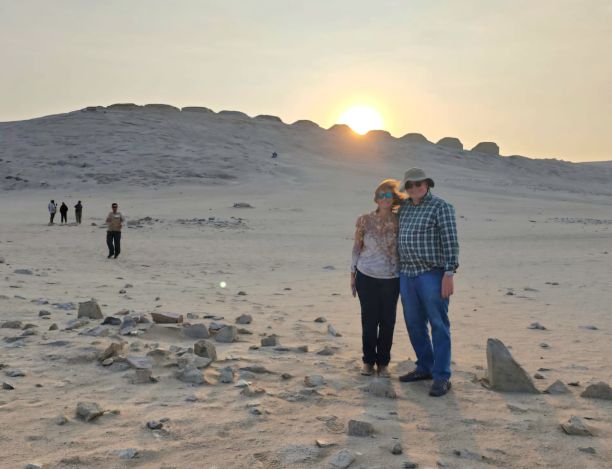
Steve’s work has taken him around the world - from Belfast to Buenos Aires, Reykjavik to Melbourne - sharing insights into one of humanity’s oldest connections: the night sky.
What began as a personal fascination has become a career defined by exploration, collaboration and discovery.
Alongside his work, Steve’s wife, Jessica, has played a creative role in bringing his research to life, contributing artwork for his books and helping translate complex ideas into visual form.
“I never imagined that I would regularly be requested to speak at many international conferences each year,” he says.
Looking to the future
For Steve, cultural astronomy remains a field full of possibility.
As recognition grows, so too do opportunities for students and researchers willing to work across disciplines and follow their curiosity.
His advice is simple.
“My university-self did not foresee what a wonderful opportunity in life this would become for me. I would tell myself to plan for a great and exciting future!”
Enduring connections
From the Andes to the Outback, Steve’s work reveals a powerful truth: across cultures and generations, humanity has always looked to the sky to make sense of the world.
It is a connection that continues to inspire his work - and one that began, he says, at JCU.