For Russ Cook, service didn’t end when the uniform came off. Throughout Defence, policing and community life, lifelong friendships helped shape every chapter of his journey.
The JCU alum has worn many - from the Australian Defence Force and Queensland Police Service to youth support work, local government and decades of volunteering - but one thing has remained constant: community.
The friendships that started it all
Long before Russ walked into a JCU classroom as a mature-age student, James Cook University had already changed the course of his life.
In 1987, after leaving the military and returning to Townsville, Russ joined Townsville Saints University Rugby League Club - despite never having played rugby league before. It was there, among teammates, training sessions and fundraising events, that friendships were formed which would shape the decades ahead.
Those friendships remain just as strong today.
Russ still catches up regularly with mates he met through University Rugby League nearly four decades ago. Their children became friends, their families grew up together, and the bonds formed around football became part of the fabric of life.
"If you include the football side of things, friendships, lifelong friendships, loyalty, and so many fun times," Russ said.
"It was just an amazing journey."
Finding his place at JCU
For Russ, JCU was never simply a place to study. It became a place where community took root.
Years later, after careers in Defence, policing, business and youth work, Russ returned - this time as a mature-age student studying psychology.
Having left school after Year 10, stepping back into a university classroom in his 50s felt daunting.
He remembers feeling out of place among students young enough to be his children and initially struggled to find his footing. But with support from lecturers and classmates, the experience became another chapter in a life already defined by resilience and learning.
Service beyond the uniform
Russ returned to study for deeply personal reasons.
After years of seeing the impact of trauma through frontline work and community experiences, he wanted to better understand mental health - both to help others and to understand some of his own experiences.
Studying psychology gave him tools to better recognise trauma, understand triggers and support people around him. It also reinforced something he had long believed: that asking for help matters.
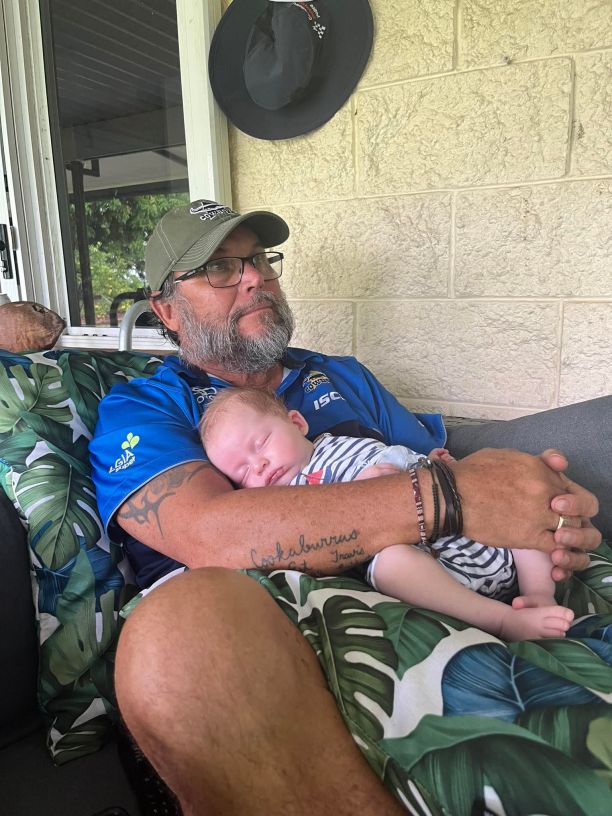
Following his police career, he spent years working with children and young people at risk. Alongside his wife, he supported Indigenous students, opened his home to young footballers and became deeply involved in mentoring and community programs.
That commitment to helping others runs throughout every chapter of Russ’ life.
He later stepped into local government, serving on Townsville City Council during one of the city’s most challenging periods.
When Townsville needed its community
During the 2019 floods, Russ saw a side of Townsville he says he will never forget.
Emergency services, volunteers, community members and everyday residents stepped up for one another. High-profile sports figures quietly helped with rescues and recovery efforts, while countless others simply found ways to support neighbours in need.
For Russ, those moments reinforced something he has always valued.
"Just community," he said. "I just love the community I’m living in."

The measure of success
Across uniforms, professions and decades, that commitment has never really changed.
Russ believes success has little to do with titles or achievements. For him, it is much simpler than that.
Success is knowing family and friends can call at any hour and knowing they never have to face difficult moments alone. It is being there when people need support.
He credits many influences throughout his life, but one lesson from his father has remained with him:
"People will not remember what you said or what you did, but they will always remember how you made them feel."
It is a philosophy that seems to connect every stage of his journey.
For Russ, life has never been about following a straight path, only making the most of the people, places and opportunities along the way.
And for students wondering whether it is too late to take a different path, Russ has simple advice:
"It's never too late.”