Newborn sharks swim like ‘ninjas’ to avoid predator attacks
New research shows that baby blacktip reef sharks use warm waters to boost their escape performance from adult sharks, barracudas and other predators.
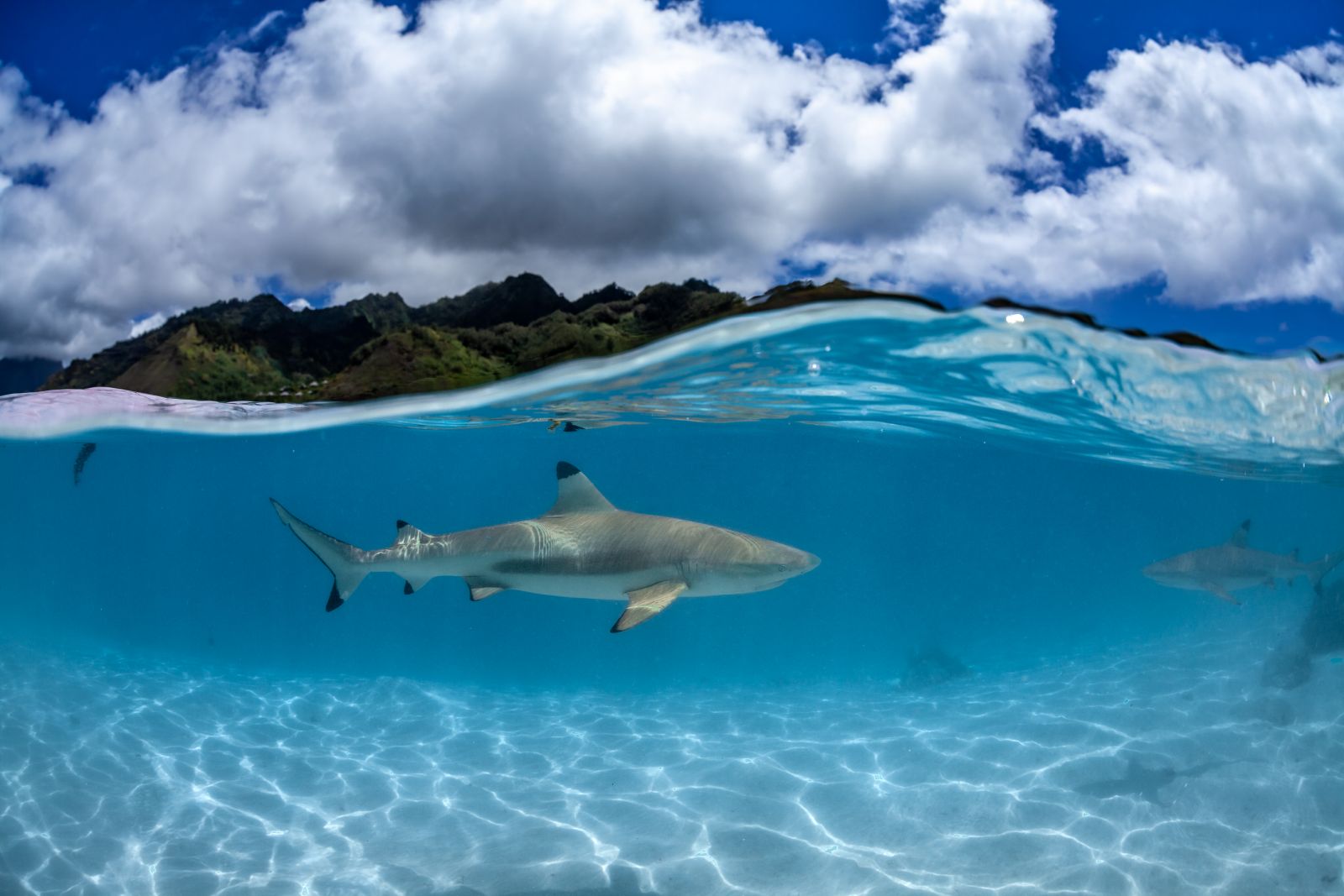
The study, recently published in Conservation Physiology, has found that newborn blacktip reef sharks use warm water in nursery environments for faster acceleration, turn and response rates to outperform their attackers.
The scientists caution, however, that as ocean temperatures continue to rise, these baby sharks are at risk of losing their surprise advantage.
“Newborn sharks are like these little reef ninjas that can parkour themselves in and out of the reef matrix,” explains James Cook University researcher Professor Jodie Rummer, who supervised the study.
“And they seem to have these abilities right away. It's not even something that they're trying to learn and figure out.”
The lead researcher, Dr José Trujillo from the University of Otago, compares their agility to small coral reef fish, explaining that while fast-escape responses are very common among fish, this is the first time it’s been seen in tropical and newborn sharks.
“This agility is not just about escaping pursuit from, say, a large shark predator. It’s just about escaping that first attack. Then they can find refuge,” he said.
“The baby blacktip reef sharks are extremely fast, very agile and can move in very tight spaces, just like small coral reef fishes.”
“We had no idea that these same escape responses are also in newborn tropical sharks.”
As part of the larger Physioshark Project, led by Prof. Rummer, this discovery of post-predator-encounter abilities inside shark nurseries goes beyond what is currently known of these environments.
“The common paradigm about shark nurseries is that they basically exclude predators, which are simply too large to enter these systems,” explains Dr Trujillo.
“But in our system, we found that these habitats were actually easily accessible for blacktip adults. The newborns are encountering these predators, and for some reason, they are able to evade an attack.”
“So, we had to ask the question, could nurseries also be providing elements that give baby sharks post-encounter abilities to escape their predators?”
The researchers tested this hypothesis by examining how temperature, depth and habitat complexity (e.g. coral density) influence the escape performance of baby blacktip reef sharks in Mo’orea, French Polynesia.
They found that water temperatures exceeding 25°C, water depths ~0.7m, and complex reef flats dominated by coral substrate were key requirements that allowed newborn sharks to evade attacks.
Prof. Rummer warns, however, that although these findings are a positive message for newborn shark populations, we can’t take their survival for granted, especially with increasing threats of climate change and coastal development.
“We think that beyond these temperatures [31°C], we're going to see some crash in terms of their escape tactics,” she said.
“They really are operating at the very, very edge of what they can do as baby sharks in terms of that critical escape response. And if they're not going to make it, we won't get healthy adult populations.
“Healthy reefs need healthy sharks. Healthy sharks need healthy reefs. If we don't have one, we don't have the other.”
Ultimately, this study has refined what elements are potentially needed for effective shark conservation in nurseries around the world, including the Great Barrier Reef.
“I would say that this is foundational benchmark, gold standard material that we have an obligation to use and apply to shark nurseries elsewhere,” Prof. Rummer said.