Black corals can help fight back against reef decline
New research from James Cook University reveals that black corals, a species commonly neglected from reef studies, could be the key to buffering coral reef decline.
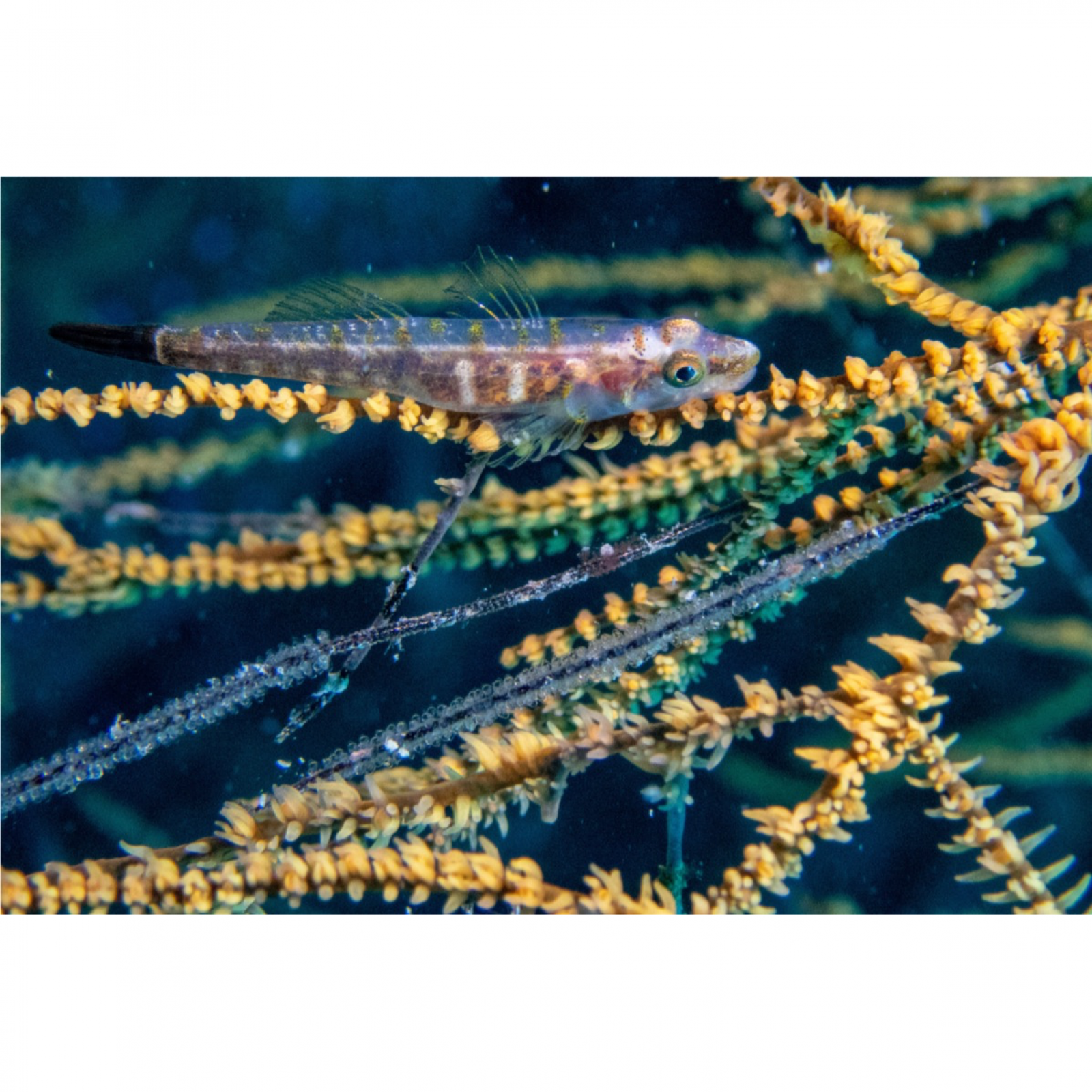
The James Cook University-led research, recently published in Ecology and Evolution, is the first study to assess how antipatharians (black corals) support fish communities in shallow water tropical reefs and discovered that these understudied corals are integral to reef biodiversity.
Lead researcher Dr Erika Gress explains why black corals, which get their common name from their black skeletons – even when colourful – have not received as much attention as other coral species.
“Black corals are closely related to hard corals, which are what most people study because they are known as essential reef builders and habitat providers,” Dr Gress said.
“However, black corals are usually misidentified as soft corals because they grow like them and look very similar, even though they’re evolutionarily very different and have different kinds of skeletons and traits. So, they’ve been largely overlooked from reef studies.”
After studying both artificial and natural reef sites in the central Great Barrier Reef, Dr Gress and colleagues found that black corals support higher fish density as well as unique and overlapping fish species compared to hard corals.
They also have significantly higher fish functional diversity than their popular coral counterparts, which means that not only are there a lot of different fish species using the black corals as habitats, but these fishes also have many different roles to play in the reef ecosystem.
Importantly, the researchers found that there is a large overlap in the ecological roles of fishes associated with both types of corals, suggesting that black corals may be critical to supporting ecosystem resilience as hard corals continue to decline.
“Black corals are not affected by bleaching,” Dr Gress said.
“So, if hard corals remain threatened by such stressors, it could be that some fish species can still find refuge in black coral colonies.”
According to the scientists this means that black corals can have an important role to play in restoration projects.
“All the restoration projects that you hear about, even for artificial reefs, focus on the other types of corals,” she said.
“But we know that black corals can live in these shallow water environments, and we now have the empirical evidence that they provide habitat for the same and distinct fish species compared to hard corals, and we know they’re better at handling bleaching.”
“So, they should also be considered in restoration scenarios.”
Dr Gress warns, however, that black corals aren’t without their own threats and urges for more research done on these key species.
“They might be exempt from bleaching, but they are not exempt from everything. Cyanobacteria, for example, can affect them in shallow waters,” she said.
“We need to identify where there are reefs with black corals, what threatens them, address those issues, and learn how to incorporate black corals into restoration projects.”