Blue carbon interest risks undermining the rights of coastal communities
New James Cook University-led research warns that rising interest in blue carbon projects could pose significant risks to the tenure rights of coastal communities, small-scale fishers and Indigenous Peoples.
The research finds current guidance is falling short of the international standards needed to protect these rights.
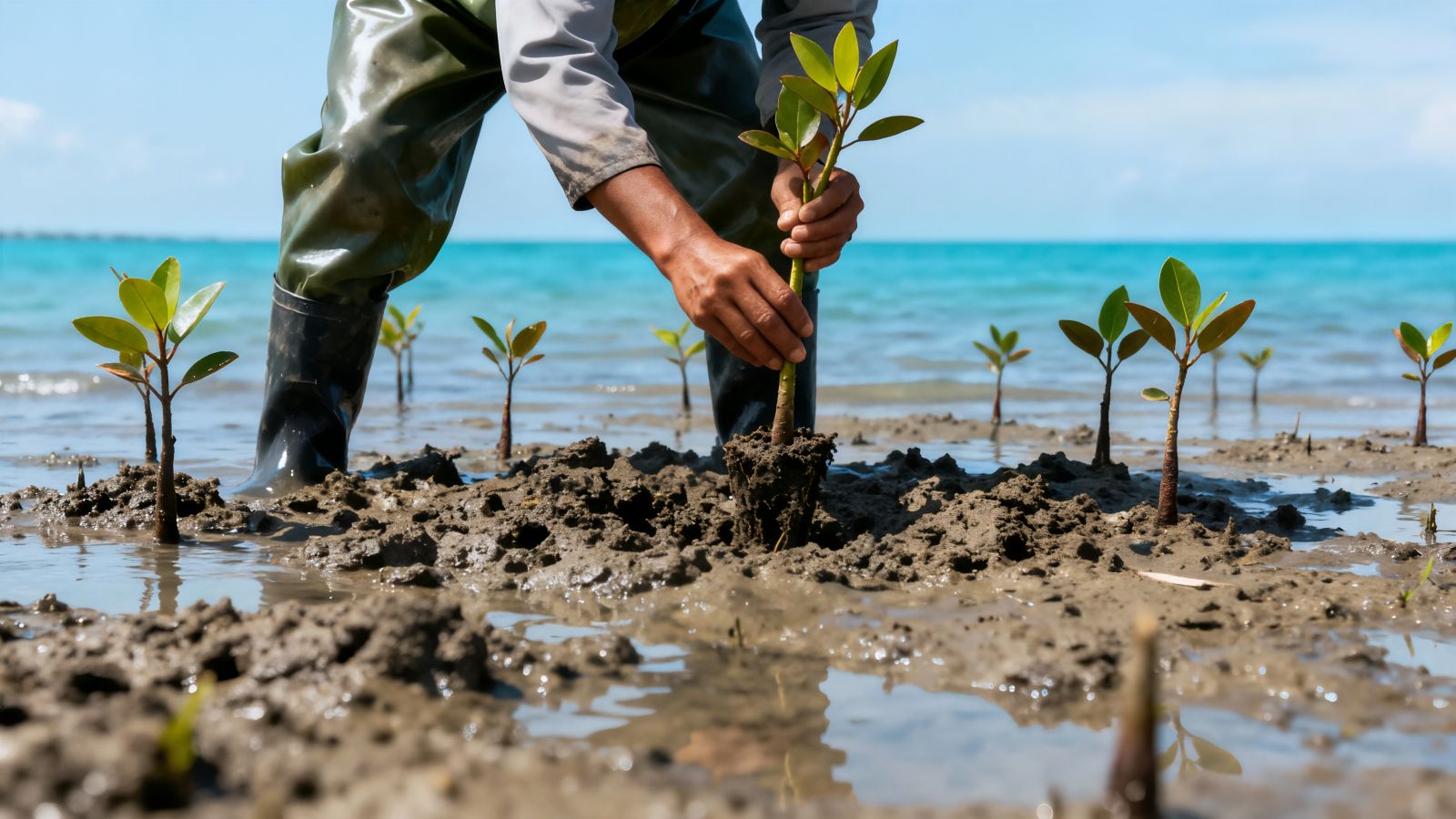
Blue carbon ecosystems – including mangroves and coastal wetlands – sequester carbon at rates several times greater than tropical forests, making them attractive targets for conservation, restoration, and carbon markets, backed by governments, conservation organisations and investors, primarily from the Global North.
But many blue carbon ecosystems lie within the territories of coastal communities, small-scale fishers and Indigenous Peoples who have long lived with, managed and depended on these resources.
This new study analysing 122 global blue carbon guidance documents across science, policy and technical fields has found major inconsistencies in how tenure (ways of using, accessing and managing land and sea areas and resources) are being recognised.
Lead researcher and AIMS@JCU Research Fellow Dr Sarah Lawless said the study finds guidance predominately reflects a Western property paradigm, ill-suited to the worldviews and lived realities of coastal and Indigenous communities in the Global South.
"Much of the current guidance assumes that rights to what are now being framed as ‘blue carbon’ ecosystems must be proven through title deeds,” Dr Lawless said.
“But community or customary tenure arrangements – ways Indigenous and coastal peoples govern land and sea – often exist even where title deeds do not.”
The study finds that even where community tenure is recognised, only a narrow selection of rights – access and management rights – are consistently acknowledged, while the rights that determine who actually controls resources and resource decisions lay elsewhere.
This partial recognition of rights risks communities being excluded from governing and benefiting from their own lands and waters.
The research identifies six core international tenure obligations, including protections enshrined in the Indigenous and Tribal Peoples Convention, that are largely absent from current blue carbon guidance.
“The omission is striking given that blue carbon projects disproportionately focus on the territories of precisely the peoples these instruments were designed to protect,” said co-researcher Dr Sisir Pradhan, from The University of Waterloo
"Our study raises concerns that social safeguards are not keeping pace with the speed of interest and investment from foreign actors.”
Grassroots civil society were less represented in the guidance, but where they did appear, they presented pointed warnings.
Some viewed blue carbon as a direct threat to communities while others said it could only work if communities hold genuine authority over decisions in their own territories.
The study warns that without realignment to international tenure and human rights standards, blue carbon risks repeating the dispossession and governance failures of earlier carbon markets and conservation initiatives.
"The real question is who bears the cost of climate change, and of the actions needed to address it?” said Dr Lawless.
“Those costs should not be exported onto the communities least responsible for the crisis.”