A lab on a strip: world-first $5 system replaces costly protein–DNA research equipment
James Cook University scientists have unveiled a world-first, instrument‑free method to study protein–DNA interactions that could transform drug discovery, cancer research and biotechnology worldwide – for less than $5 a test.
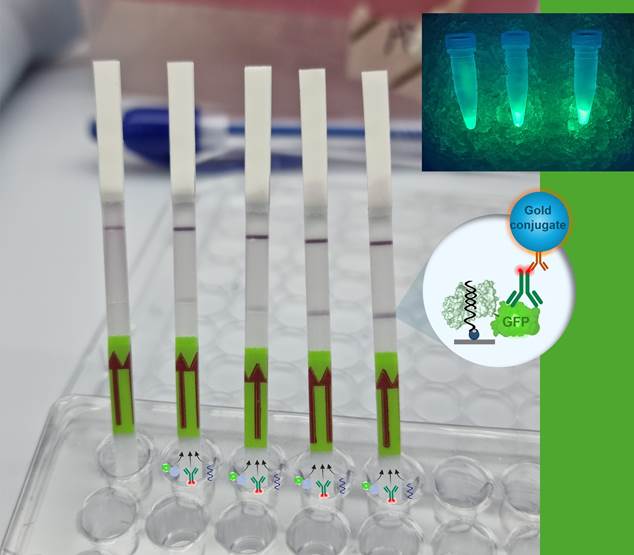
Published in Nucleic Acids Research, the new platform, called R-PNAI-T, compresses what traditionally required up to million-dollar instruments or radioactive facilities and hours of tedious labour into a rapid, lateral-flow dipstick test that delivers results in minutes.
JCU Associate Professor Patrick Schaeffer, a protein–DNA interaction specialist with over 25 years’ experience, said the team had effectively miniaturised an entire laboratory workflow and infrastructure onto a simple test strip.
“This advancement is the most significant achievement of my career,” Assoc Prof Schaeffer said.
“We turned an entire lab process into a test strip. Instead of having days of work to do an experiment, you can have a rapid test-like system that can do it in about 15 minutes.”
JCU’s Dr Casey Toft led the research and development of the platform, validating the core technology. Colleague Dr Alanna Sorenson evaluated the method against a bacterial drug target, and Ms Holly Radford applied the platform to characterise the initiator protein and origin of replication of Burkholderia pseudomallei, the causative agent of melioidosis.
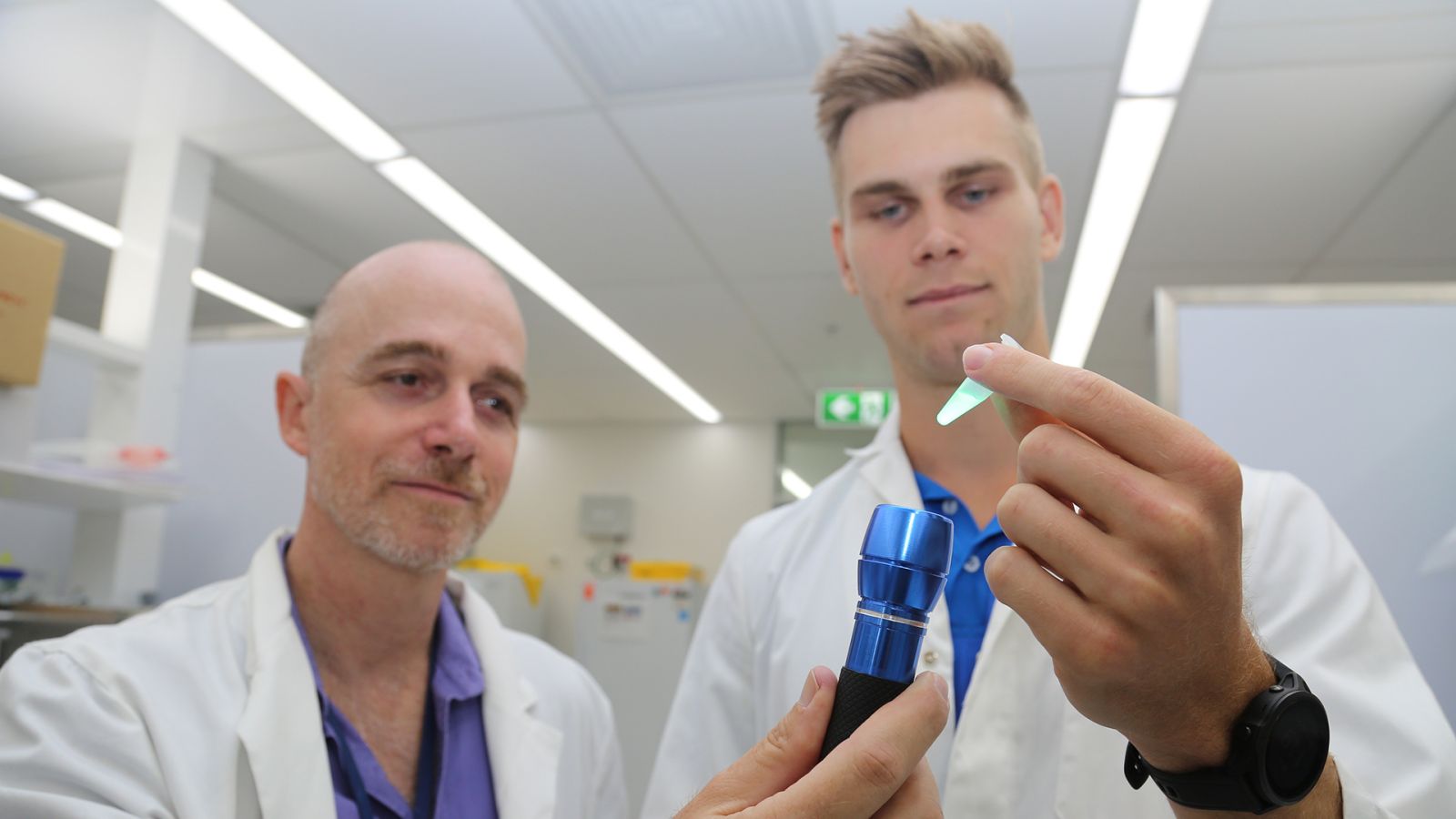
The method repurposes green fluorescent protein, or GFP, to directly detect protein–DNA binding. It works even in crude cell samples, eliminating the need for complex purification or specialised infrastructure.
“You literally can just burst open the cells and test specifically for that protein–DNA interaction,” he said.
“As a bonus, we have the advantage of being able to do it in crude samples.”
Protein–DNA interactions underpin fundamental biological processes and are central to cancer, infectious disease and genetic disorders.
Until now, characterising how proteins bind DNA has relied on high-end platforms such as surface plasmon resonance systems, advanced calorimetry or dedicated radioactive facilities. These technologies are typically confined to specialist centres.
“Let’s imagine everyone is thinking about this instrument that is super expensive, super hard to use and long-winded, and really, no one wants to use it,” Assoc Prof Schaeffer said.
“Then someone comes along and says instead of all that stress, you can have a rapid test-strip system.”
Despite its simplicity, R-PNAI-T matches, and in some cases exceeds, the sensitivity of flagship biophysical instruments.
“We have gotten test lines appearing at concentrations that, in the high end machine, you would see nothing,” Assoc Prof Schaeffer said.
“We have pretty much beaten the sensitivity of the million-dollar instruments.”
Assoc Prof Schaeffer said the breakthrough could be a game-changer for regional and resource-limited institutions.
“Being in a resource-limited environment, like regional areas with no experts around, you need to turn technologies into simple, bulletproof and robust systems that anyone can use,” he said.
Beyond basic research, the platform is poised to accelerate drug discovery by enabling rapid target engagement studies.
Assoc Prof Schaeffer said these studies confirm directly, in complex mixtures, whether a candidate drug is hitting the protein–DNA interaction it is designed to block.
“These days, a drug does not go to market without target engagement studies,” he said.
“We now have a system that allows researchers interested in protein–DNA interactions to do this super easily.”
The method has been published open access and without patent restrictions to maximise global uptake and impact.