Invasive water weed mulch adds new life to soil
A problematic water weed clogging up the world’s waterways can find new use as a material applied to farmer’s soils to speed up nitrogen uptake, encourage soil microbial diversity and promote faster decomposition.
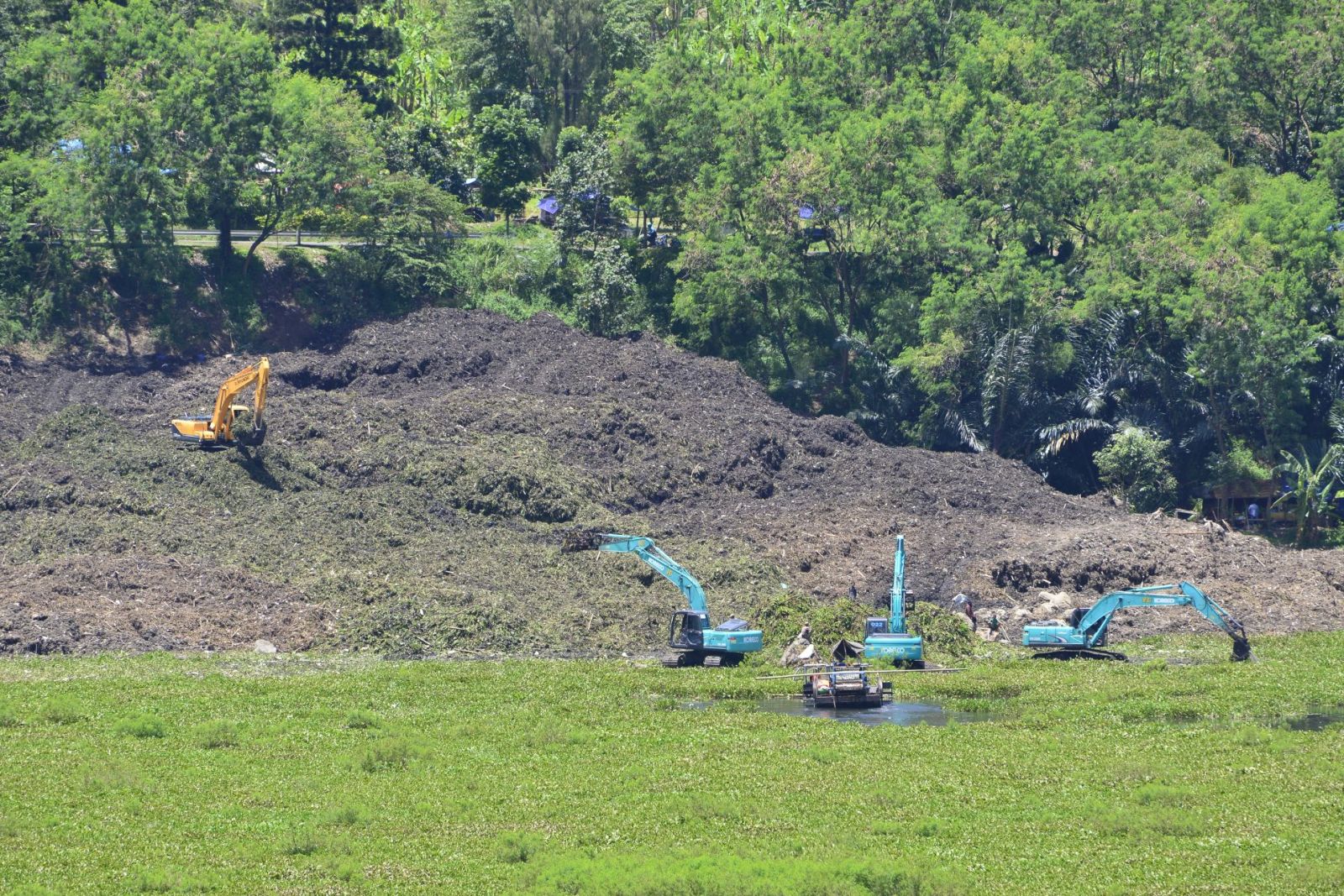
Research published in Agriculture, Ecosystems and Environment by James Cook University’s Tropwater researcher Dr Adam Canning, tracked changes in soil nutrients and soil microbes when nutrient-rich water hyacinth weed mulch was applied to Queensland lychee, macadamia and cattle grazing farms.
Water hyacinth is one of the world’s most invasive weeds, growing quickly and forming dense mats that clog up waterways. However, it is also rich in plant nutrients and has the potential to improve soil fertility.
“It's a plant that grows on top of the water with this big root that goes down deep. It grows everywhere … we see it clogging up wetlands and rivers and accumulating behind weirs”, said Dr Canning.
“If you've got water hyacinth, you're not going kayaking, you're not going for a swim and if you want to go fishing, your lures are going to get stuck.”
Dr Canning explained that some councils currently go in with diggers, harvest the weed, and put it onto the sides of riverbanks - where it degrades and eventually releases valuable nutrients back into the water or is washed downstream during floods.
Townsville’s Ross River requires regular weed harvesting to control water hyacinth outbreaks.
“We know that a lot of our nitrogen is getting lost into waterways … but water hyacinth and other aquatic weeds are actually capturing nitrogen and other nutrients that are running off the land,” he said.
“It's either we keep pumping the problem by putting our money into synthetic fertilizers that grow the weed, or we think of it as a resource and use it to close the nutrient loop.”
The research was supported by the Fitzroy Basin Association, who harvested invasive water hyacinth weed clogging up Rockhampton’s Murray lagoon, mulching and drying it before providing it to researchers to use as a soil amendment on different farms over seven-week trials.
“A soil amendment is just anything that we can add to the soil to help improve its fertility,” Dr Canning said.
“When you add this mulch to soil, you're adding on a whole lot of nutrients. So farmers would be able to reduce the amount of fertilizer that they usually put on - which is a big benefit.”
Dr Canning used DNA metabarcoding to track bacteria, fungi and nematodes in the soil, explaining that these microbes are the powerhouses driving the nutrient cycle.
“Applying mulch altered the microbial community diversity and in unfertilised lychee and macadamia soils it increased the phosphatase enzyme activity,” he said.
“The phosphatase enzyme produced by the microbes helps take phosphorus from stores that are less easily available into ones that are more easily available.”
But Dr Canning suggested that benefits of water hyacinth mulch were context dependent and that it comes down to what your starting soil looks like.
“It’s possible to take a soil sample, look at the soil’s nutrient profile and then give an estimate as to how much the fertility would shift by adding water hyacinth mulch, in much the same way we do for fertilisers” he said.
“Carefully tailoring each application will help farmers get the best value out of water hyacinth mulch.”
This research was jointly funded by the Fitzroy Basin Association, the Cooperative Research Centre for Developing Northern Australia, Rockhampton Regional Council, and the Queensland Government.
Dr Canning and the Fitzroy Basin Association noted that collection and re-use of invasive weeds such as water hyacinth requires appropriate controls – to minimise biosecurity risks.