Magnetic Island may be last stronghold of ancient coral lineage
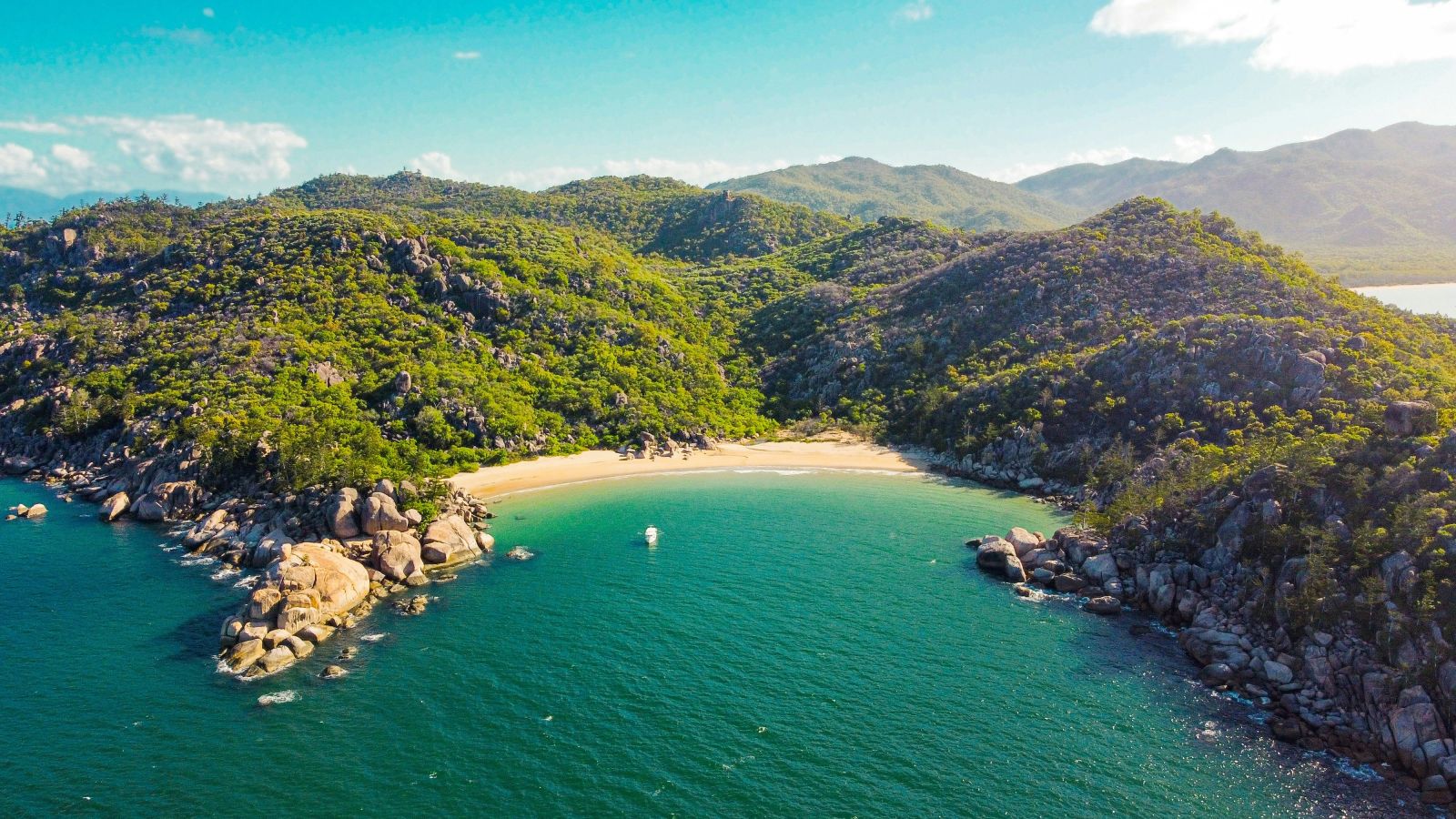
A common coral around Magnetic Island/Yunbenun, near Townsville, belongs to an ancient genetic lineage that is found almost nowhere else and has limited genetic connections with nearby reef populations.
These findings raise concerns about the ability of the coral to adapt to environmental change, new research has found.
The study was led by Sandra Erdmann, a master’s student at James Cook University. She worked with Associate Professor Ira Cooke, Professor David Bourne and colleagues from JCU and the Australian Institute of Marine Science, together with traditional owners of Yunbenun.
Researchers examined populations of Acropora kenti, a common coral species found locally at Magnetic Island/Yunbenun and across the entire Great Barrier Reef.
The scientists said although the coral carries the same species name along the full length of the reef, colonies at Magnetic Island/Yunbenun are genetically very different from those elsewhere.
“With very few exceptions, the Yunbenun lineage has so far only been found around the island and further work is needed to determine whether it should be classified as a separate species,” Dr Cooke said.
“Our results suggest that Yunbenun is the only remaining stronghold of this distinct lineage that split from other Acropora kenti over half a million years ago.”
He said many visitors to the island will be familiar with this coral, which forms large colonies with finger-like branches at all the popular snorkelling spots.
Ms Erdmann said the scientists used genetic analysis to identify differences between populations, assess genetic diversity and investigate how effectively corals exchanged genetic material through the movement of their larvae.
“The results showed that a genetically distinct lineage dominated the bays around Magnetic Island/Yunbenun but was rarely found on nearby reefs,” said Ms Erdmann.
Researchers also identified genetic differences between northern and southern populations around the island, highlighting the importance of understanding variation even across relatively small areas.
“Although there was larval dispersal between the island and surrounding reefs, gene flow remained limited. The island's coral populations had lower genetic diversity and smaller effective population sizes than those of neighbouring reefs,” Ms Erdmann said.
She said effective population size estimates how many individuals have contributed to a population's genetic makeup over the last few generations.
The researchers estimated it at fewer than 100 in the island’s southern bays and about 1,000 in its northern bays. This compares with about 10,000 for the other lineage of Acropora kenti on neighbouring reefs.
Dr Cooke said smaller populations could be more vulnerable to genetic decline, particularly as rising ocean temperatures and other pressures, such as water quality, increasingly threaten coral survival.
“Genetic diversity helps populations adapt to changing conditions. When populations are isolated and have limited opportunities to exchange genetic material, they risk losing diversity over time, potentially reducing their capacity to withstand disturbances,” he said.
Dr Cooke said that because this lineage is so distinct, it could not simply be replenished by coral larvae from other reefs.
“The Yunbenun lineage has such a low effective population size that it might struggle to adapt. If it disappears from Yunbenun, it may be lost entirely,” he said.
The researchers cautioned that Magnetic Island/Yunbenun might not be the only stronghold of this distinct coral lineage but despite considerable survey effort it is the only location found so far.
Prof Bourne said the findings highlighted the importance of local reef conservation efforts at Yunbenun and the need for conservation strategies that recognise differences between local coral populations rather than treating reefs as genetically interchangeable.
“This kind of work, untangling genetic relationships within coral, is important for maintaining healthy, genetically diverse populations. That’s what we’re going to need to do to support the long-term resilience of the Great Barrier Reef, especially as we see environmental pressures intensify,” he said.
Link to paperhere.
More Information
Media Enquiries:
Sandra Erdmann
E: sandra.erdmann@my.jcu.edu.au
Associate Professor Ira Cooke
E: ira.cooke@jcu.edu.au
Professor David Bourne
E: david.bourne@jcu.edu.au
Published:
05, November 2026