Reef fish show resilience to bleaching devastation
New James Cook University research has found that reef fish communities are more resilient to mass coral bleaching events than previously thought.
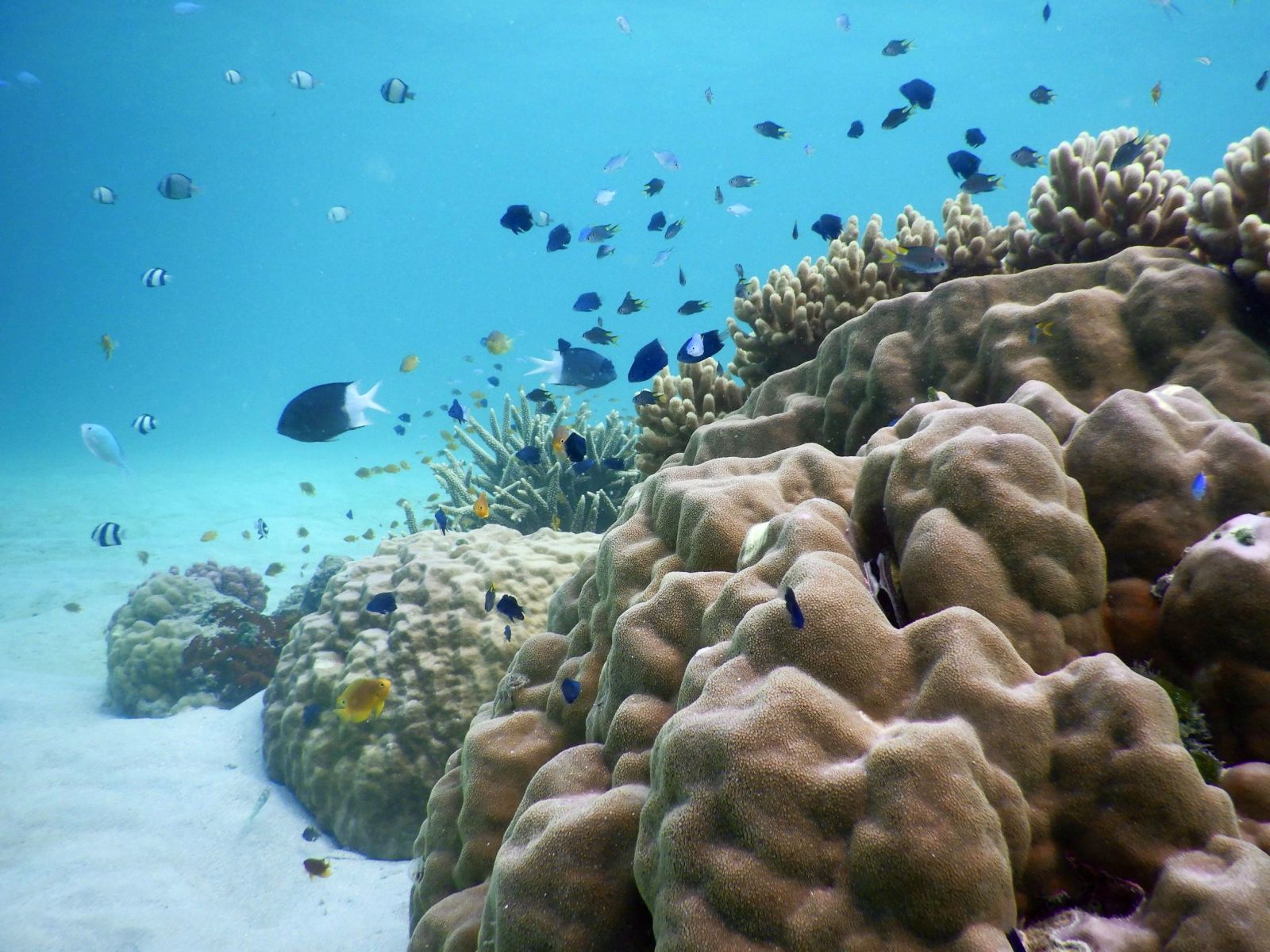
The research led by JCU PhD graduate Dr Pooventhran Muruga and published in Global Ecology and Biogeographyinvestigated the impact of recurrent heat-induced coral bleaching events on fish abundance and fish species richness across eight regions in the Indo-Pacific.
Researchers found that coral bleaching events between 2009 and 2024 did not lead to consistent declines in either the number of fish species present (richness) or the total quantity of fish (abundance) – even for fishes that are strongly associated with corals.
“We tend to assume that the fishes are there only because of the corals, and so when corals are devastated by bleaching, we expect fishes to decline,” Dr Muruga said.
“But when we considered longer timescales, we show that there’s an almost even chance that fish communities will increase or decrease following these events.
“Our evidence suggests that fish declines after bleaching are not inevitable … which makes us rethink the paradigm we've built around our understanding of coral reef fishes and what is fundamentally important to them.”
Researchers suggest that other factors, besides coral cover, are also important considerations when researching reef fish community resilience.
Dr Muruga explained that while similar patterns on fish resilience have been reported in other locations, less is known about the impacts of bleaching on the different groups of fishes that can be found on coral reefs.
Researchers categorised the 780 fish species found within the eight regions of the Indo-Pacific into three coral-association categories: strong, moderate, and non-associated.
“Strongly coral-associated fishes are those that feed on corals or use corals for shelter … the kind you typically see in images of a coral colony,” he said.
“But 78% of fishes on coral reefs are not associated with corals. While they can be found on coral reefs, they can also be found on non-coral reef systems”
The researchers used the Reef Life Survey (RLS) dataset and publicly available data quantifying coral bleaching severity and duration, within a Bayesian modelling framework – uncovering changes in the different fish communities over time-periods corresponding to bleaching events.
“There were no consistent differences across the three categories of fishes, which shows that even fishes that need corals don't respond in the way that we think they would,” Dr Muruga said.
The researchers argue that other environmental drivers on coral reefs – wave action, ocean currents, overall reef structure, nutrient and planktonic input – should be considered in future research that studies ecological change on reefs.
“In the last 10 years we've had three global mass coral-bleaching events and five on the Great Barrier Reef – all resulting in massive coral loss,” Dr Muruga said.
“But our research shows that coral reef fishes persist … it's an optimistic outlook.”