Vibrant reef colours important to fish lifecycle
A new international study shows yellow damselfish on the Great Barrier Reef prefer starting-out life on brightly coloured corals, emphasising how important colourful fine branching corals are to fish diversity.
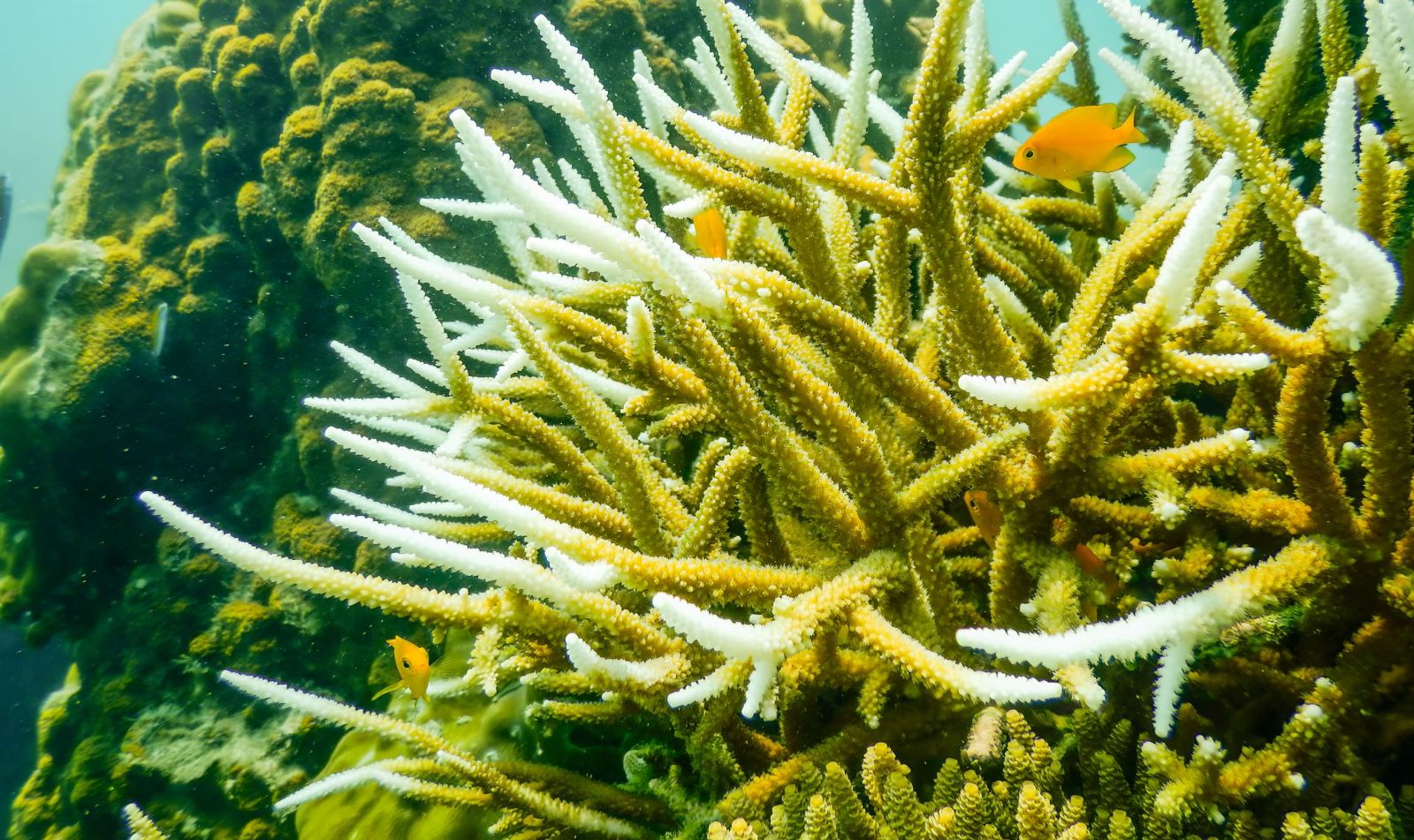
Research by James Cook University, University of Essex and University of Texas scientists published in Marine Environment Research found brown and yellow damsel fish settling-in on the reefs of Lizard Island chose their preferred settlement locations based on the colour of their surroundings.
“When fish reproduce on the reef, their larvae develop out in the open sea. After a few weeks they return to the reef to choose their settlement environment,” JCU Masters graduate Mr Norbert Rapolthy, who led the research and was the paper’s first author, said.
“At settlement, the fish is essentially choosing its home. It's using all these cues from the reef to choose the perfect spot.
“They're very vulnerable at this stage and there's high mortality.”
Researchers studied the settlement behaviour of four different species of dark brown to bright yellow damsel fish, using image analysis to classify the colouration of the reef environments preferred by the 2-3cm long baby damsel fish.
“We started from the edge of the reef and then went 20 meters up onto the reef flat. For every fish we found, we took a picture of the environment,” Mr Rapolthy said.
“Most of the colour comes from live hard corals … all the Acropora coral species, the fine branching corals and all the mounding corals.
“We looked at bright coloured fish and dark, drab-coloured fish – to see if they choose different coloured reef environments when they settle.”
Mr Rapolthy said they observed significant differences in the colour preferences of all four species – with brown fish being less choosy and occupying drabber habitats like sand and rubble, while yellow fish showed distinct preferences for brighter habitats associated with live coral.
“Our results show strong colour space preferences between the different species,” he said.
“It's well known that the colour vision of these fishes is very good … so while we can’t say it's the only influence, our research suggests they deliberately choose a certain coloured area to settle.”
As the effects of climate heating and coral bleaching intensify, reefs are becoming more dominated by algae and the colours represented by live coral are reducing.
Mr Rapolthy explained that previous studies suggested that the number of colourful fish that tourists like to see are declining, and that we now see more drabber fish species finding their homes in algae dominated reefs.
“If our goal is to restore existing reefs, then we need to do a bit of everything. Not just consider the structural effect of corals, but also provide a bit of colour,” Mr Rapolthy said.
“We found that Acropora coral species and other fine branching corals provided the most colour in our transects. They also provide lots of structure on our reefs.
“They're very important for biodiversity … they are ecosystem engineers.”