This article was written by JCU Cyclone Testing Station researchers Juan Zaracho and Geoff Boughton and was first published via LinkedIn.
On 11 November 2026, severe thunderstorms swept across Southeast Queensland, causing significant damage to homes and infrastructure, particularly in the Logan region.
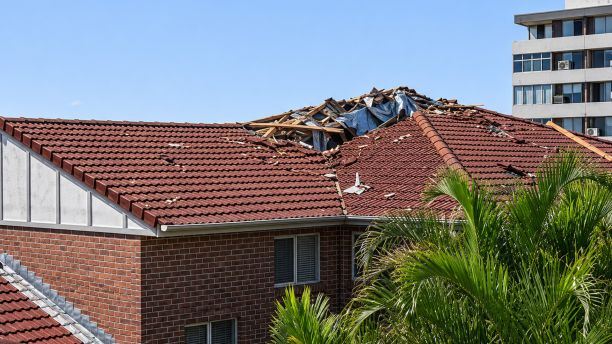
Strong winds tore roofs from houses and brought down trees and powerlines. Energex reported more than 400 powerlines down across the region, around 85% of them in the Logan and Scenic Rim areas, and about 77,800 customers lost power at the peak of the event.
On 14 November, the Insurance Council of Australia (ICA) declared a Significant Event (SE265). By 16 November, insurers had received 4,670 claims from storms affecting Queensland and parts of New South Wales since 11 November.
Most claims involved damage from fallen trees and branches, damaged roofs and fences, and water entering homes. Notably, food spoilage following prolonged power outages accounted for approximately 30% of home claims in Queensland.
These figures show that the consequences of severe weather extend well beyond structural damage. Even when a building remains standing, disruption to essential services, water ingress and damage to contents can significantly affect households and their ability to recover.
When extreme weather becomes a recurring challenge
Perhaps the most concerning figure in the ICA's latest release is the history of repeated natural hazard events affecting Logan.
Since 2022, and excluding the latest storms, Logan has experienced eight ICA-declared events, including the 2022 floods, the 2023 Christmas storms, Ex-Tropical Cyclone Alfred, and damaging storms and hail in 2025. According to the ICA, these events generated more than 37,500 insurance claims, costing over $813 million.
As ICA CEO Andrew Hall put it, for many Logan families this means "yet another clean-up after years of repeated storms and floods." Repeated events also place sustained pressure on the insurers, builders and tradespeople involved in recovery.
This raises an important question: How can we move from repeatedly repairing damage to systematically reducing the vulnerability of our buildings?
What have previous storm investigations taught us?
At JCU's Cyclone Testing Station (CTS), investigating how buildings perform in severe weather has been a fundamental part of our research for decades. Our previous investigations in Southeast Queensland offer important insights into how buildings respond to destructive winds, hail and wind-driven rain.
Following the November 2008 Brisbane storms, CTS conducted damage surveys in The Gap, Redbank Plains and Paddington. The investigation, published as Technical Report 55, identified several common vulnerabilities:
- Inadequate structural connections and roof tie-downs.
- Damage to windows and doors from wind pressure and windborne debris.
- Water penetration through windows, doors and tiled roofs, including components that had not structurally failed.
- Damage caused by falling trees and other surrounding hazards.
Notably, peak gust wind speeds in both storms were estimated to be below the design wind speed for Brisbane. A survey of 97 houses in The Gap also indicated that newer houses, built after stronger Queensland building requirements were introduced in the 1980s, generally performed better than older housing.
Similarly, following the November 2014 Brisbane severe storm, CTS investigated damage associated with strong winds, hail and localised flooding. The resulting Technical Report 60 again identified significant roof damage despite estimated wind speeds being below the applicable design levels.
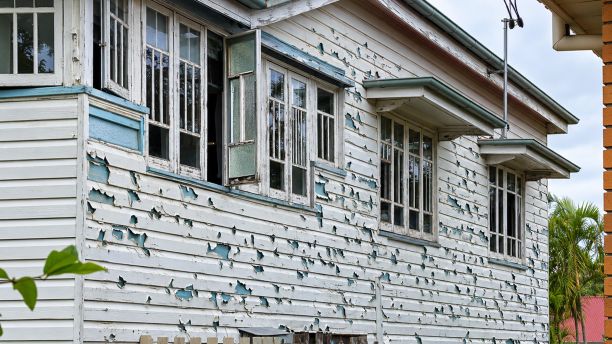
Contributing factors included deterioration of structural elements and connections, and roof cladding replacements carried out without corresponding upgrades to the underlying tie-down system. The investigation also highlighted hail damage to windows, subsequent water ingress, and the increased internal pressure once the building envelope was breached.
These findings reinforce an important engineering principle:
The performance of a building depends not only on the strength of its individual members, but also on their connections, condition and interaction as a complete structural system. It also relies on weatherproofing of the whole building envelope.
These findings relate to earlier storms. The specific causes of building failures during the November 2026 events cannot be established without detailed engineering investigations, but the basic engineering principle can be applied to buildings everywhere.
Building safety and building resilience are not the same thing
Australia's building codes and standards set essential requirements for structural safety and building performance. Their primary aim is to protect lives, so that a building does not collapse or endanger its occupants in a design event. They are not intended to keep a home usable after an extreme storm, or to keep repair costs low.
A building that complies with these requirements and not have a structural failure, may therefore still sustain extensive damage. A damaged roof flashing or minor damage to roof cladding, a broken window or compromised external door can let rainwater in, damaging internal finishes, electrical systems and personal belongings. That damage can generate significant repair costs and displace occupants even where the primary structure remains intact.
This distinction is central to the discussion about building resilience. Resilience is not only about preventing structural collapse and protecting occupants. It is also about limiting damage, maintaining functionality where practicable, providing continuing shelter and enabling a faster, more affordable recovery. As repeated events affect the same communities, these considerations become increasingly important.
Translating research into better building performance
The lessons from post-disaster investigations point to one main requirement: buildings that are well designed, well constructed and well maintained. Within that, there are several opportunities to improve the performance of Australian housing.
First, we need to consider the complete building envelope. Roofs, windows, doors and other external components must be designed, installed and maintained not only for structural resistance but also to keep wind-driven rain and debris out of the interior. This requires specific design for resilience, diligent construction and attention to maintenance to always keep the building ready.
Second, existing buildings deserve greater attention. The 2014 investigation found roofs that had been re-clad without upgrading the tie-downs beneath them: new sheeting fixed to old, and sometimes deteriorated, connections. Although the cladding is new, the roof's resistance to uplift remains governed by the existing connections along the load path. Re-roofing therefore presents an opportunity to inspect and upgrade the tie-down system, and regular maintenance and well-designed retrofits can reduce vulnerability across the existing housing stock.
Third, we need to consider the complete building envelope. Roofs, windows, doors and other external components must be assessed not only for structural resistance but also for how well they keep wind-driven rain and debris out of the interior.
Finally, continued research and post-disaster investigations remain essential. Understanding the relationship between wind characteristics, building performance and observed damage, including both structural and water damage, provides the evidence needed to improve engineering practice, inform standards and develop effective resilience measures.
Building better for the next storm
Destructive winds are not limited to tropical cyclones. In Southeast Queensland, severe thunderstorms are a regular source of damaging winds, and their consequences for communities can be profound.
The growing cost of repeated events highlights the importance of proactive risk reduction, alongside effective emergency response and recovery.
At the Cyclone Testing Station, we remain committed to investigating building performance, advancing wind engineering research and supporting practical improvements to the resilience of Australian buildings and communities.
Our thoughts remain with everyone affected by the recent storms including those in Southwest Rocks (NE NSW) and with those working to support the recovery.
The question is then no longer simply how we repair the damage after each event, but how we use the lessons from this and previous events to reduce the damage caused by the next ones.