It’s time for a new treatment
It’s killed 1 billion people worldwide, and available treatments have become less effective. Now, scientists from JCU’s Australian Institute of Tropical Health and Medicine (AITHM) are contributing to finding a better solution to the tuberculosis crisis.
In the past 200 years, tuberculosis (TB) has killed more than 1 billion people worldwide. It’s an ongoing crisis, with more than 53 million of these deaths having occurred since the year 2000.
Almost 11 million cases of tuberculosis were documented in 2023 alone, and around one-third of the world’s population is currently infected with a latent form of the disease.
In its most active form, tuberculosis manifests as a severe, highly contagious, and potentially deadly lung infection. In children, the disease can also spread into other organ systems — the bones, brain, liver, skin — and is often fatal.
AITHM’s Associate Professor Andreas Kupz says that while tuberculosis is considered treatable, this treatment is time-consuming, costly, and not always effective.
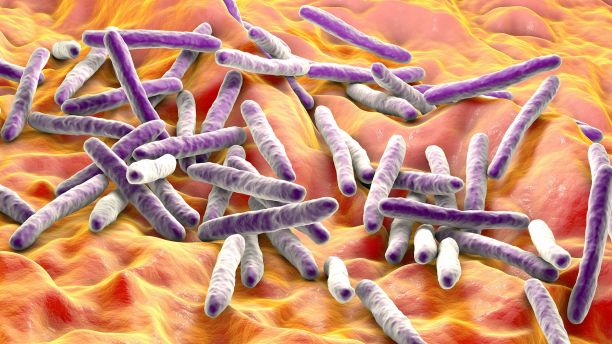
Tuberculosis is caused by bacteria called Mycobacterium tuberculosis, and since the 1950s, treatment has largely involved an intensive regimen of three antibiotics over the course of six to nine months. For the most part, this approach has been effective, but over the past decade, the number of strains becoming resistant to these drugs has increased every year.
“That means we now have ‘multi-drug resistant’ strains and ‘extensive-drug resistant’ strains,” Andreas says. “In some countries, ‘totally-drug resistant’ strains have emerged.”
Treatment of drug-resistant tuberculosis requires administration of extremely expensive drugs over an extended period and stringent quarantine protocols. Ultimately, this can cost as much as US$200,000 per case, which has a severe impact on the already overwhelmed health systems of low- and middle-income countries, where most cases arise. Australia’s nearest neighbours, Papua New Guinea (PNG) and Indonesia, are among those with the highest tuberculosis burdens globally.
“While new drugs have led to a shortening of treatment regimens more recently, unfortunately, we haven’t discovered a new antibiotic mechanism in more than 25 years,” Andreas says.
That’s why his team is working on preventing infections from taking hold in the first place — by improving the current vaccine.
Bolstering the BCG vaccine
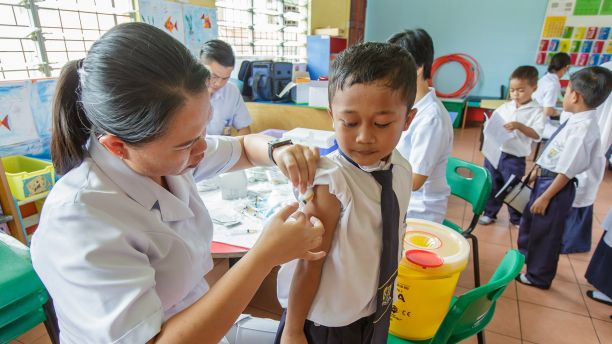
The current vaccine for tuberculosis, Bacillus Calmette–Guérin (BCG), has been in use for more than 100 years. However, it only protects children and has limited efficacy against tuberculosis in adults.
“Tuberculosis is a complex disease, and we don't seem to be able to find a vaccine that is better than BCG,” Andreas says.
“Researchers have looked into the three possible vaccine types: the first one would be a preventative vaccine, that is, a replacement for BCG. The second type is a therapeutic vaccine, something that you would give to someone who already has tuberculosis.
“Now, Dr Guangzu Zhao and I are working on the third type, what we call a booster vaccine. We think the best strategy is to make BCG even better by boosting the immune response BCG already elicits.”
The new booster is based on peptides and peptide epitopes. Peptides epitopes are small pieces of proteins the immune system recognises. Peptides are considered safe, which makes them attractive vaccine components. However, they also tend to have low immunogenicity when used alone, meaning they typically fail to trigger a sufficiently strong immune response.
“That’s why we prepared our vaccine using peptide epitopes and other peptide fragments,” Guangzu says. “When mixed into water, our peptide vaccine can spontaneously self-assemble into nanoparticles.”
This is what led the team to call their booster a ‘nanovaccine.’
“One of its major advantages is that it’s cold-chain independent, meaning it doesn’t need to be refrigerated. This makes it much easier to use in regions where access to electricity is unreliable,” Guangzu says.
“It’s also incredibly flexible,” Andreas adds. “The nanovaccine is made from six different peptides, and each one acts like a Lego block. Depending on the population you’re treating, the six peptides might be enough, or we may need a modified selection, or potentially include other peptides.”
The team’s nanovaccine was recently selected for a global head-to-head comparison by the Tuberculosis Vaccine Initiative (TBVI). TBVI supports the development of new, safe and effective tuberculosis vaccines that are accessible and affordable for all people.
“Our booster was one of the three accepted in late 2024,” Andreas says. “An independent lab will compare all three vaccines. In our own trials, we have seen a good immune response and we’re confident that our nanovaccine will do very well in the trials.”
If it does, this booster vaccine could become a game changer in the global fight against tuberculosis, offering new hope to millions of people worldwide.
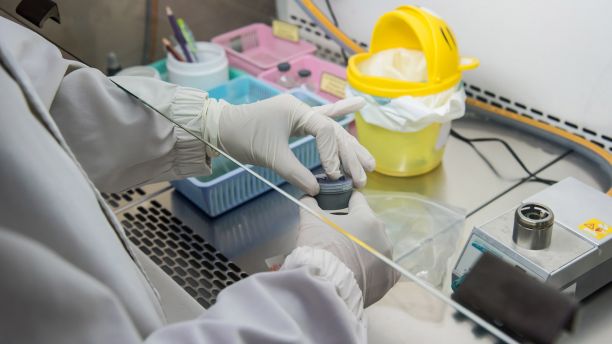
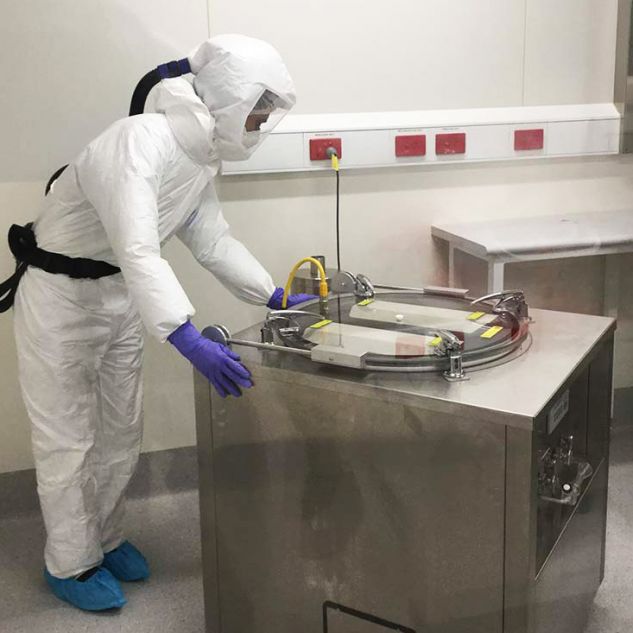
This research has attracted funding support from the Far North Queensland Hospital Foundation (FNQHF) and the Tropical Australian Academic Health Centre (TAAHC). These grants are helping the team further optimise the nanovaccine’s formulation and evaluate its effectiveness across different delivery strategies, with the goal of accelerating its development towards clinical readiness.
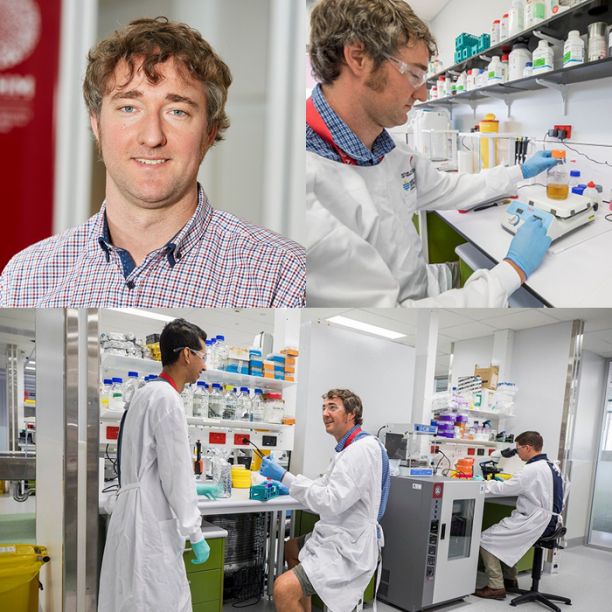
Featured researcher
Andreas Kupz
Associate Professor
Andreas’s research is largely concerned with developing an effective, life-long vaccine for tuberculosis (TB) in the face of steadily growing drug resistance in the disease. As the current TB vaccine, Bacille-Calmette-Guérin (BCG), only protects children, Andreas is working to genetically enhance BCG to protect adults as well.
Andreas is currently in the pre-clinical stages of his research, which aims to develop an enhanced live recombinant strain of BCG. He is also pursuing salmonella research as well as investigating immune responses to toxoplasmosis – a parasitic disease that is a major cause of death in those with AIDS.