Fast Facts
Location
Commencing
- Townsville: February
Fees
From $8,936+
$36,491^
+
estimated annual Commonwealth Supported Fee for a full-time study load, based on 24 credit points. Please note this estimate is variable and subject to fluctuation depending on choice of elective subjects.
^
estimated annual tuition fee for a full-time study load, based on 24 credit points.
Scholarships and financial aid available if eligible.
Plus Student Services and Amenities fee. Fee deferral and scholarships available if eligible
Currently displaying fees for 2026, which are subject to change in following years.
Duration
3 years and 2 trimesters full-time
Entry Requirements
ATAR 72
English (Units 3/4,C), Mathematic Methods (Units 3/4,C), Chemistry (Units 3/4,C)
Assumed Knowledge
Recommended subjects: one of Biology, Health, Physical Education or Physics
English language requirements
Band 2
If your native language is not English, you must meet the minimum English language requirements for this course.
QTAC Codes
- 316451
Course detail
The Bachelor of Biomedical Sciences – Bachelor of Laboratory Medicine combines biomedical science and professional laboratory medicine training in a unique joint qualification completed in less than four years of full-time study.
Designed for students interested in health, disease, diagnostics and medical science, this innovative degree prepares you for a career as a medical laboratory scientist while providing the flexibility to pursue a range of future study and career pathways.
You'll develop a comprehensive understanding of human biology, pathology and disease processes while learning how laboratory science contributes to patient diagnosis, treatment and healthcare decision-making.
Your studies begin with a strong foundation in anatomy, physiology, biochemistry and microbiology before progressing into specialised laboratory medicine training.
Along the way, you'll gain practical skills, research experience and exposure to real-world healthcare challenges affecting regional, tropical and global communities.
One of the key advantages of this degree is its flexibility. Students may complete the full program and graduate as a workforce-ready medical laboratory scientist or choose to exit after completing two years and two trimesters of full-time study with a Bachelor of Biomedical Sciences.
This provides a pathway into postgraduate study in medicine, research, medical imaging, allied health and other health-related professions.
At JCU, you'll learn from internationally recognised researchers and industry experts working in areas including infectious diseases, tropical health, immunology, pathology and biomedical science.
Their research-led teaching ensures you graduate with contemporary knowledge and skills relevant to today's healthcare workforce.
Practical Experiences and Work-Integrated Learning
Practical learning is embedded throughout the degree from your first year of study.
More than 80 per cent of core subjects include hands-on laboratory training, allowing you to develop technical skills and confidence across disciplines including anatomy, chemistry, biochemistry, microbiology, genetics, physiology, histology and haematology.
As you progress through the course, you'll build expertise in laboratory techniques, scientific analysis, quality assurance and professional practice.
You'll also have opportunities to participate in research-focused learning, developing skills in experimental design, data analysis and scientific communication.
Students completing the full degree undertake 16 weeks of professional placement in accredited diagnostic and pathology laboratories across North Queensland and Australia.
These placements provide invaluable real-world experience, exposure to contemporary laboratory technologies and the opportunity to work alongside experienced professionals in clinical environments.
Many students establish industry connections through placement experiences, with placements frequently leading to employment opportunities after graduation.
Inherent requirements
Inherent requirements are the identified abilities, attributes, skills, and behaviours that must be demonstrated, during the learning experience, to successfully complete a course. These abilities, attributes, skills, and behaviours preserve the academic integrity of the University’s learning, assessment, and accreditation processes, and where applicable, meet the standards of a profession. For more information please review the inherent requirements for the Bachelor of Biomedical Sciences - Bachelor of Laboratory Medicine.
Majors
Choose from three different majors, each designed to provide you with the knowledge and skills required to specialise in key biomedical fields, and all incorporating advances in informatics and data science. All majors are offered on campus at JCU Townsville.
Physiology and Pharmacology
Develop an advanced understanding of how the body's systems function and interact. Explore the physiological mechanisms that maintain health and investigate how drugs influence biological processes, disease prevention and treatment, equipping you to excel in numerous pharmacology roles.
Microbiology and Immunology
Study infectious diseases, host-pathogen interactions and immune responses. Learn how microorganisms affect human health while exploring contemporary diagnostic techniques used in laboratory medicine and disease management. Gain skills and knowledge in the theories of epidemiology, molecular genetics, microbiology and advanced immunobiology. Extend your knowledge by understanding and analysing the theories of infectious diseases and tropical microbes.
Molecular and Cell Biology
Study biology at the molecular and cellular level as you explore the origins of specific diseases and disorders. Develop knowledge and skills in the fields of cell biology, genetics, immunology and bioengineering. Discover emerging biotechnologies and gain insight into the scientific advances shaping the future of healthcare and biomedical research.
Graduates of the Bachelor of Biomedical Sciences – Bachelor of Laboratory Medicine are equipped with the knowledge, practical skills and professional experience needed to work across a wide range of healthcare, diagnostic and research settings.
As a medical laboratory scientist, you'll play a critical role in diagnosing disease, monitoring treatment, supporting clinical decision-making and improving patient outcomes.
Graduates are trained across multiple pathology disciplines and exceed the minimum requirements of the Australian Institute of Medical and Clinical Scientists (AIMS), preparing them to work as multi-skilled laboratory professionals in metropolitan, regional and rural healthcare settings.
This broad skill set is particularly valuable in regional and rural healthcare settings, where versatile laboratory professionals are in high demand.
Graduates can pursue careers in:
- Medical laboratory science
- Hospital and diagnostic pathology laboratories
- Medical and biomedical research
- Public health laboratories
- Pharmaceutical and biotechnology industries
- Clinical measurement and diagnostic services
Students who choose to exit early with a Bachelor of Biomedical Sciences are well positioned to pursue further study and career pathways in medicine, medical research, medical imaging, clinical sciences, allied health, public health, and the pharmaceutical and biotechnology sectors.
For students interested in discovery and innovation, this flexible degree offers strong pathways into honours, master's and doctoral research programs.
Through exposure to research projects, advanced laboratory techniques and active research environments, graduates are well positioned to contribute to future advances in healthcare, biotechnology, tropical health and disease prevention.
Whether your goal is to work in a diagnostic laboratory, pursue medical research, enter a postgraduate health program or contribute to solving some of the world's most pressing health challenges, this degree provides the knowledge, practical experience and career flexibility to help you get there.
Estimated annual Commonwealth Supported fee: $8,936
Estimated annual tuition fee: $36,491
A variety of Scholarships are available to suit different student types.
Learn more about fees and financial support
JCU Prep provides a pathway into this course. Enrolling in this flexible program will enable you to meet entry requirements including subject pre-requisites and ATARs. Introductory academic subjects are also available to prepare you for tertiary study.
Successful completion of a Certificate IV or AQF Diploma qualifications can also be used as a pathway into this course.
Explore our list of guaranteed entry courses to see if you are eligible through your prior qualification.*
Some courses require that additional subject prerequisites are met. These prerequisites may include subjects such as English, Mathematics or Science. Subject prerequisites are detailed in the Handbook above.
Contact our friendly JCU Future Students Team to find out more.
*Excludes entry into the Bachelor of Advanced Science, Bachelor of Dental Surgery, Bachelor of Medicine, Bachelor of Surgery, Bachelor of Physiotherapy, and Bachelor of Veterinary Science (Honours).
Note the course QTAC code for the location you've chosen. You'll need to enter it as part of your QTAC application.
Application dates vary between courses, whether they're delivered in semester, trimester or carousel study modes. View our Application due dates page for more information.
ATAR score is indicative only. Entry scores will be finalised in the major offer round.
Real stories
-

Student
Jessica Scott
Bachelor of Biomedical Sciences
I found the coursework incredibly fascinating, particularly in microbiology and immunology, which led me to major in these fields. JCU’s hands-on approach to learning and the comprehensive curriculum fuelled my curiosity and strengthened my passion for research.
-
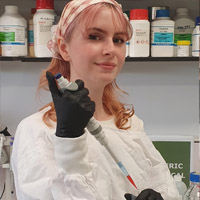
Alumni
Sophie McIntyre
Bachelor of Biomedical Sciences
I enjoyed the research experience in biomedicine so much that I pursued further immunology study through a Master of Philosophy. The abundance of practical laboratory experience was vital and the quality mentorship and guidance in the biomedical sciences degree certainly facilitated my success.
-

Lecturer
Professor Jeffrey Warner
Head, Biomedical Sciences and Molecular Biology
What makes this degree unique is its single-entry point with multiple pathways. Whether your goal is professional laboratory medicine, biomedical research, postgraduate study, or a broader health career, you’ll graduate with strong scientific foundations, hands-on lab experience and flexibility to shape your future.
-

Lecturer
Associate Professor Donna Rudd
Course Coordinator, Medical Laboratory Science and Clinical Sciences
Medical laboratory scientists are at the heart of modern healthcare, providing the testing and analysis that supports diagnosis, treatment and patient care. Our graduates will be helping improve healthcare access, drive innovation and make a real difference in regional and rural communities.