Fast Facts
Location
Commencing
- Townsville: February, September
- Cairns: February, September
Fees
From $5,936+
$36,491^
+
estimated annual Commonwealth Supported Fee for a full-time study load, based on 24 credit points. Please note this estimate is variable and subject to fluctuation depending on choice of elective subjects.
^
estimated annual tuition fee for a full-time study load, based on 24 credit points.
Scholarships and financial aid available if eligible.
Plus Student Services and Amenities fee. Fee deferral and scholarships available if eligible
Currently displaying fees for 2026, which are subject to change in following years.
Duration
1 year full-time
2 years part-time
Entry Requirements
AQF level 7 bachelor degree in science; or equivalent
Course Code
105006
Course detail
JCU students study in the diverse environmental region of North Queensland. You will gain advanced theoretical and practical knowledge in a range of specialised scientific fields, through practical workshops, projects and directed study.
This flexible one year full-time course is offered at JCU’s Townsville and Cairns campuses and is designed for you to expand your knowledge in your chosen science specialisation. Choose from one of eight discipline streams described below, plus choose from a range of elective subjects to complement your training.
View the handbook for detailed information on the subjects included in each discipline stream and available electives.
Inherent requirements
Inherent requirements are the identified abilities, attributes, skills, and behaviours that must be demonstrated, during the learning experience, to successfully complete a course. These abilities, attributes, skills, and behaviours preserve the academic integrity of the University’s learning, assessment,and accreditation processes, and where applicable, meet the standards of a profession. For more information please review the inherent requirements for the Graduate Diploma of Science.
Streams
Aquaculture Science and Technology
Students benefit from laboratory and field based learning in JCU’s Marine and Aquaculture Research Facility. You will explore the science of aquaculture and learn about the husbandry and nutrition of various aquaculture species.
Learn to maintain your own organisms in an intensive aquaculture system. Investigate the scope and role of aquaculture as a food source and critically assess the environmental sustainability and suitability of existing and developing aquaculture industries.
Environmental Earth Science
Learn from world-class lecturers about the impacts of land use, land management, and climate change on the earth surface. Investigate the latest techniques to minimise the harmful effects of human activity on the environment.
Apply your learnings to the diverse environments of the tropics, including the Daintree Rainforest, fertile agricultural regions, the vast savannah outback, magnificent tropical rivers and diverse coastlines.
Environmental Management
Reap the benefits of hands-on fieldwork experience to develop your capability in natural resource management. Work with research and industry experts to deepen your understanding of the impacts of human activities on our natural resources.
Become an expert in best practice approaches to the sustainable management of terrestrial landscapes and natural resources in the tropics.
Fisheries Science and Management
Explore the fundamentals of fisheries science and its application in tropical environments. Students gain knowledge, technical skills and experience in fisheries assessments, sustainable development and management approaches.
Tackle the grand challenges in fisheries across small scale and industrial contexts, to ensure the best possible outcomes for human communities, fish stocks, and ecosystems globally.
Geology
Develop your knowledge of geological structures and plate tectonics. Build a core understanding of mineralogy as applied to rocks, sediments and soils. Learn about the distribution of earth resources and the mechanisms by which metalliferous ores, industrial minerals and fossil fuels are formed.
Students gain a practical appreciation of global environmental change and develop an informed perspective of global natural resources.
Marine Biology
Access one of the most diverse and fragile marine ecosystems in the world, the Great Barrier Reef. Students undertake field trips to study the impact of human society on tropical marine populations, species, habitats and ecosystems. Learn how coral reefs, oceanic and coastal ecosystems function in the tropics.
Study corals, fish, turtles, marine mammals, fisheries, marine reserve design, conservation biology and genetics, biodiversity and more. Attain the technical skills and knowledge necessary for working in the marine education, science and conservation sector.
Tropical Biology and Conservation
Benefit from access to natural environments in close proximity to JCU campuses, including savannahs, the World Heritage Daintree Rainforest, and coastal marine habitats. Your studies will integrate a range of disciplines such as zoology, ecology, botany, and behaviour and evolution biology across an array terrestrial and marine habitats.
Observe, explore and build your understanding of the diversity of the biological world while developing the skills necessary to conduct applied research and / or work in environmental science industries delivering innovative and sustainable solutions for conserving the natural environment.
Broaden your career opportunities with a JCU Graduate Diploma of Science. Enhance your current qualifications by extending your knowledge and technical skills in your profession or learn the fundamentals for a new career track in the natural and environmental sciences.
Graduates of the Graduate Diploma of Science find work in public and private sectors both in Australia and beyond.
You could work in such roles as a marine biologist, conservation agent, educator, environmental manager, field or laboratory technician, geologist, research assistant, resource consultant, or science communicator.
Students who complete the Graduate Diploma of Science are eligible for credit towards the Master of Science (Professional) and Master of Science degrees.
Estimated annual Commonwealth Supported fee: $5,936
Estimated annual tuition fee: $36,491
A variety of Scholarships are available to suit different student types.
Learn more about fees and financial support
Complete an online application through our Online Application Portal.
Real stories
-

Lecturer
Dr Naomi Gardiner
Senior Lecturer, Marine & Aquaculture Sciences
The best part of working at JCU is being part of an incredibly vibrant, active and diverse team of students and staff. Together our JCU Science team regularly make breakthrough discoveries that change paradigms and practices globally. It is great to be able to contribute to work that really does make a difference.
-
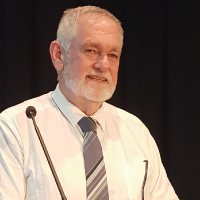
Employer
Dr. Lyndon Llewellyn
Australian Institute of Marine Science
JCU students are of a like mind to us. They want to make the world a better place and they bring that desire into their work with us. They are practical, passionate and willing to tackle challenging problems through science.