Fast Facts
Location
Commencing
- Townsville: February, September
- Cairns: February, September
Fees
$43,949+
+
estimated annual tuition and student services and amenities fee for a full-time study load, based on 24 credit points
Scholarships and financial aid available if eligible
Currently displaying fees for 2026, which are subject to change in following years.
Duration
1 year and 1 trimester full-time
Entry Requirements
AQF level 7 bachelor degree in Science with a minimum GPA of 5.0 (65%) or equivalent.
English language requirements
Band 1
If your native language is not English, you must meet the minimum English language requirements for this course.
CRICOS Code
074894M
Course detail
Learn from research and industry experts and diversify your knowledge studying the unique environments of North Queensland, including coral reefs, seagrass beds, mangroves, dry savannahs and tropical rainforests.
During this flexible, 18-month, full-time course, you will learn from research and industry experts through practical experiences in varied environments. Choose from one of six majors, with each offering a range of electives and skills-based classes to extend and specialise your core knowledge components.
View the handbook for a detailed overview of available majors and subjects.
Additional information
Inherent requirements
Inherent requirements are the identified abilities, attributes, skills, and behaviours that must be demonstrated, during the learning experience, to successfully complete a course. These abilities, attributes, skills, and behaviours preserve the academic integrity of the University’s learning, assessment, and accreditation processes, and where applicable, meet the standards of a profession. For more information please review the inherent requirements for the Master of Science.
Work Integrated Learning
This course requires work-integrated learning (WIL) activities, such as placements, fieldwork, internships or industry-partnered projects for the following Science majors:
- Aquaculture Science and Technology major 8 hours;
- Environmental Earth Science major 64 hours;
- Environmental Management major 8 hours;
- Geology major 80 hours;
- Tropical Biology and Conservation 52 to 127 hours*.
*depending on subjects
Majors
There are 6 majors offered within the Master of Science. Students can also select elective subjects within the same major or from another discipline to enhance their learning.
All majors are available at the Townsville campus. Students attending the Cairns campus must select from the Environmental Earth Science, Environmental Management and Tropical Biology and Conservation majors.
Aquaculture Science and Technology | Townsville
Students benefit from staff members who are world-leaders in tropical aquaculture research, and a combination of theoretical and hands-on learning in JCU’s Marine and Aquaculture Research Facility, the largest university research aquarium facilities in Australia. You will explore the science behind the innovative and sustainable commercial production of aquatic species.
Gain knowledge and skills on scientific, technological and practical applications of breeding and rearing of aquatic organisms for food, aquarium, pearl and pharmaceutical applications. Through course work with field trips, and unique hands-on Hatchery Technique subject, you will understand how diverse species are farmed and the science and biotechnology approaches to enhance production including physiology, nutrition, genetic selection and disease management.
Our researchers’ strong links to industry will give you a sound professional network and a wide range of career opportunities when you graduate.
Environmental Earth Science | Townsville and Cairns
Learn about the impacts of land use, land management, and climate change on the Earth’s surface, about present and future environmental challenges facing modern society, and how applied science is helping to solve these problems.
Gain specialised skills in assessing land and water condition and apply your learnings to the diverse environments of the tropics, including tropical rainforests, fertile agricultural regions, the vast savannah outback, magnificent tropical rivers, diverse coastlines, and various other field areas in North Queensland, Australia and beyond.
Environmental Management | Townsville and Cairns
Reap the benefits of hands-on fieldwork experience to develop your capability in natural resource management. Work with research and industry experts to deepen your understanding of how natural environments function and change over time and how to manage them.
Gain specialised technical skills in remote sensing, Geographic Information Systems, and Environmental and Social Impact Assessment. Become an expert in the interconnected ecological and social aspects of managing complex ecosystems.
Fisheries Science and Management | Townsville
Explore the fundamentals of fisheries science and its application in tropical environments. Gain knowledge, technical skills and experience in fisheries assessments, sustainable development and management approaches.
Tackle the grand challenges in fisheries across small scale and industrial contexts, to ensure the best possible outcomes for human communities, fish stocks, and ecosystems globally.
Geology | Townsville
Develop your knowledge of geological structures, mineralogy, plate tectonics and geochemistry, as well as the field, instrumental and analytical techniques used to conduct research in these areas. Benefit from practical experience studying minerals, rocks and sediments—and their chemical make-up—in research contexts including the Great Artesian Basin, the Outback, the Great Barrier Reef Marine Park, and other coastal and terrestrial environments.
Learn about feasible and sustainable ways to explore for and extract strategic/critical resources and evaluate geological natural hazards that may threaten communities.
Tropical Biology and Conservation | Townsville and Cairns
Benefit from access to natural environments in close proximity to JCU campuses, including savannahs, the World Heritage Daintree Rainforest, and coastal marine habitats. Your studies will integrate a range of disciplines such as zoology, ecology, botany, and behaviour and evolution biology across an array terrestrial and marine habitats.
Observe, explore and build your understanding of the diversity of the biological world while developing the skills necessary to conduct applied research and / or work in environmental science industries delivering innovative and sustainable solutions for conserving the natural environment.
View the handbook and for detailed subject information.
Advance your scientific career with a professional post-graduate course. JCU Master of Science graduates are highly regarded and find employment in a range of organisations within Australia and around the world.
You could pursue your specialised scientific field in the public or private sector, working for business, government, educational, research or not-for-profit agencies.
As a Master of Science graduate, you may find yourself holding positions such as a biologist, ecologist, conservation agent, environmental manager or specialist, or within academia as a researcher or teacher within these fields.
Estimated annual tuition fee: $43,949
Course fees are charged per year of full-time study. International course fees are reviewed annually and subject to change.
A Student Services and Amenities Fee is payable per subject up to a maximum amount per year.
Student Visa holders must have Overseas Student Health Cover (OSHC) for the duration of their Student Visa (except Norwegian, Swedish and Belgian citizens). Costs depend on the length of study and the number of dependents accompanying the student. For more information see Overseas Student Health Cover (OSHC).
Scholarships and financial aid are also available for international students.
Application dates vary between courses, whether they're delivered in semester, trimester or carousel study modes. View our Application due dates page for more information.
Gather the documents you need to apply and submit an application via JCU's online application portal.
Real stories
-
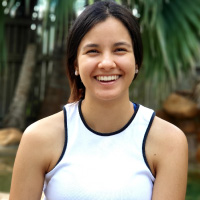
Student
Sheila Villora
Master of Science, majoring in Fisheries Science and Management
JCU is one of the world’s leading universities in Marine Science and offers study on Fisheries Management in the Tropics. This was the main reason I travelled from Germany to study here in Townsville. I had the opportunity to work on projects which will help to conserve the marine environment on an international scale.
-
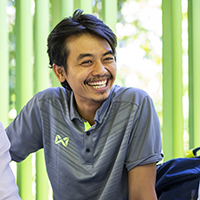
International Student - Thailand
Nut Munpholsri
Master of Science, majoring in Tropical Biology and Conservation
I was looking for opportunities to study and conduct research in a thriving environment. JCU location provides a great opportunity for my field. My aim is to acquire research skills, build up international networks, and return to Thailand to join a research team.
-
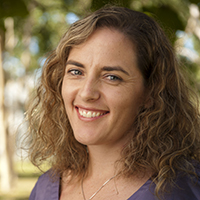
Lecturer
Dr Naomi Gardiner
Senior Lecturer, Marine & Aquaculture Sciences
The best part of working at JCU is being part of an incredibly vibrant, active and diverse team of students and staff. Together our JCU Science team regularly makes breakthrough discoveries that change paradigms and practices globally. It is great to be able to contribute to work that really does make a difference.