
AI technology the early bird detector of cane disease

Image: Ethan Waters
Novel artificial intelligence technology developed by JCU Research Officer Ethan Waters, Associate Professor of Electrical and Electronic Engineering Mostafa Rahimi Azghadi, and Senior Lecturer of Data Science, Dr Carla Ewels is giving farmers the edge by enabling early detection of diseases in their crop.
Applying machine learning techniques with data collected from satellite imagery, the team developed a prototype that detected Ratoon Stunting Disease in sugarcane paddocks in the Herbert River District. This research, in collaboration with Herbert Cane Productivity Services Limited, was the outcome of Ethan’s Honours thesis in 2022.
“Ratoon Stunting Disease is a really big issue for not just Herbert Cane Productivity Services Limited but the global sugar community because it has no visual symptoms, but it affects the way water propagates through the stalk. It means the cane yield can be reduced by up to 60 per cent.”
“We discovered that we could use multi-spectral satellite imagery in near-infrared and short-wave infrared regions of the electromagnetic spectrum to get an indication of how much water is in the vegetation which would identify if the disease was in cane. We then trained the machine learning algorithms to identify the disease from that satellite imagery.”
Ethan Waters

Detecting this disease as early as possible allows farmers to prevent the spread, therefore minimizing crop loss.
“Early detection of cane diseases or abnormalities in the crop is a vital step in ensuring minimal loss to yield. In the worst-case scenario with Ratoon Stunting Disease, losing 60 per cent of your yield means roughly 60 per cent of your annual income if you look at the commercial cane sugar content of your crop.”
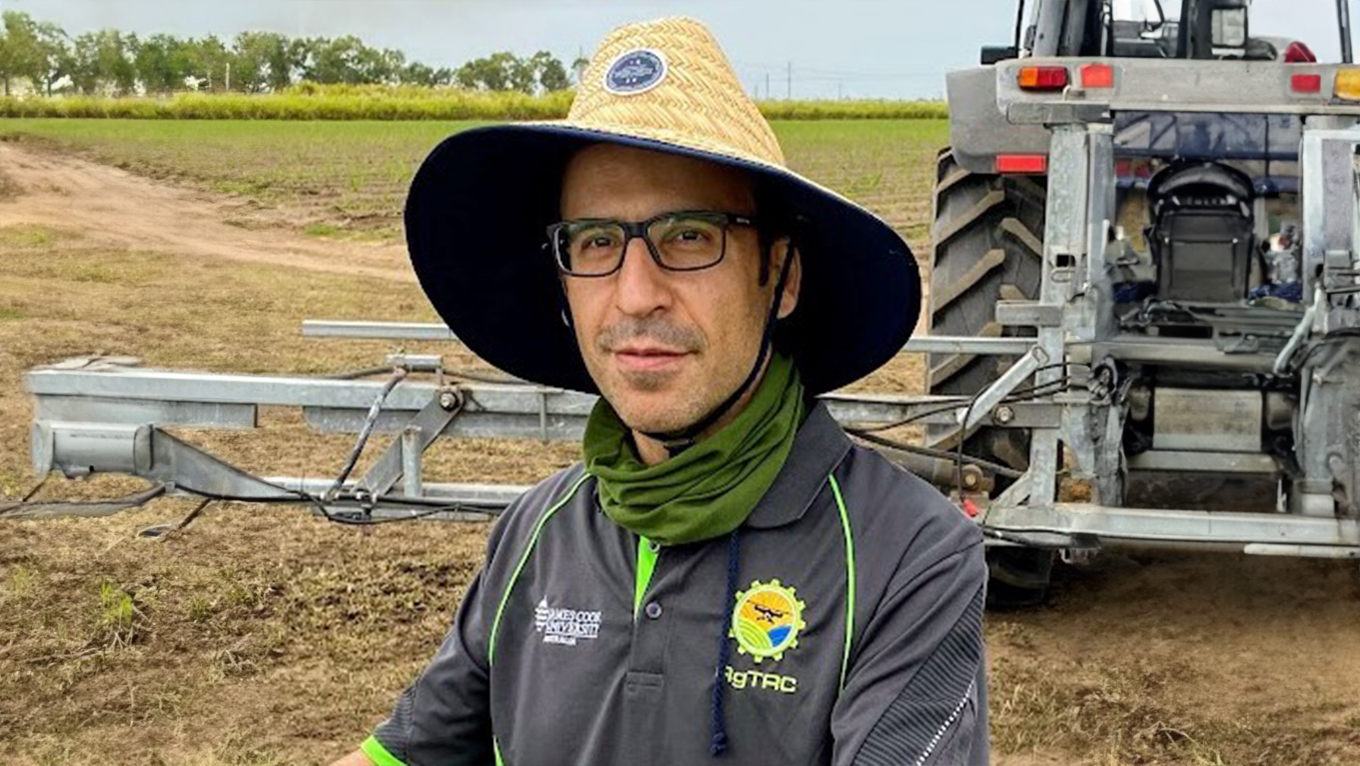
Associate Professor Mostafa Rahimi Azghadi
Using a grant from Australia’s Economic Accelerator the research team will continue to improve their prototype technology. Collaboration continues in the Herbert region and will be extended to the Burdekin and Tully regions. Detection of Ratoon Stunting Disease is the focus of this grant funding, however there is scope to expand the technology to detect other diseases.
“More than one disease affects the sugarcane industry, and to be able to detect other diseases and abnormalities in the crop will make this tool an effective, real-world solution,” said Ethan. There is potential for the technology to be used in several varieties of sugarcane, and for it to recognise and account for other factors including weather conditions and soil types.

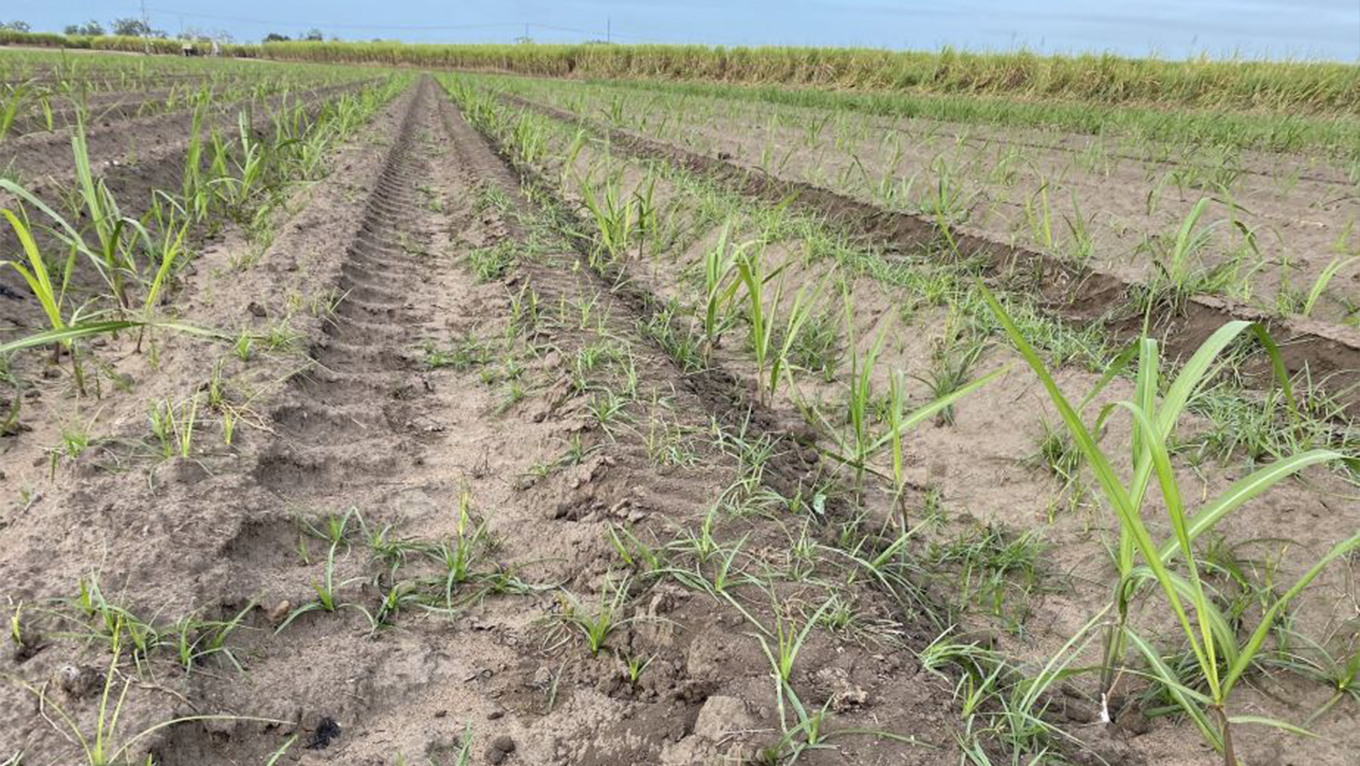
Image: Ratoon stunting disease blocking the xylem of the sugarcane stalk.
Ratoon Stunting disease blocks the xylem of the sugarcane plant restricting water movement through the stalk. Our AI was trained on multispectral images which indicated vegetation with less water absorption to try and discern the disease in addition to other factors.
The project commenced on August 1, 2024, and is scheduled to continue until July 31, 2025. Our goal is to obtain the RSD disease data collected by HCPSL and other industry stakeholders over the past few years. This will enable us to start developing and refining advanced models and assessing their accuracy. As we collaborate with additional industry partners to gather more data, the development of these models will be iterative. This approach aims to enhance prediction accuracy, thereby increasing the project's impact on the industry. While models are training, we will focus on developing a web-based application to integrate these models, with the goal of delivering a functional prototype by the end of the project that industry could adopt.
The project received approximately $200,000 from the Department of Education through Australia’s Economic Accelerator grant and Industry partner HCPSL contributed $15,000 and $100,000 of in kind staff time and resources.
The project team extends sincere appreciation to Industry partner HCPSL for their invaluable contribution in collecting and providing the ground-truth data essential for this project. Special thanks to Lawrence Di Bella, Rod Nielson, Adam Royle and Rhiannan Harragon from HCPSL for their industry knowledge and support in the ground truth data collection process.
Contact details
Ethan Waters
Electrical and Electronic Engineering | Data Science
Associate Professor Mostafa Rahimi Azghadi
Electrical and Electronic Engineering
Project Research Publications
- Sugarcane Health Monitoring With Satellite Spectroscopy and Machine Learning: A Review [Pre-print] (Under Review)