
Agriculture Technology and Adoption Centre (AgTAC) Research Impact Connecting the dots to save vulnerable coastal wetlands
Connecting the dots to save vulnerable coastal wetlands
- MRCMHR
- Future Students
- JCU Global Experience
- International Students
- Student experience
- Open Day
- How to apply
- Pathways to university
- Living on Campus
- Courses
- Publications
- Mature students
- Scholarships
- Entry options
- JCU Families
- JCU Heroes Programs
- Aboriginal and Torres Strait Islander in Marine Science
- Elite Athletes
- Defence
- Capability.Co
- AI@JCU
- AALL
- Current Students
- Student Ambassador Program
- New students
- JCU Orientation
- LearnJCU
- Placements
- EDQS
- Unicare Centre and Unicampus Kids
- Graduation
- Off-Campus Students
- JCU Job Ready
- Safety and Wellbeing
- JCU Prizes
- Professional Experience Placement
- Employability Edge
- Art of Academic Writing
- Art of Academic Editing
- Careers and Employability
- Health, Wellbeing and Belonging
- Career Ready Plan
- Careers at JCU
- Partners and Community
- School Outreach and Widening Participation
- Alumni
- International partnerships
- About JCU
- Reputation and Experience
- Chancellery
- Governance
- Celebrating 50 Years
- Academy
- Indigenous Engagement
- Education Division
- Research Festival
- Graduate Research School
- Research Division
- Research and Innovation Services
- CASE
- College of Business, Law and Governance
- College of Healthcare Sciences
- College of Medicine and Dentistry
- College of Science and Engineering
- MPE
- Anthropological Laboratory for Tropical Audiovisual Research (ALTAR)
- Rural Remote and Tropical Health Systems
- Agriculture Technology and Adoption Centre (AgTAC)
- Advanced Analytical Centre
- Australian Institute of Tropical Health and Medicine
- AMHHEC
- Aquaculture Solutions
- AMHRA
- JCU Digital Wellbeing Group
- ARCSTA
- Lions Marine Research Trust
- Australian Tropical Herbarium
- Australian Quantum & Classical Transport Physics Group
- Boating and Diving
- Clinical Psychedelic Research Lab
- Centre for Tropical Biosecurity
- Centre for Tropical Bioinformatics and Molecular Biology
- CITBA
- CMT
- Centre for Disaster Solutions
- CSTFA
- Cyclone Testing Station
- The Centre for Disaster Studies
- Daintree Rainforest Observatory
- Fletcherview
- JCU Eduquarium
- JCU Turtle Health Research
- MARFU
- Orpheus
- TESS
- JCU Ideas Lab
- CADSI
- CNL
- TARL
- eResearch
- Indigenous Education and Research Centre
- Past Course and Subject Handbooks
- Estate
- Work Health and Safety
- Staff
- Discover Nature at JCU
- Cyber Security Hub
- Association of Australian University Secretaries
- Services Division
- Environmental Research Complex [ERC]
- Foundation for Australian Literary Studies
- Gender Equity at JCU
- Give to JCU
- Indigenous Legal Needs Project
- Inherent Requirements
- IsoTropics Lab
- IT Services
- JCU Webinars
- JCU Events
- JCU Motorsports
- JCU Sport
- Library
- Mabo Decision: 30 years on
- Marine Geophysics Laboratory
- Office of the Vice Chancellor and President
- Outstanding Alumni
- Policy
- PAHL
- Queensland Research Centre for Peripheral Vascular Disease
- Rapid Assessment Unit
- RDIM
- Researcher Development Portal
- Roderick Centre for Australian Literature and Creative Writing
- Contextual Science for Tropical Coastal Ecosystems
- State of the Tropics
- Strategic Procurement
- Student profiles
- SWIRLnet
- TREAD
- TropEco for Staff and Students
- TropCOVID: Mapping COVID-19 Immunity in Far North Queensland
- TUDLab
- VAVS Home
- WHOCC for Vector-borne & NTDs
- Media
- Copyright and Terms of Use
- Australian Institute of Tropical Health & Medicine
- JCU Respect
- Pay review
- Research
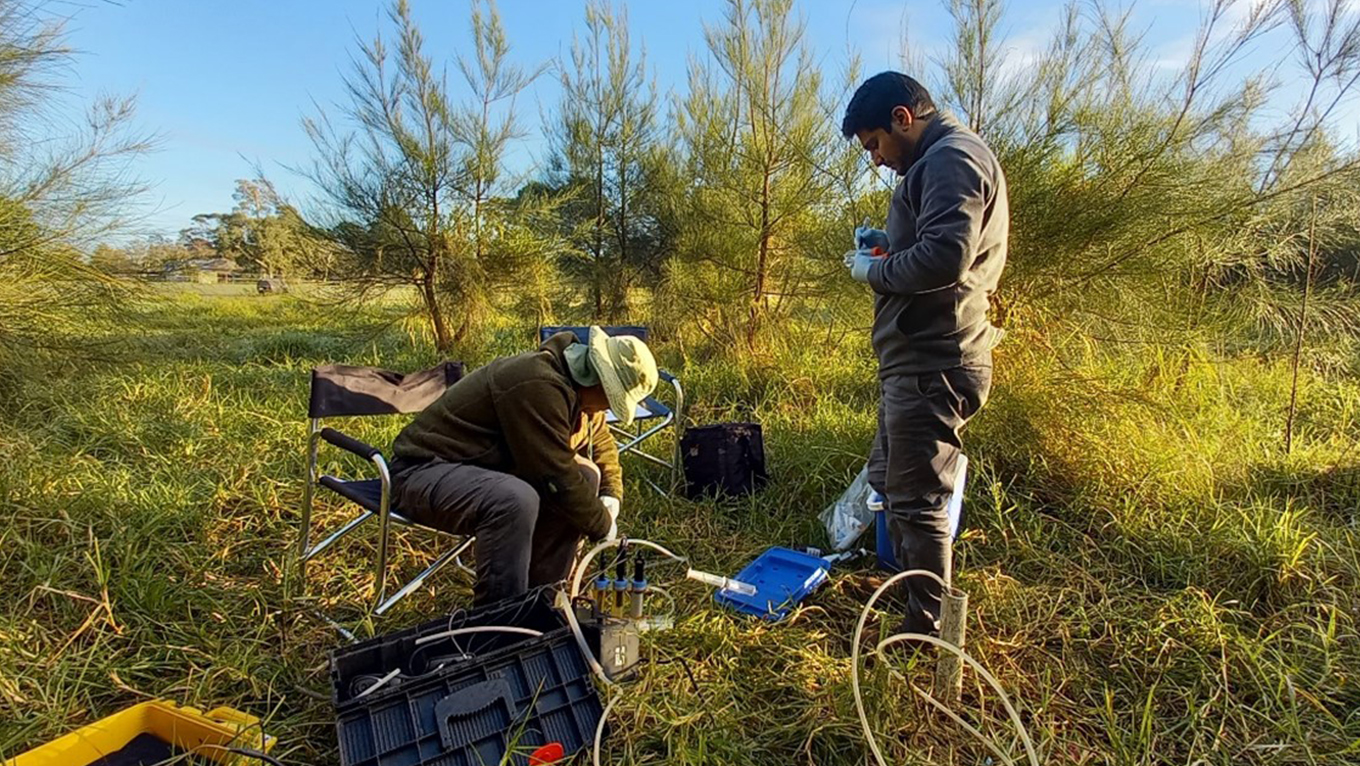
Image: : Dr. Mahmood Sadat-Noori (JCU) and Associate Professor Martin Andersen (UNSW) sampling groundwater quality including dissolved carbon dioxide and methane in a restored coastal wetland.
Focussing on the connection between surface water and groundwater, Dr Mahmood Sadat Noori is investigating how these interactions can influence the quantity and quality of water in wetlands and estuaries.
Mahmood is a Senior Lecturer in Civil Engineering with expertise on the interface between hydrology, water quality and environmental restoration. Using a wide range of techniques and technologies, Mahmood investigates the role that surface water and groundwater hydrology plays in transporting solutes such as carbon and nitrogen from and to coastal wetlands. These processes can have profound implications for the restoration of coastal wetlands, and blue carbon sequestration. Blue carbon is carbon that is stored in coastal wetlands. The results of this research will guide effective coastal wetland restoration and water quality management strategies.
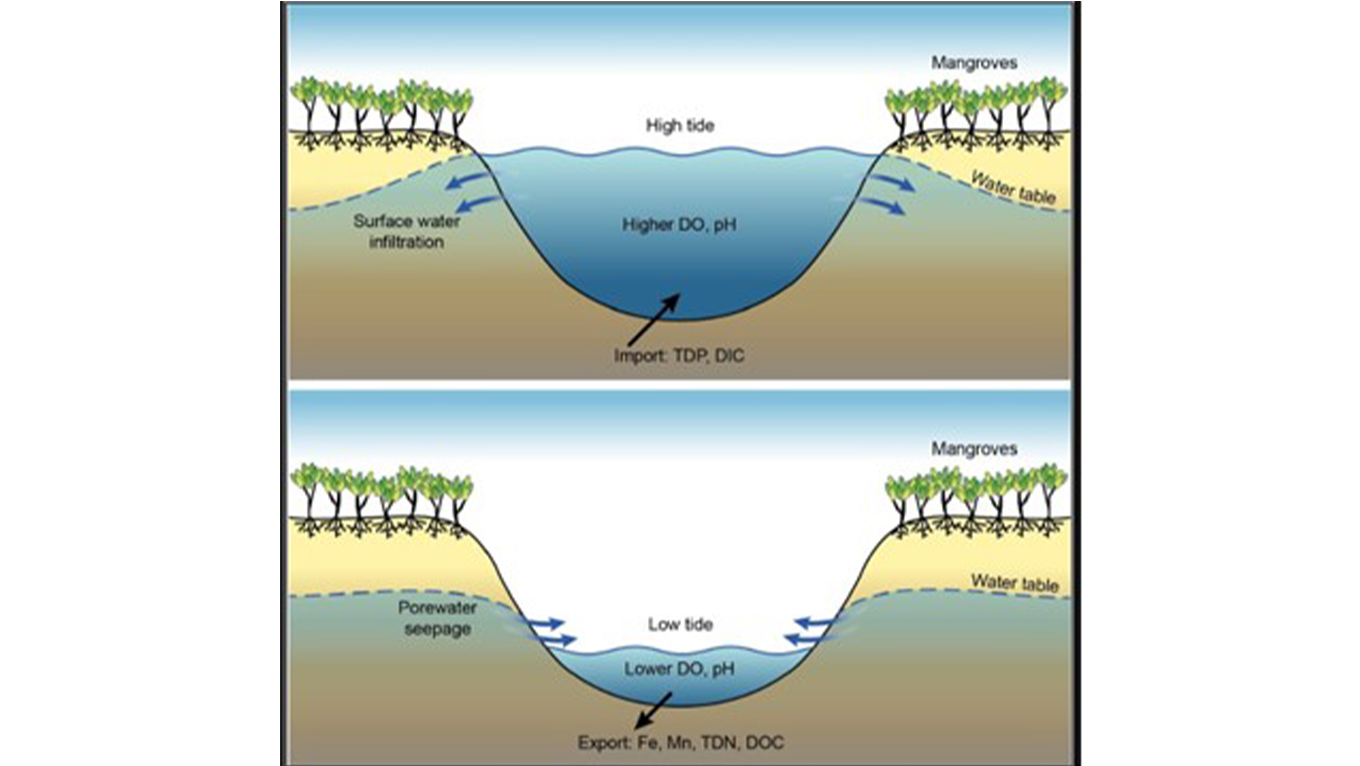
Image: Illustration of tidal dynamics driving surface water and groundwater fluxes of carbon and nutrients in a coastal wetland affecting its water quality.
“The time is fast approaching where local plans for sea level rise are required. If we cannot stop the sea levels rising then we will need to determine which low-lying areas we plan to save and which areas will become the next Atlantis; forever disappeared under the sea.”
Mahmood Sadat Noori
Mahmood recently led a successful coastal wetland restoration project at Koragang Island, NSW where a novel method was proposed to save vulnerable coastal wetlands from sea level rise. The part eco-engineering, part biomimicry work provides a nature-based solution to adaptively preserve existing coastal wetlands from sea level rise and restore wetlands already impacted by human actions. The novel method, if adapted, can save millions of hectares of Ramsar listed coastal wetlands of international importance worldwide.
Over the period of 2017 to 2023, with funding of $350,000, this project was a collaboration between the University of New South Wales, Newcastle Coal Infrastructure Group, the Port of Newcastle and the University of Newcastle.
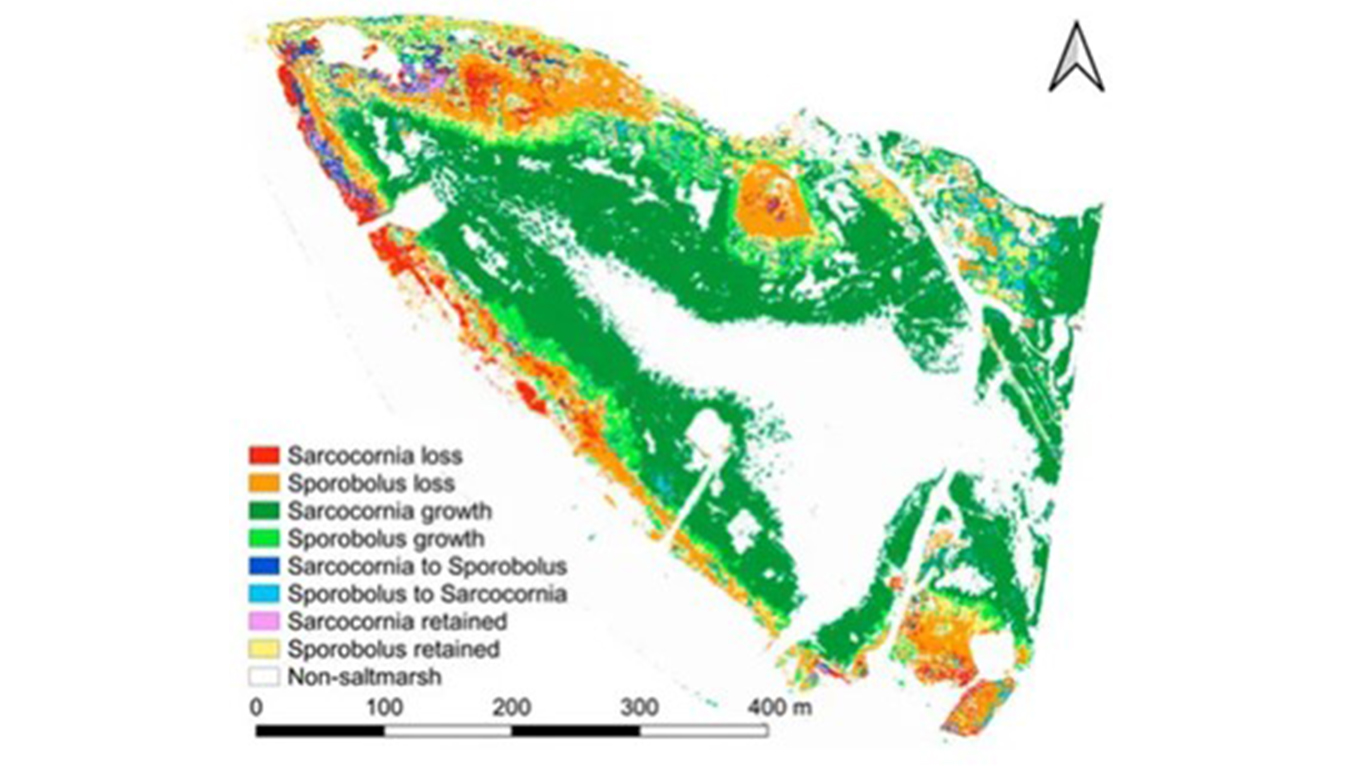
Image: Monitoring wetland restoration progress over time via regular drone surveys and classification of target vegetation species.
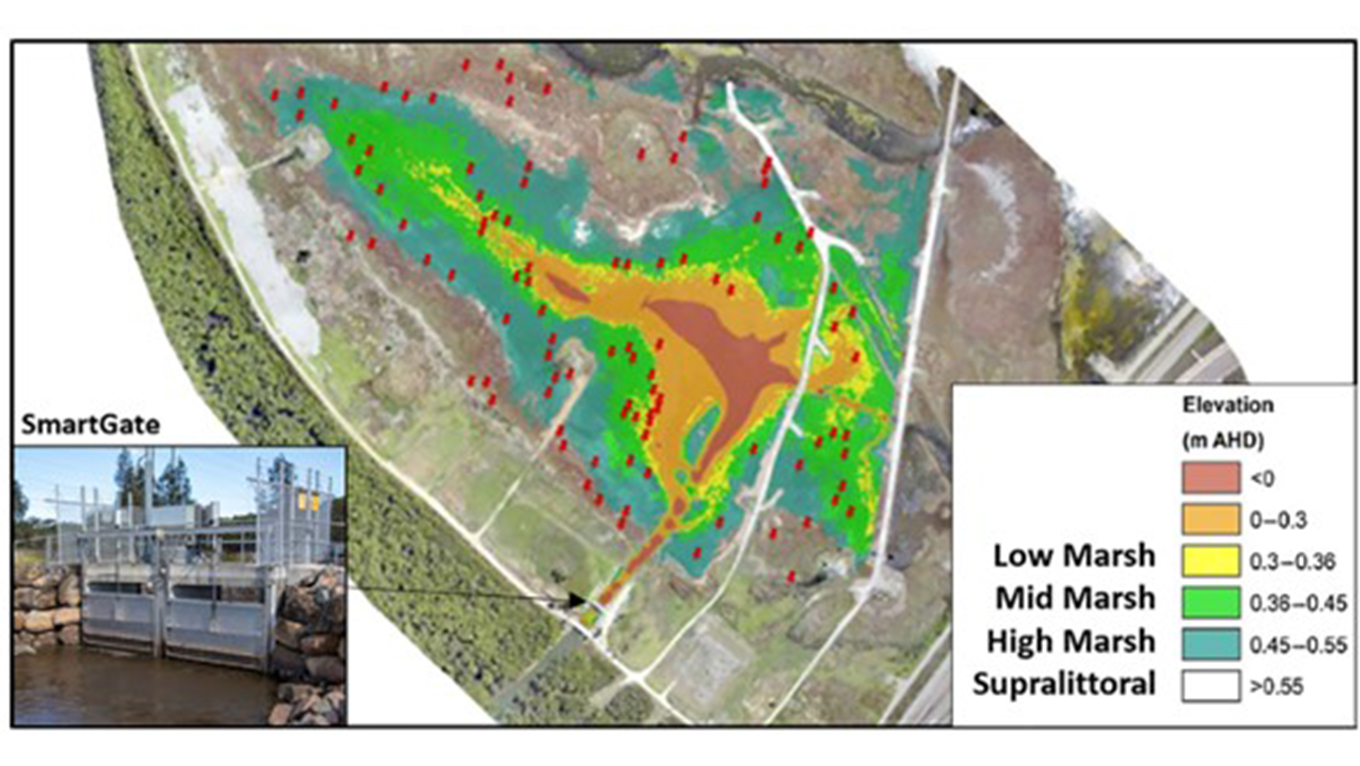
Image: A digital elevation model of the wetland undergoing restoration. The gates showed in the bottom left, allow controlling the water elevation at a desired depth at the wetland.
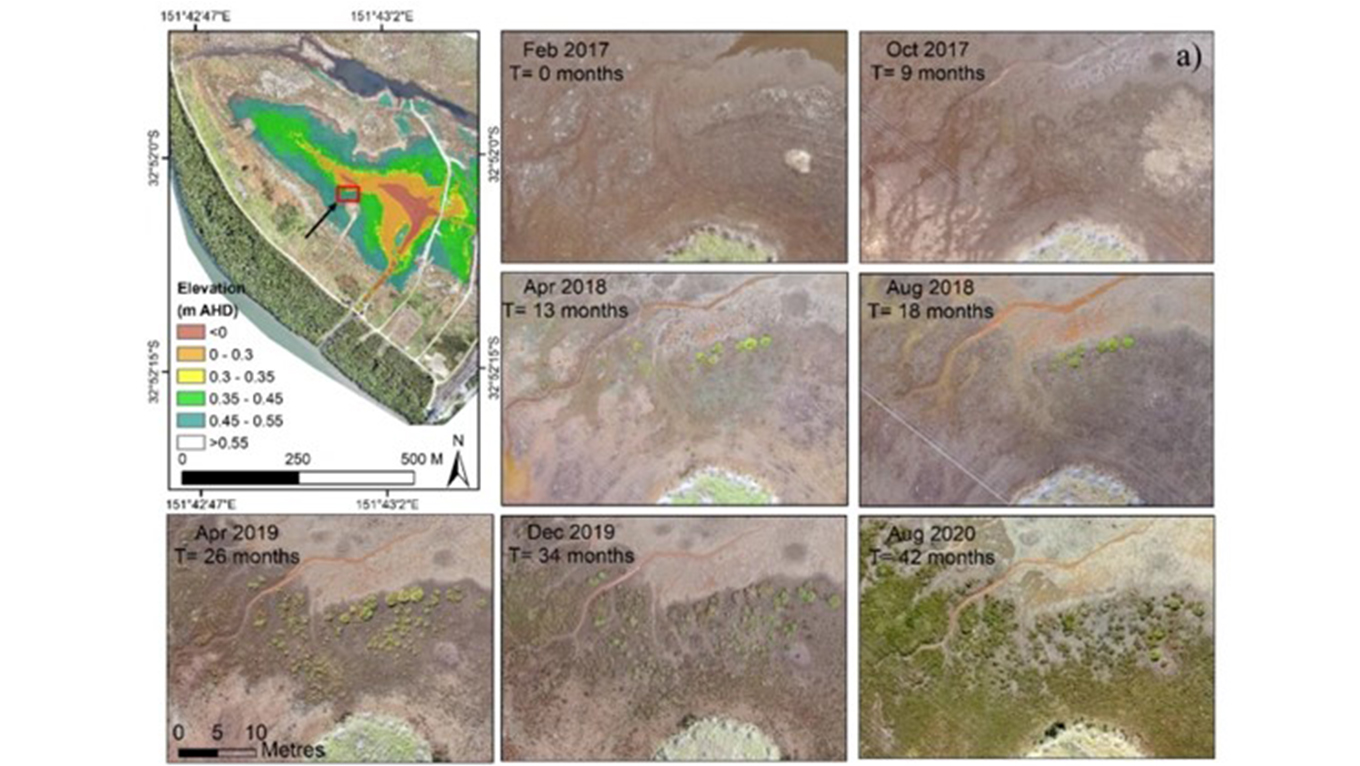
Image: Saltmarsh vegetation development over time after restoration based on aerial imagery. (Red box in the left-hand side map indicates the area zoomed and illustrated over time.)
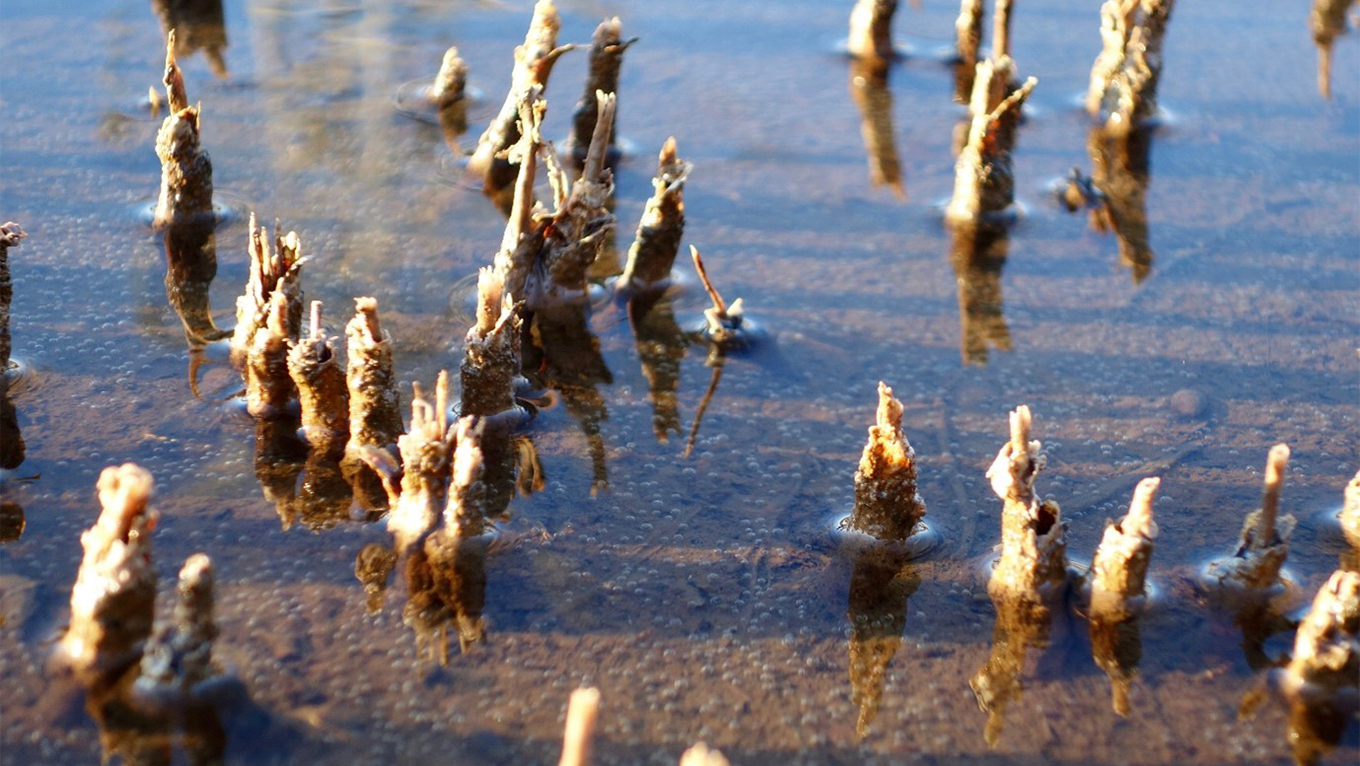
Image: Geochemical processes in the water column and sediments of a coastal wetland forming gas bubbles.
Contact details

Project Research Publications
- Coastal wetlands can be saved from sea level rise by recreating past tidal regimes.
- A comparison of radon, heat tracer and head gradient methods to quantify surface water-groundwater exchange in a tidal wetland (Kooragang Island, Newcastle, Australia)
- Porewater exchange drives trace metal, dissolved organic carbon and total dissolved nitrogen export from a temperate mangrove wetland.
- Innovative tidal control successfully promotes saltmarsh restoration
- Blue carbon ecosystem monitoring using remote sensing reveals wetland restoration pathways