
Technology keeping farmers on top of their game
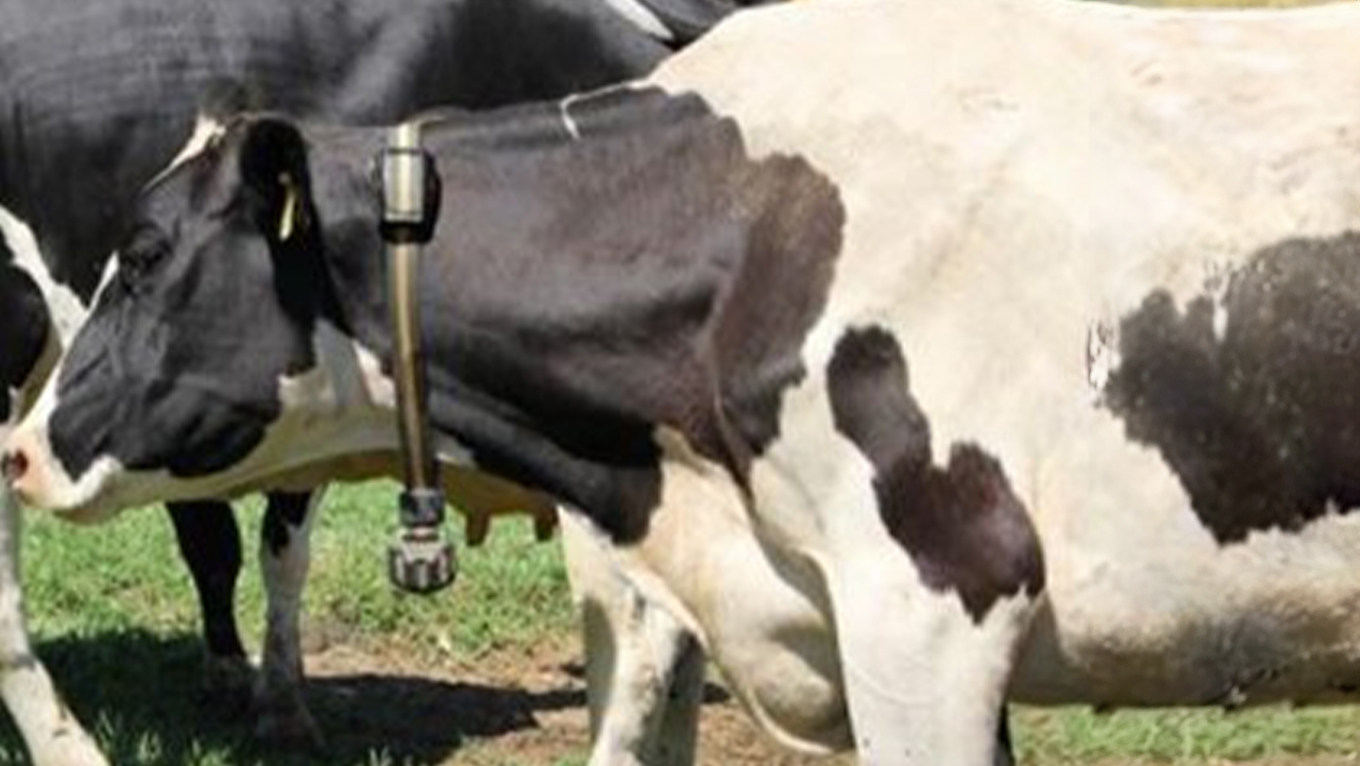
Image: Cows fitted with SCR collar which records rumination and activity level.
Dr Saranika Talukder, Lecturer in Animal Nutrition at the JCU College of Public Health, Medical and Veterinary Sciences, uses advanced tools and technologies to revolutionise animal management practices.
With a focus on Precision Farming and Technology, Saranika’s work spans various facets of precision farming, including enhancing animal health, optimising pasture and grazing management, and improving overall farm efficiency.
In her research, Dr Talukder has pioneered the use of precision farming technologies such as SCR collar tags for enhancing oestrus detection in dairy farms equipped with automatic milking systems. She has also leveraged infrared thermography to monitor animal health and welfare, and Ice tags to track grazing behaviours effectively. Furthermore, her studies include the development and implementation of early detection methods for calving and metabolic disorders, crucial for maintaining herd health and productivity.
“With the growth of the Australian dairy herd over the past 20 years, farmers are increasingly pressed for time to provide the individual attention required to monitor and detect animals that require assistance. These technologies, together with the development of early detection methods will allow farmers to focus on providing the care and resources required when individual cows are in need.”
Dr Saranika Talukder

In this first study, Saranika used infrared thermography (IRT) to capture thermal images of different body parts of 30 cows (eye, ear, muzzle and vulva). This was undertaken twice each day, after the morning and evening milking sessions. The data obtained was then used in conjunction with data on activity and rumination to provide a more accurate prediction of time of ovulation.
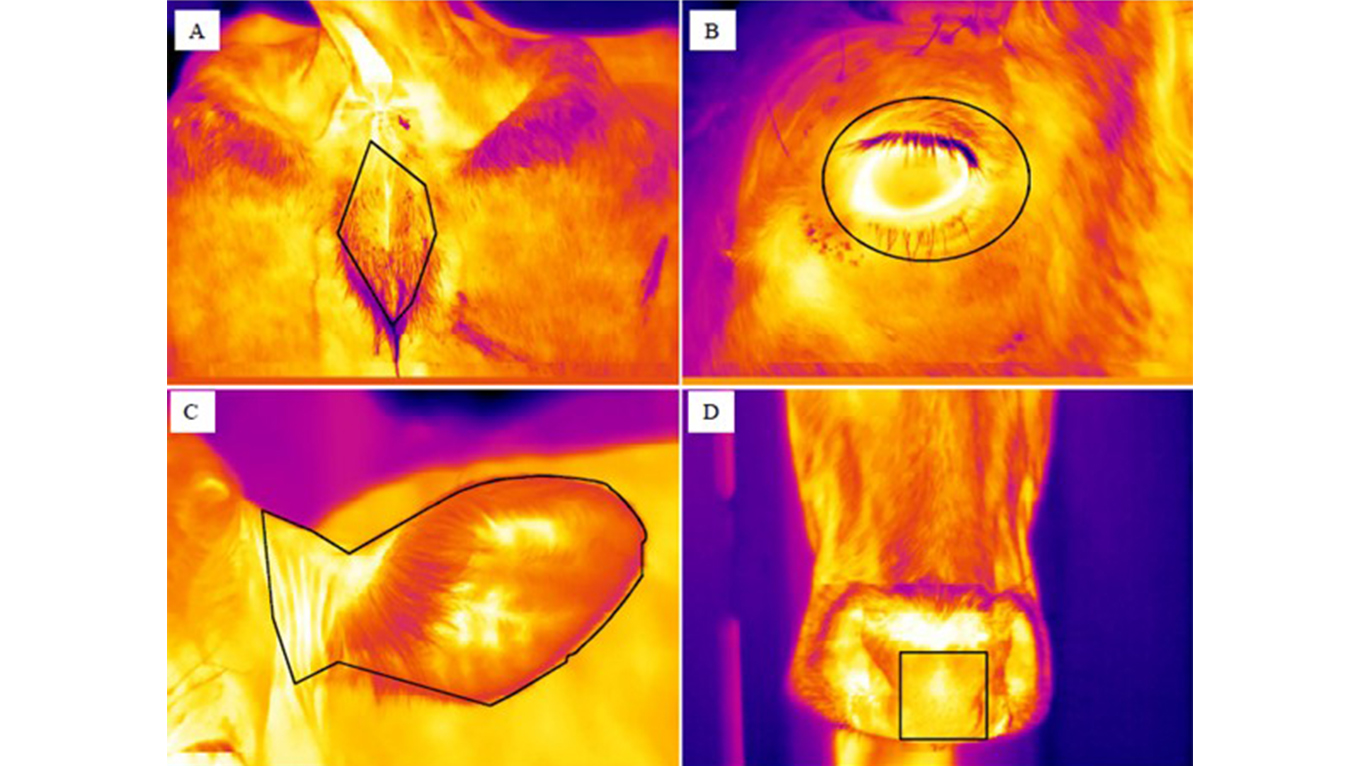
Image: Hand drawn area of vulva (A), eye (B), ear (C) and muzzle (D) which defined the temperature data area used by the support software. (https://pubmed.ncbi.nlm.nih.gov/25464865/)
The next study also used infrared thermography to capture thermal images of the feet of sheep, along with biomarkers of oxidative stress to diagnose foot lesions. It was discovered that infrared thermography temperature was higher and oxidative stress levels were also higher in rams with foot lesions compared with healthy rams.
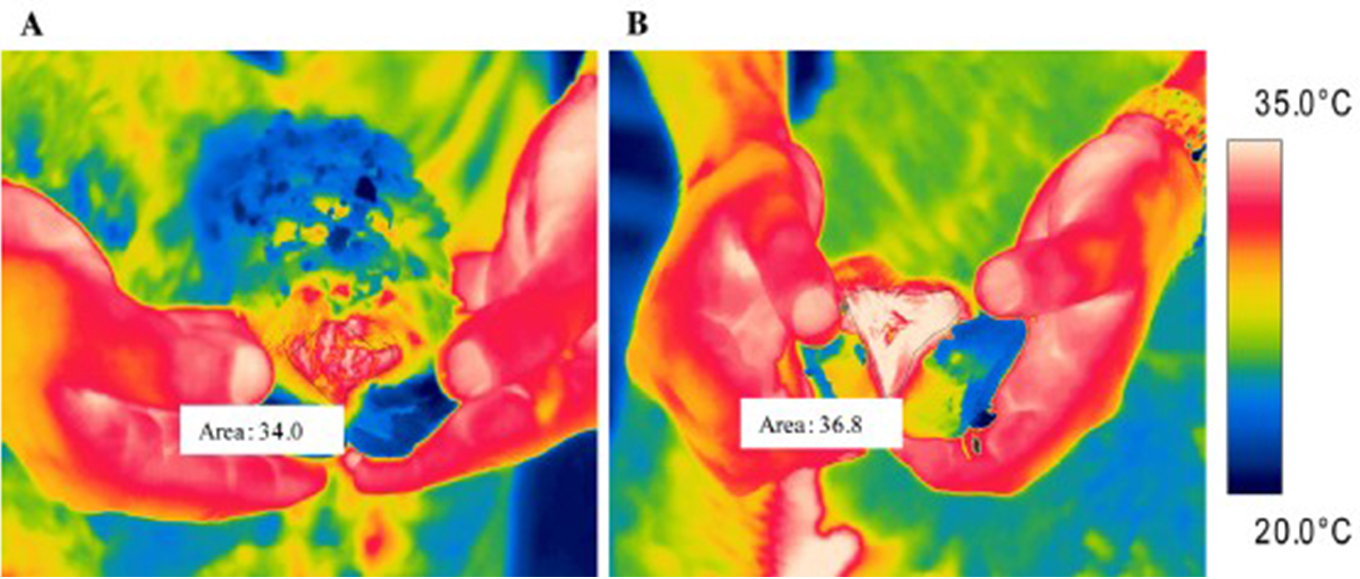
Image: Infrared camera images of interdigital space imaged from healthy (A) or with foot lesions (affected) rams (B). The polygonal shapes indicate the area of interdigital space along with the areas’ maximum temperature. (https://doi.org/10.1016/j.smallrumres.2015.04.006)
This study collected data from IceTag motion sensors on 29 lactating cows that were grazed in a pasture-based dairy production system. The experiment monitored and measured animal behaviour, including grazing, standing, walking and lying with the aim to predict grazing behaviour and improve animal production and welfare.
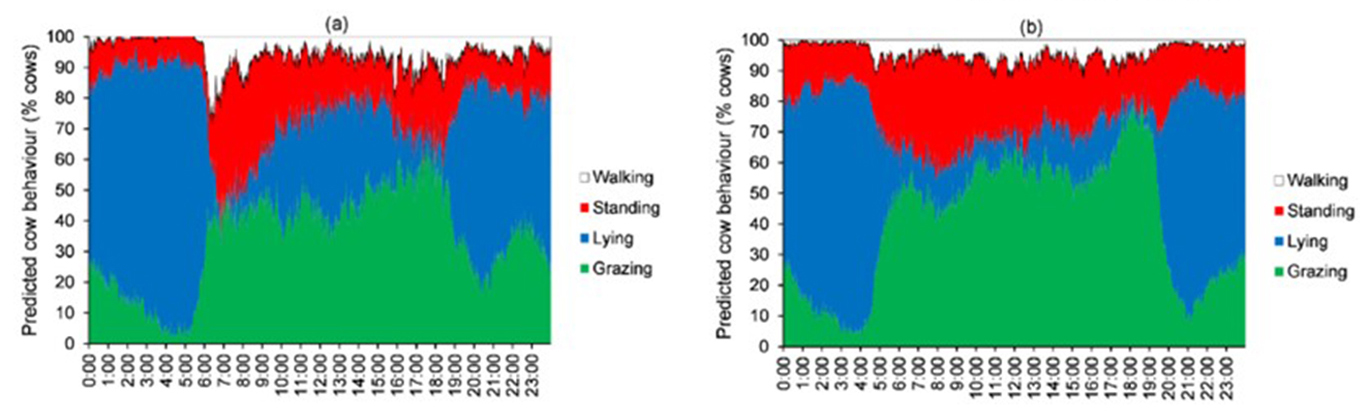
Image: Average percentage of cows with predicted grazing, lying, standing, and walking behaviour for each minute of the day in (a) September period (15 cows over 10 days) and (b) November (data from 13 cows over 20 days) in a pasture-based AMS. Times are shown in Australian Eastern Standard Time. Sunrise and sunset times were 06:15 and 18:08 in September and 05:00 and 19:03 in November. (https://doi.org/10.3390/dairy4010009)
These initial research projects were kindly supported by the dairy farmers and their staff and funded by FUTUREDAIRY, The University of Sydney and The University of Melbourne, and took place between 2011 to 2015 and 2020 to 2022.
Contact details


Project Research Publications
- Development of Thresholds to Predict Grazing Behaviour of Dairy Cows from Motion Sensor Data and Application in a Pasture-Based Automatic Milking System
- Impact of heat stress on dairy cow rumination, milking frequency, milk yield and quality in a pasture-based automatic milking system
- Rumination and activity levels as predictors of calving for dairy cows
- Rumination patterns, locomotion activity and milk yield for a dairy cow diagnosed with a left displaced abomasum
- Evaluation of infrared thermography body temperature and collar-mounted accelerometer and acoustic technology for predicting time of ovulation of cows in a pasture-based system
- Infrared technology for estrus detection and as a predictor of time of ovulation in dairy cows in a pasture-based system
- The use of digital infrared thermography and measurement of oxidative stress biomarkers as tools to diagnose foot lesions in sheep