
Working towards Net Zero
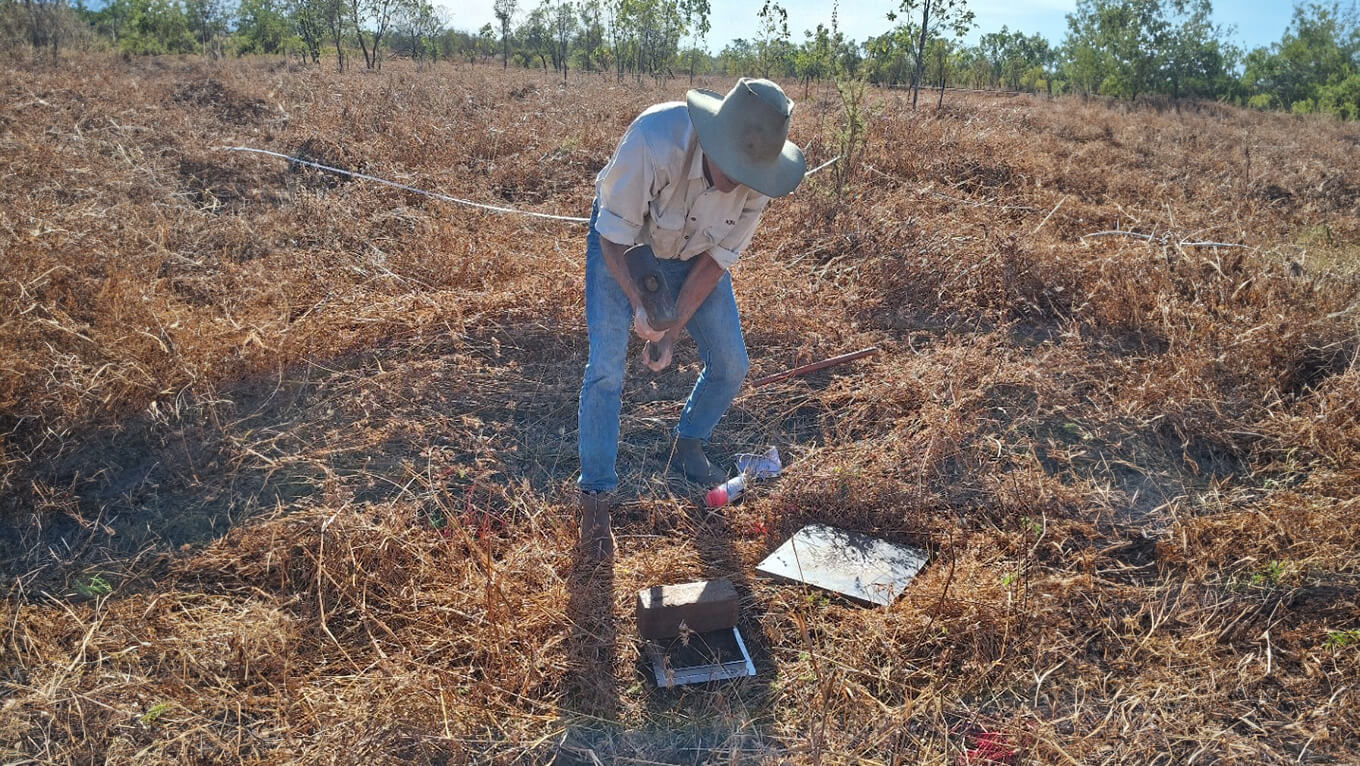
Image: Paul Nelson sampling soil in an enhanced weathering trial in grazed savanna. Photo credit: Vanessa Goggin
As part of an international effort to assess promising negative emission technologies, Paul Nelson and his team of researchers are conducting trials on several farms in North Queensland.
These trials are investigating whether applying crushed basalt and mill ash to the soil could enhance production whilst removing carbon dioxide from the atmosphere and improve water quality leaving the farm.
“Enhanced weathering is a promising carbon dioxide removal technology that is being increasingly investigated as a negative emissions technology and for its commercial potential in carbon markets. We are investigating techniques that may enhance production, whilst removing carbon dioxide from the atmosphere and improve water quality and runoff, which benefits the Great Barrier Reef.”
Paul Nelson
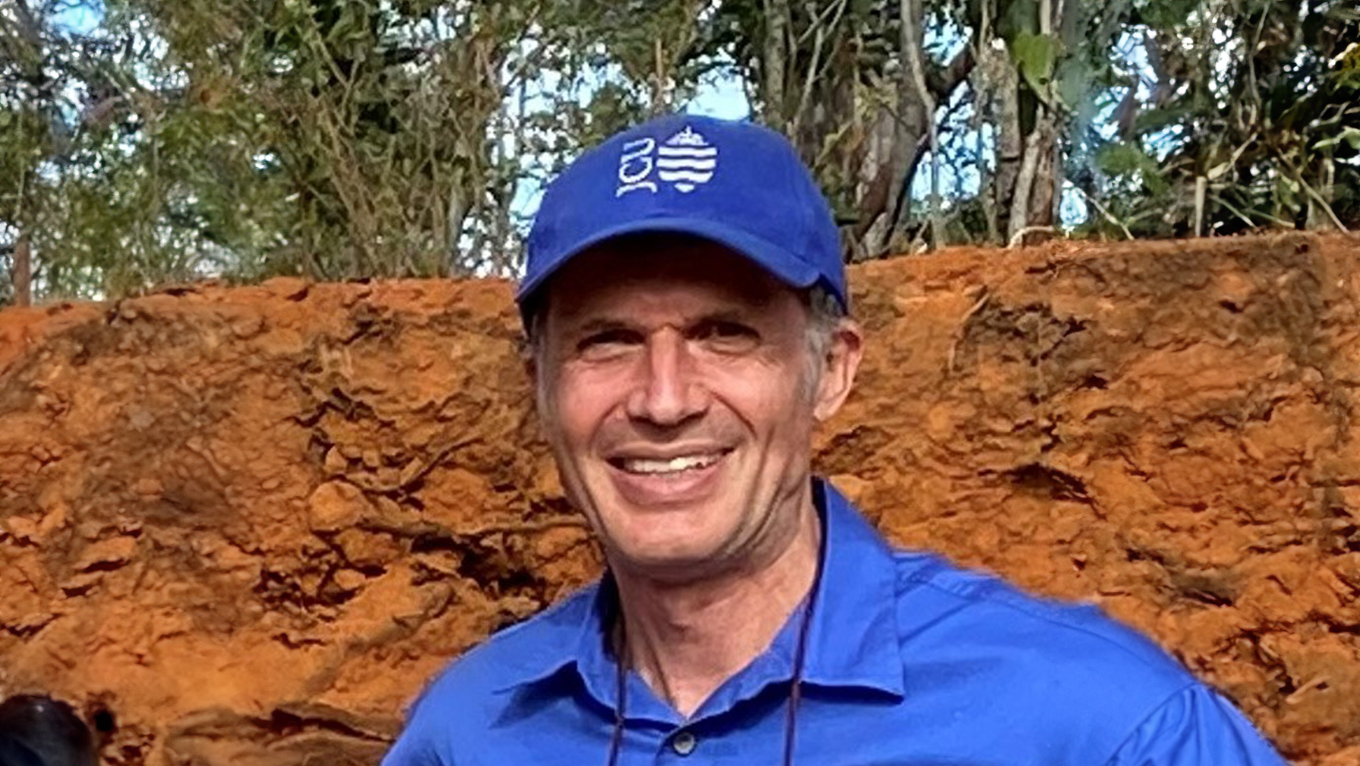
In Australia, the sugarcane industry generates approximately $2 billion in export earnings each year. Enhancing production, improving runoff, reducing greenhouse gas emissions, creating carbon sequestration benefits and improving water quality are outcomes that could be achieved through these investigations. This research is in collaboration with the Leverhulme Centre for Climate Change Mitigation, which is running large-scale field trials in Australia, the US Midwest and Malaysian Borneo, UNDO Carbon, a company implementing enhanced rock weathering globally, and with Sugar Research Australia, Wilmar Sugar, and Consolidated Pastoral Company.
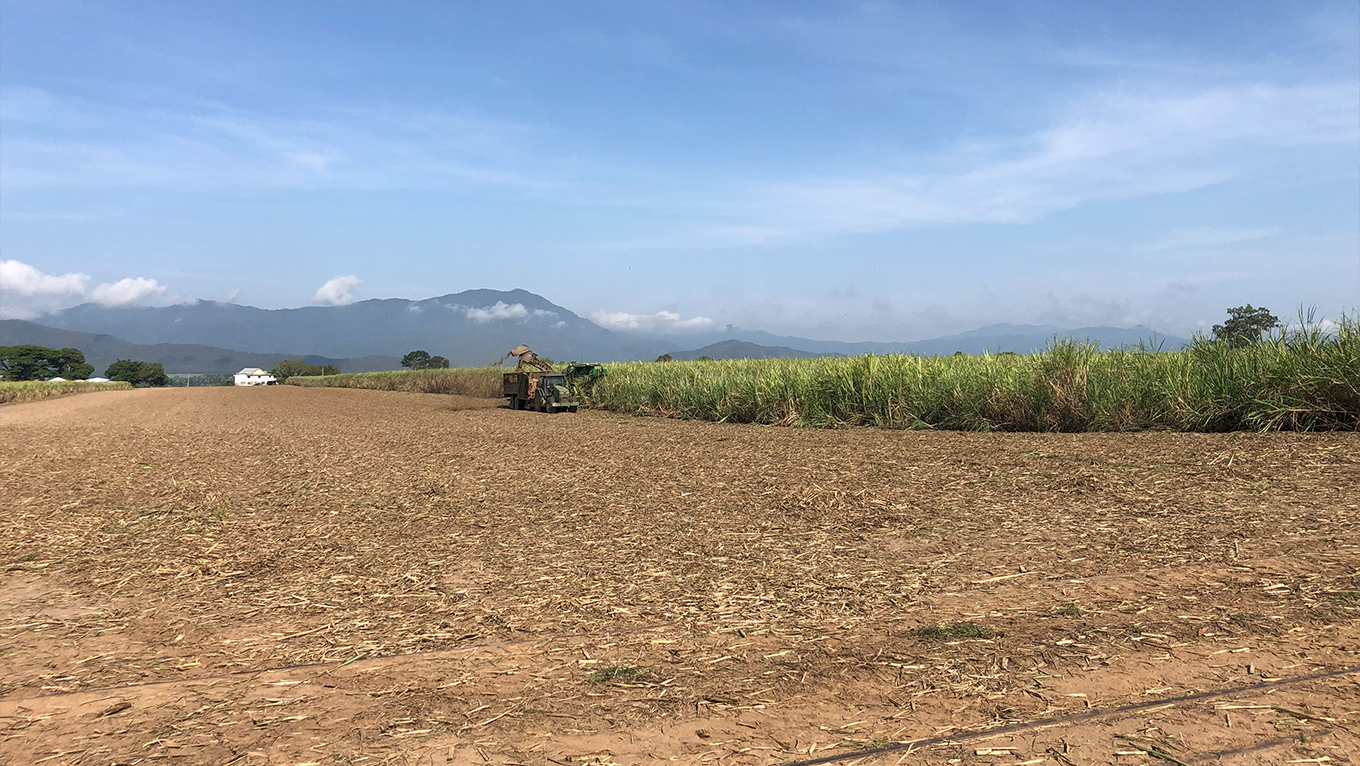
Image: Harvester in sugarcane field. Photo credit: Fred Holden.
A member of Paul’s research team, Fred Holden, is exploring the effects of soil type and management on the removal of carbon dioxide through weathering of crushed basalt applied to acidic soil under sugarcane.
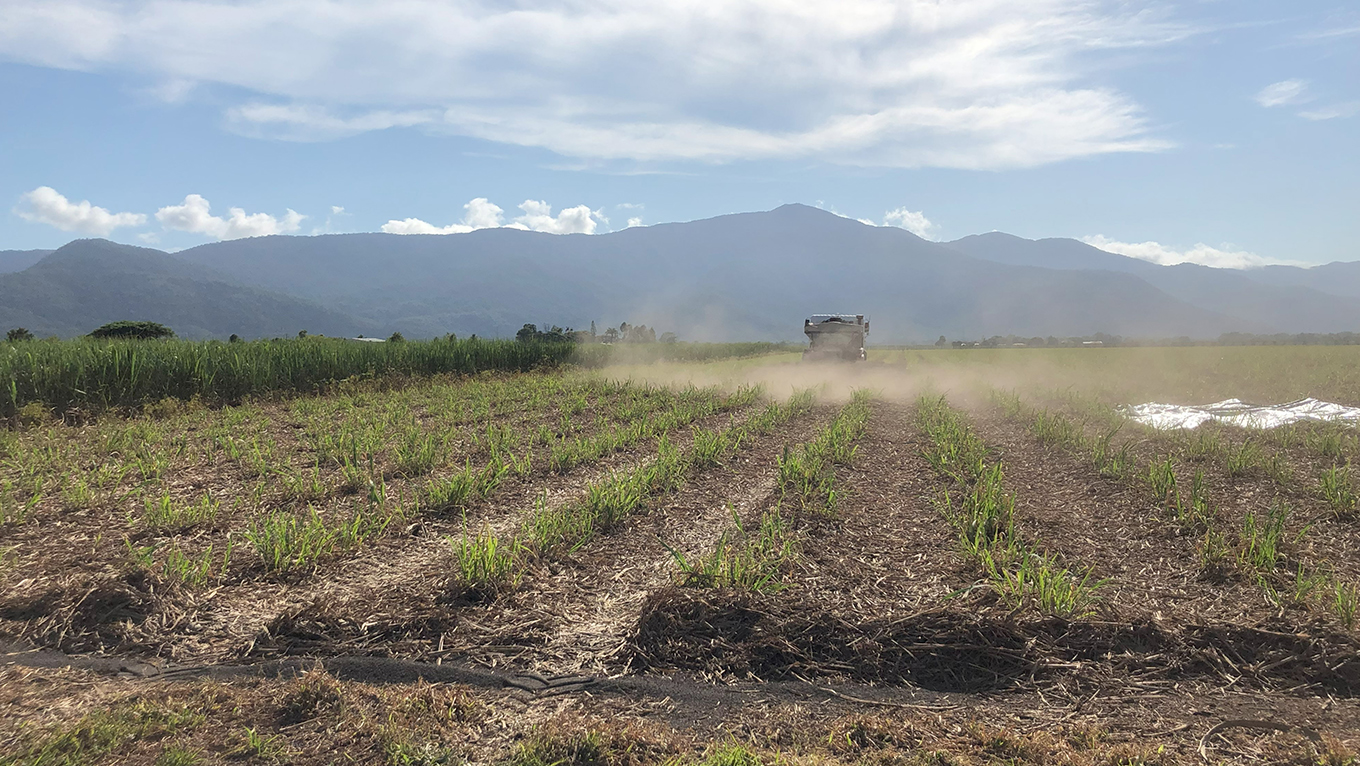
Image: Treatment application - Spreading crushed basalt over sugarcane. Photo credit Fred Holden.
This research measured in-field carbon dioxide removal via enhanced weathering of basalt following five years of application to a sugarcane crop and studied the mechanisms influencing its efficacy.
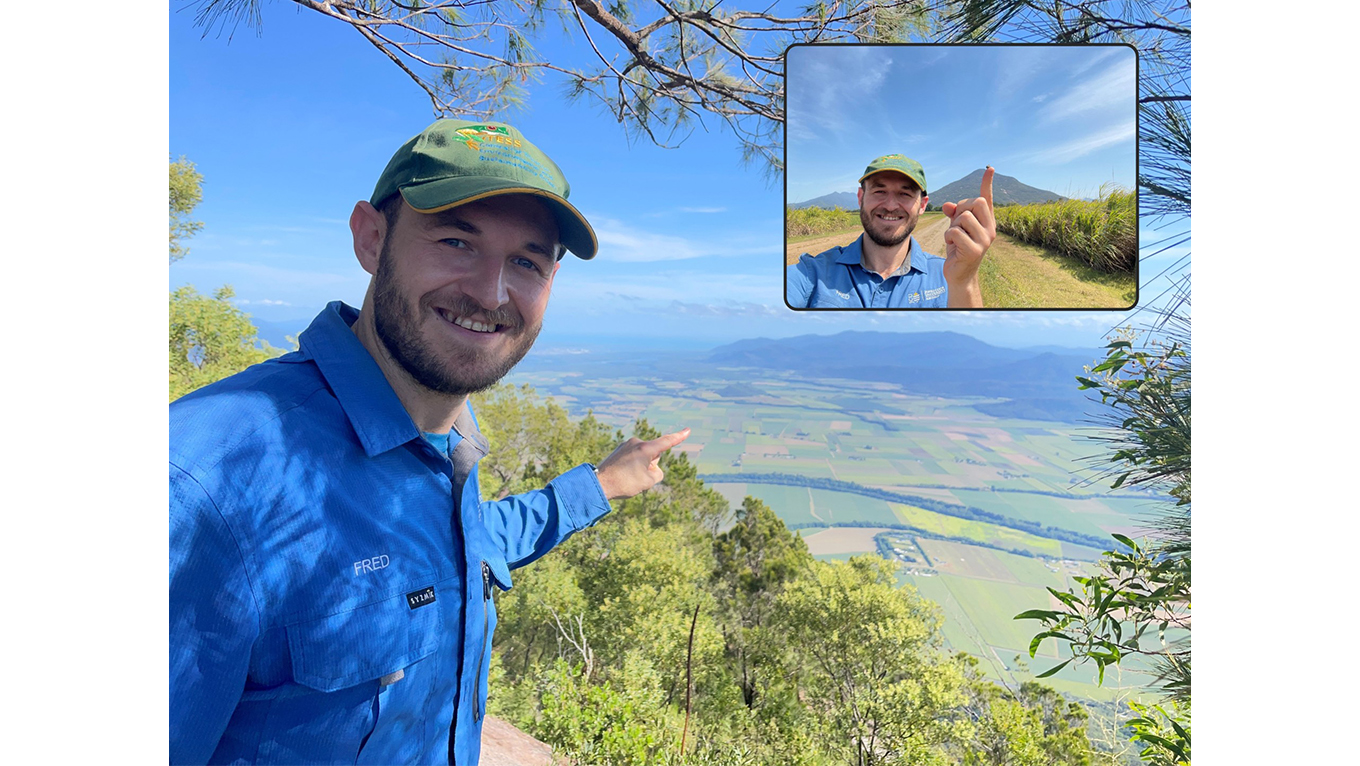
Image: Fred Holden showing two perspectives on the basalt field trial site. Photo credit: Fred Holden.
Hannah Green, another member of the team, has undertaken a geochemical modelling study of the potential for carbon dioxide removal via weathering of sugar mill ash applied to soil with different pH and carbon dioxide concentrations. The research showed that mill ash has substantial potential for carbon dioxide removal via weathering compared to the application of crushed basalt. Potential was greatest where soil pH is ~6.5 and carbon dioxide concentrations are high. Hannah is also carrying out a field trial in collaboration with Wilmar, and detailed laboratory studies.
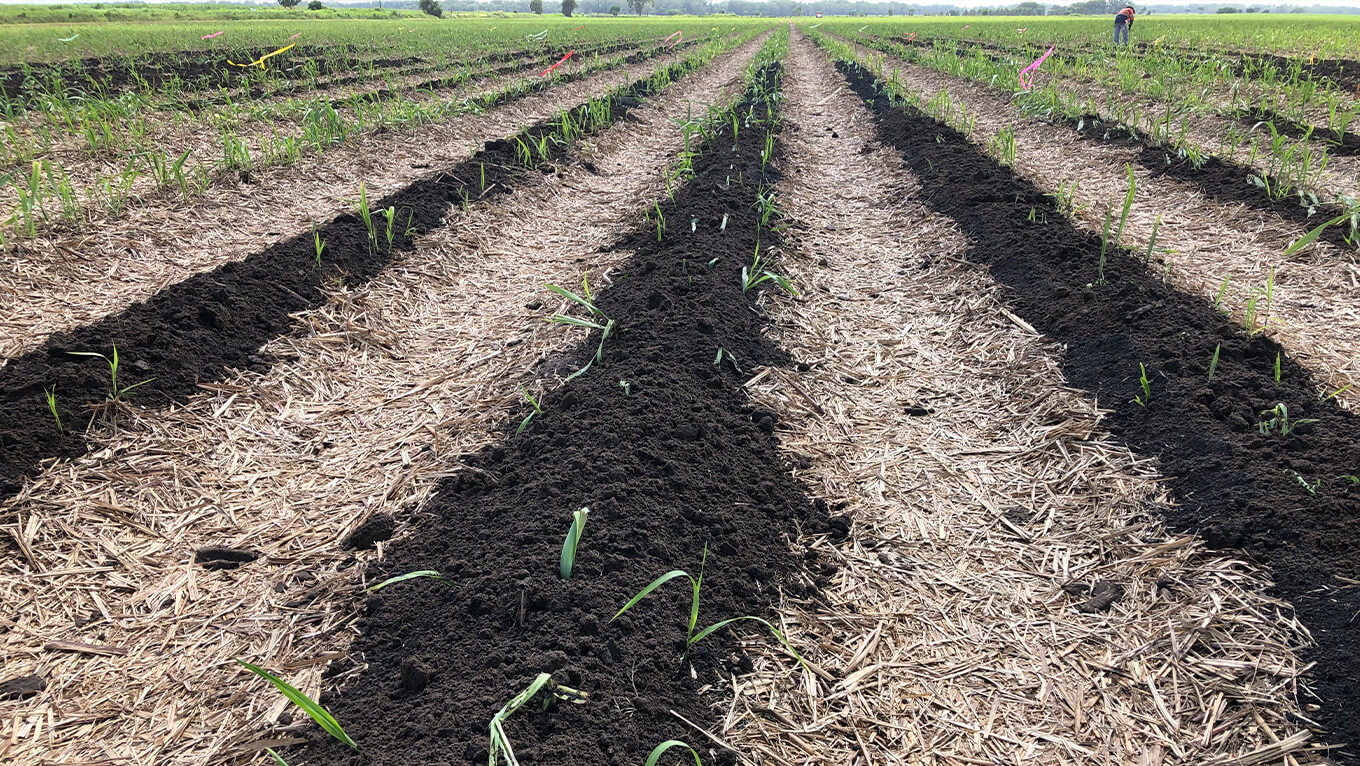
Image: The field trial on a sugarcane farm at Helens Hill soon after the application of mill mud and ash treatments.
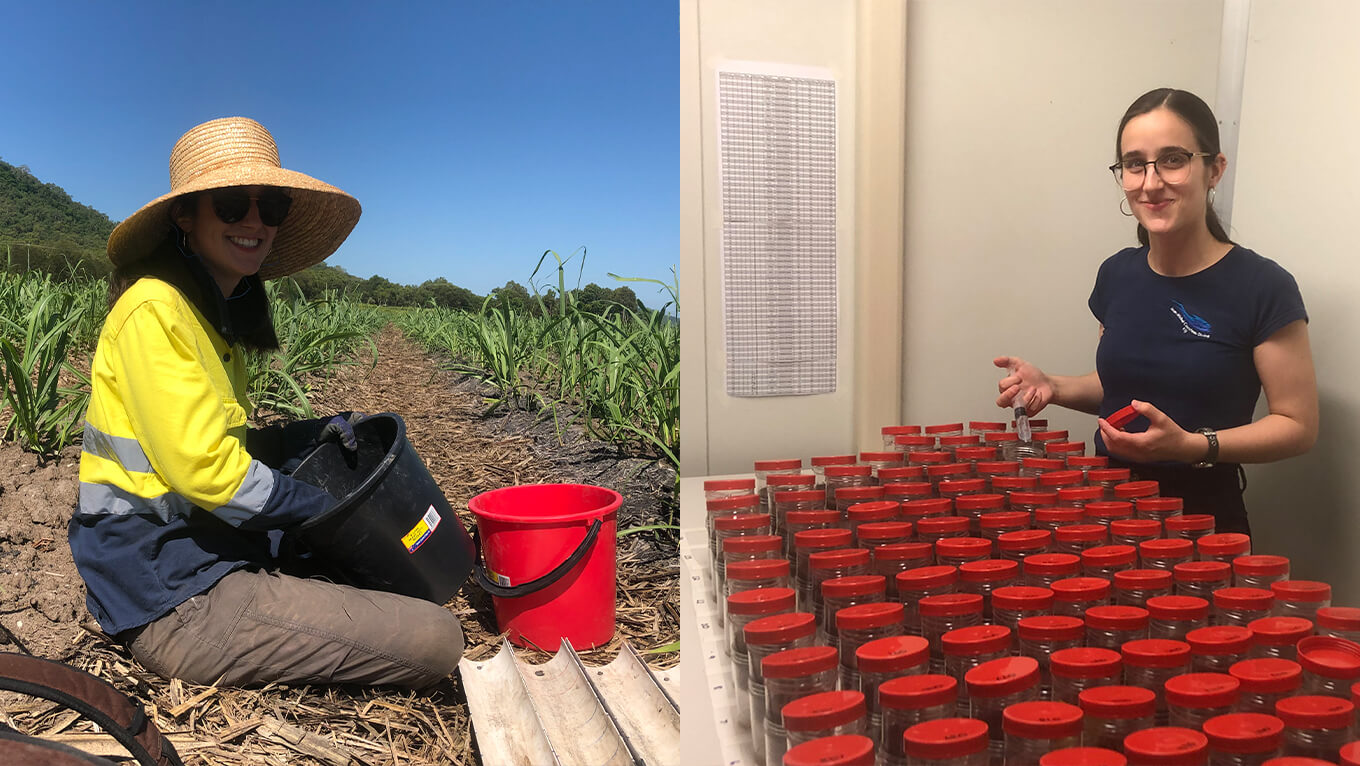
Image left: Hannah soil sampling at the field trial at Helens Hill, in the middle of mixing and homogenising soil samples in a bucket. Image right: Hannah running the laboratory experiments.
Enhanced weathering for carbon dioxide removal research is expanding with a new trial underway in north-west Queensland. This trial will test the effectiveness of enhanced weather for capturing carbon dioxide in dry tropical rangelands and is being undertaken in collaboration with Consolidated Pastoral Company on their Wrotham Park station west of Chillagoe.
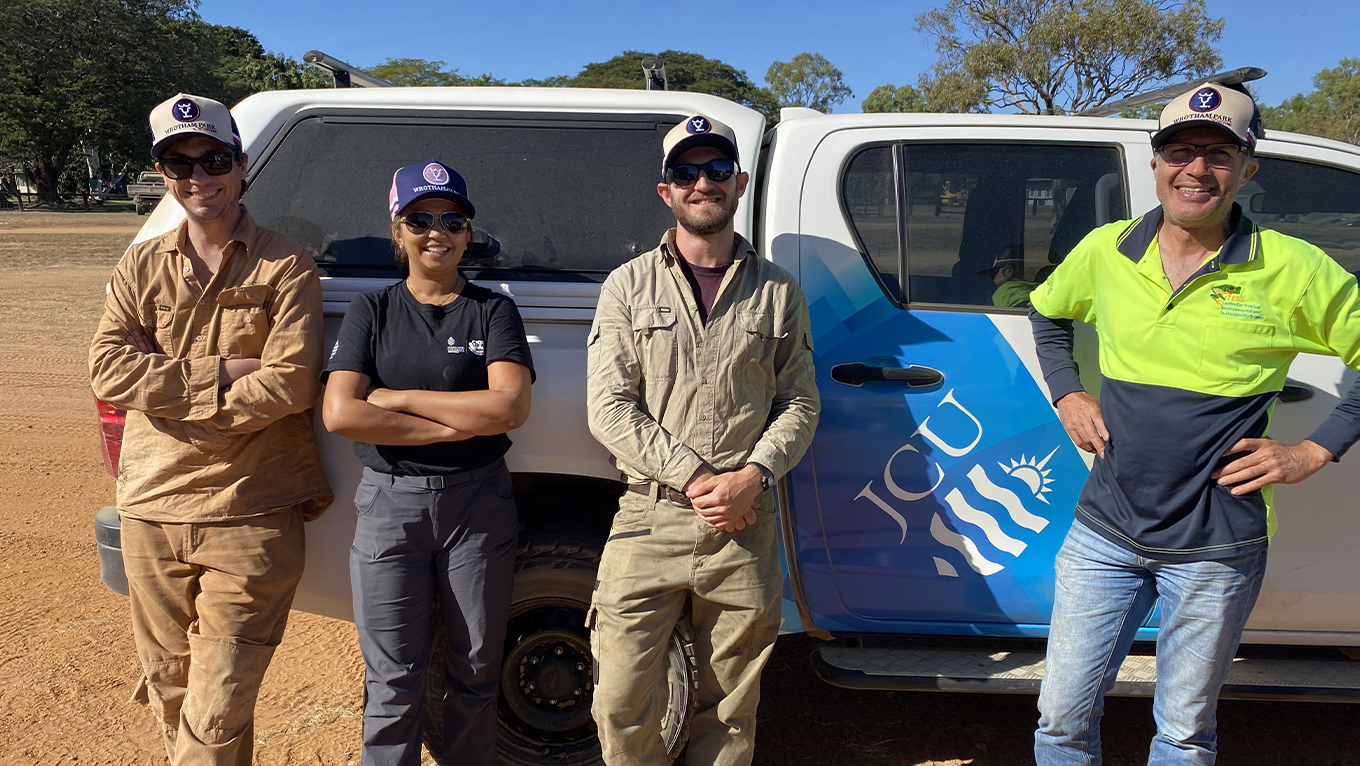
Image: JCU students Ben Krause and Vanessa Goggin, and staff Fred Holden and Paul Nelson, who established a new enhanced weathering field trial on Wrotham Park station, together with Consolidated Pastoral Company’s Amanda Neilen. Photo credit: Amanda Neilen.
Another field experiment is being established on campus at James Cook University Cairns. This experiment will examine the effect of soil conditions on carbon capture via enhanced weathering. The team has installed drainage flux meters to measure the capture of inorganic carbon making its way through the profile and have applied all the treatments. Planting the experiment site with sugarcane is the next step, and when the wet season arrives the team will measure the results.
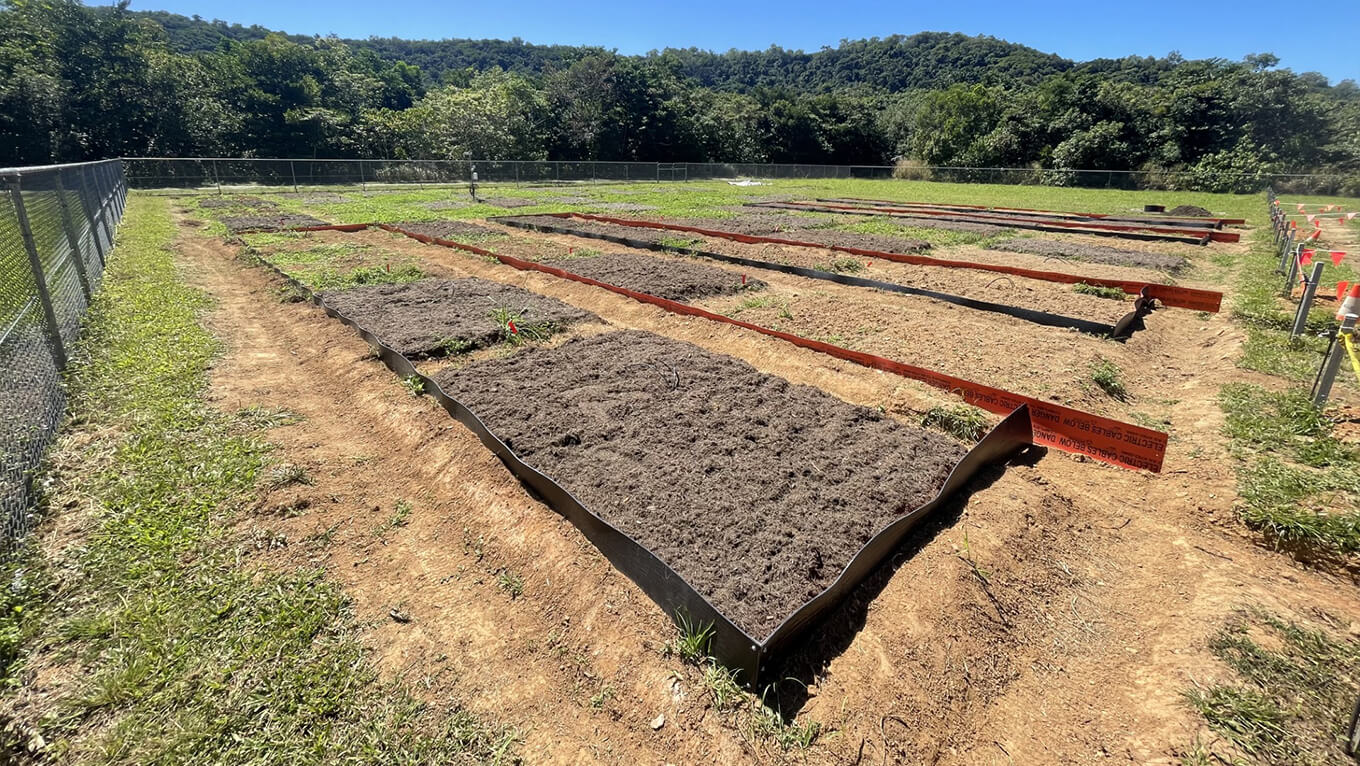
Image: Establishing new enhanced weathering field experiment on JCU Cairns campus, in collaboration with UNDO Carbon. Photo credit: Fred Holden
Contact details


Project Research Publications
- Nitrogen fertiliser rate but not form affects the severity of Fusarium wilt of banana.
- In-field carbon dioxide removal via weathering of crushed basalt applied to acidic tropical agricultural soil.
- Carbon dioxide removal via weathering of sugarcane mill ash under different soil conditions.