Education
Education and teaching at the Daintree Rainforest Observatory
The Daintree Rainforest Observatory offers a unique environment for field-based learning, teaching, and immersive education experiences. Located near Cape Tribulation in the heart of the Daintree Rainforest, the station provides direct access to one of the world’s oldest tropical rainforest systems, where students can learn within an active research landscape.
We welcome university field courses, high school groups, specialist training programs, and educational workshops from both Australia and overseas. Programs can be tailored to suit your goals—whether that involves using the DRO as a base for your own teaching, participating in station-led activities, or combining both approaches.
The observatory combines teaching facilities with direct access to the surrounding rainforest environment. On site, groups have access to a lecture theatre for presentations and workshops, indoor laboratory spaces equipped for practical teaching and sample processing, including microscopes, balances, glassware, and fume hoods, as well as outdoor laboratory areas suited to field-based and aquatic work.
The surrounding landscape becomes part of the classroom itself, with rainforest walking tracks, creeks, man-made wetlands, and long-term ecological monitoring infrastructure providing opportunities for hands-on learning across ecology, biology, environmental science, and conservation. Long-term meteorological and research datasets collected at the station also provide valuable teaching and research opportunities.
A highlight for many visiting groups is the 47-metre canopy crane, which offers a rare opportunity to experience the rainforest from above and observe the structure and ecology of the canopy firsthand.
Groups may visit for a single day or stay on site to make full use of the station’s accommodation, teaching spaces, and surrounding environment. The nearby beaches of Cape Tribulation and access to the Great Barrier Reef further expand opportunities for integrated field-based learning in one of Australia’s most remarkable natural settings.
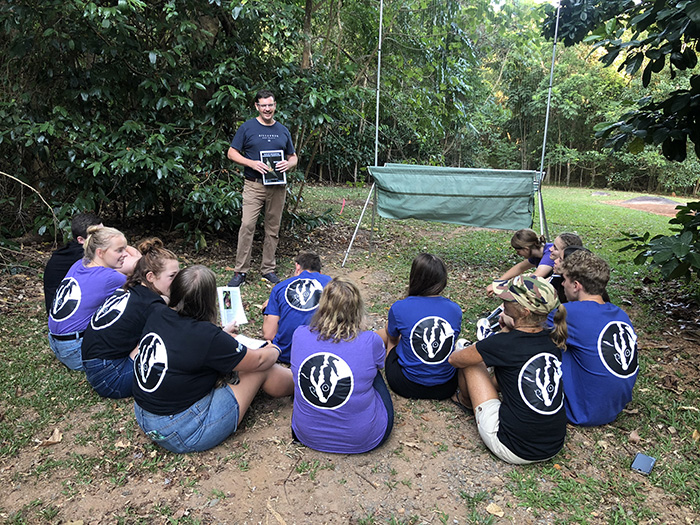
The DRO welcomes High School classes (Years 10–12), university groups, as well as educational tour groups. We offer a special discounted accommodation rate to local High Schools.
Groups are welcome to run their own activities at the station or take part in DRO-led programs, which connect students directly with authentic rainforest science.
Local High Schools may also book our Unit 3 Biology – Classroom in the Rainforest program, which delivers the three mandatory practicals required by the Queensland Biology curriculum.
Currently the Daintree Rainforest Observatory offers several activities:
- Rainforest Restoration
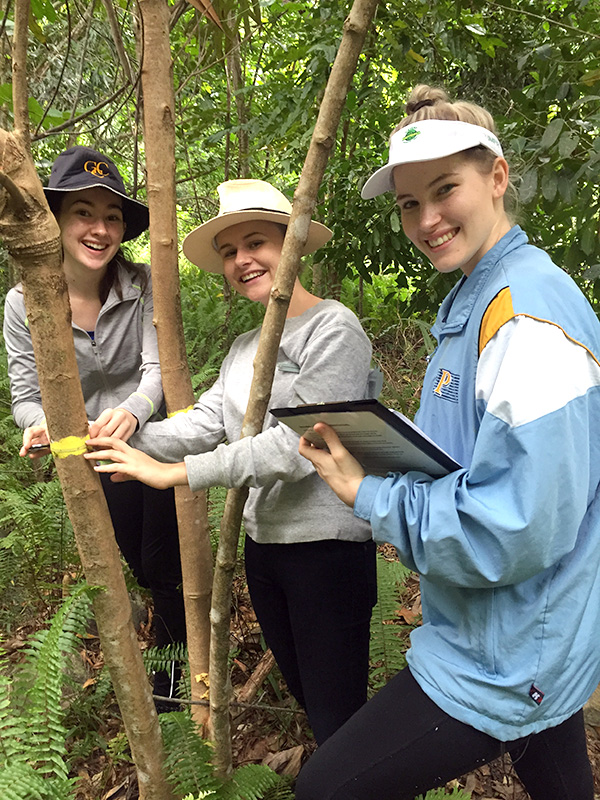
Students contribute to a long-term restoration project by measuring tree height, diameter at breast height, and overall tree health in our revegetation plot. These data are incorporated into real research, giving students a tangible role in ongoing science. Depending on the time of year and seedling availability, groups may also plant native trees to directly support rainforest regeneration. This activity promotes awareness of rainforest restoration and its importance for biodiversity, wildlife corridors, erosion control, and carbon storage.
- Aquatic Invertebrate Sampling
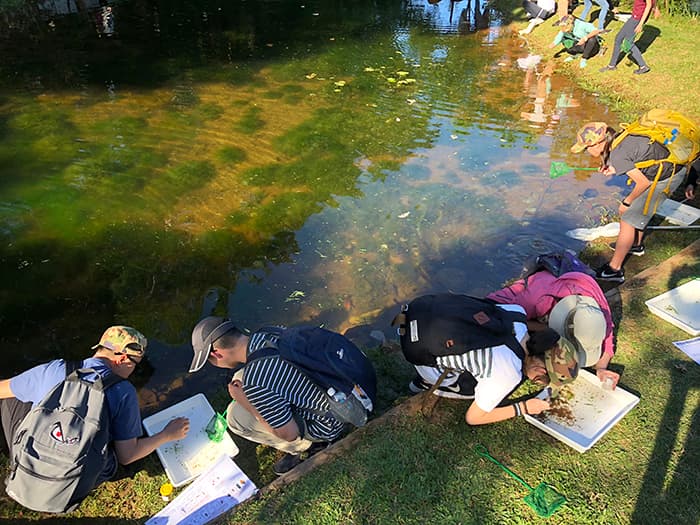
This hands-on activity is consistently one of the most engaging for visiting students. Working at our pond, students collect aquatic invertebrates and examine them under microscopes in our outdoor laboratory. Using identification keys, they calculate a SIGNAL 2 score to assess water quality. The pond is now home to an increasing diversity of wildlife, including native frogs, tadpoles, gudgeons, eels, and crayfish — making each sampling session a lively exploration of freshwater ecology.
Spotlighting & Nocturnal Ecology

At night, the rainforest reveals an entirely different community of species. With spotlights and insect light sheets, students may encounter bandicoots, melomys, frogs, reptiles, and microbats. Spectacular highlights can include Boyd’s forest dragons, glowing bioluminescent fungi, and fireflies. Occasionally, rarer animals such as striped possums or Bennett’s tree kangaroos may also be observed. This activity immerses students in rainforest biodiversity while emphasising ecological interactions and adaptations.Canopy Crane Tours

The canopy crane offers a rare chance to explore the rainforest from above. Students are lifted into the treetops in a gondola, guided by experts who explain the structure, species, and interactions of the canopy. This perspective brings rainforest stratification and biodiversity into vivid focus, combining education with an unforgettable experience.Lectures
Groups can also book lectures delivered by DRO and JCU staff, tailored to biology and ecology. Topics include rainforest biodiversity and ecology, conservation and invasive species, and the biology and evolution of tree kangaroos.
Looking for an easy way to cover the three mandatory practicals for QCAA Unit 3 Biology? At the DRO, students complete all three in one visit — freshwater macroinvertebrates, rainforest transects, and arthropod sampling — while immersed in a real rainforest research station. Learn more
Are you one of the lucky ones to be studying at JCU? Please click here to see which undergraduate courses have run at the Daintree Rainforest Observatory in the past.
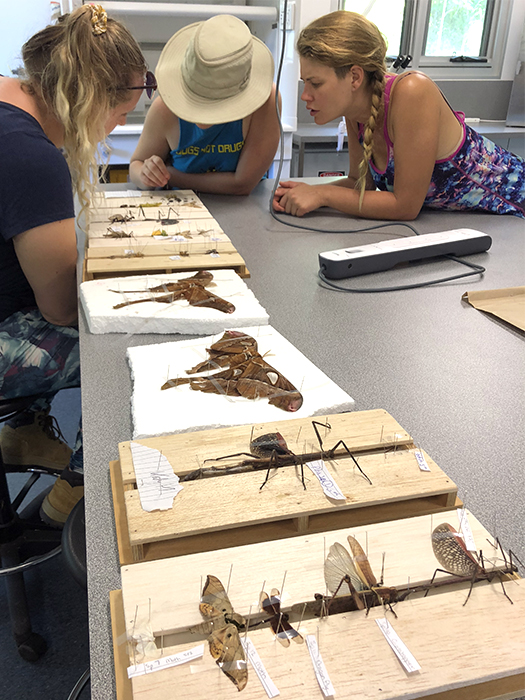
The Daintree Rainforest Observatory is the perfect location for running undergraduate courses, university conferences, and educational workshops. If you are looking for a fully immersive, unique, off-the-grid experience, then our field station could be perfect for your intensive course work, or educational event.
Please contact DRO staff to discuss how we can help you organize the field trip of a lifetime.