
Australian Institute of Tropical Health and Medicine Our impact AITHM Stories Battling dengue with mosquitos and math
Battling dengue with mosquitos and math
- MRCMHR
- Future Students
- JCU Global Experience
- International Students
- Student experience
- Open Day
- How to apply
- Pathways to university
- Living on Campus
- Courses
- Publications
- Mature students
- Scholarships
- Entry options
- JCU Families
- JCU Heroes Programs
- Aboriginal and Torres Strait Islander in Marine Science
- Elite Athletes
- Defence
- Capability.Co
- AI@JCU
- AALL
- Current Students
- Student Ambassador Program
- New students
- JCU Orientation
- LearnJCU
- Placements
- EDQS
- Unicare Centre and Unicampus Kids
- Graduation
- Off-Campus Students
- JCU Job Ready
- Safety and Wellbeing
- JCU Prizes
- Professional Experience Placement
- Employability Edge
- Art of Academic Writing
- Art of Academic Editing
- Careers and Employability
- Health, Wellbeing and Belonging
- Career Ready Plan
- Careers at JCU
- Partners and Community
- School Outreach and Widening Participation
- Alumni
- International partnerships
- About JCU
- Reputation and Experience
- Chancellery
- Governance
- Celebrating 50 Years
- Academy
- Indigenous Engagement
- Education Division
- Research Festival
- Graduate Research School
- Research Division
- Research and Innovation Services
- CASE
- College of Business, Law and Governance
- College of Healthcare Sciences
- College of Medicine and Dentistry
- College of Science and Engineering
- MPE
- Anthropological Laboratory for Tropical Audiovisual Research (ALTAR)
- Rural Remote and Tropical Health Systems
- Agriculture Technology and Adoption Centre (AgTAC)
- Advanced Analytical Centre
- Australian Institute of Tropical Health and Medicine
- AMHHEC
- Aquaculture Solutions
- AMHRA
- JCU Digital Wellbeing Group
- ARCSTA
- Lions Marine Research Trust
- Australian Tropical Herbarium
- Australian Quantum & Classical Transport Physics Group
- Boating and Diving
- Clinical Psychedelic Research Lab
- Centre for Tropical Biosecurity
- Centre for Tropical Bioinformatics and Molecular Biology
- CITBA
- CMT
- Centre for Disaster Solutions
- CSTFA
- Cyclone Testing Station
- The Centre for Disaster Studies
- Daintree Rainforest Observatory
- Fletcherview
- JCU Eduquarium
- JCU Turtle Health Research
- MARFU
- Orpheus
- TESS
- JCU Ideas Lab
- CADSI
- CNL
- TARL
- eResearch
- Indigenous Education and Research Centre
- Past Course and Subject Handbooks
- Estate
- Work Health and Safety
- Staff
- Discover Nature at JCU
- Cyber Security Hub
- Association of Australian University Secretaries
- Services Division
- Environmental Research Complex [ERC]
- Foundation for Australian Literary Studies
- Gender Equity at JCU
- Give to JCU
- Indigenous Legal Needs Project
- Inherent Requirements
- IsoTropics Lab
- IT Services
- JCU Webinars
- JCU Events
- JCU Motorsports
- JCU Sport
- Library
- Mabo Decision: 30 years on
- Marine Geophysics Laboratory
- Office of the Vice Chancellor and President
- Outstanding Alumni
- Policy
- PAHL
- Queensland Research Centre for Peripheral Vascular Disease
- Rapid Assessment Unit
- RDIM
- Researcher Development Portal
- Roderick Centre for Australian Literature and Creative Writing
- Contextual Science for Tropical Coastal Ecosystems
- State of the Tropics
- Strategic Procurement
- Student profiles
- SWIRLnet
- TREAD
- TropEco for Staff and Students
- TropCOVID: Mapping COVID-19 Immunity in Far North Queensland
- TUDLab
- VAVS Home
- WHOCC for Vector-borne & NTDs
- Media
- Copyright and Terms of Use
- Australian Institute of Tropical Health & Medicine
- JCU Respect
- Pay review
- Research
21 February 2024
Annually, around 400 million people worldwide contract dengue and some 40,000 lives are lost to the disease. A viral infection, dengue is spread by Aedes mosquitoes. Seasonal outbreaks of dengue were common in the North Queensland city of Townsville — prior to the strategic release of mosquitoes infected with Wolbachia, a naturally occurring bacteria which disarms their ability to transmit dengue to humans.
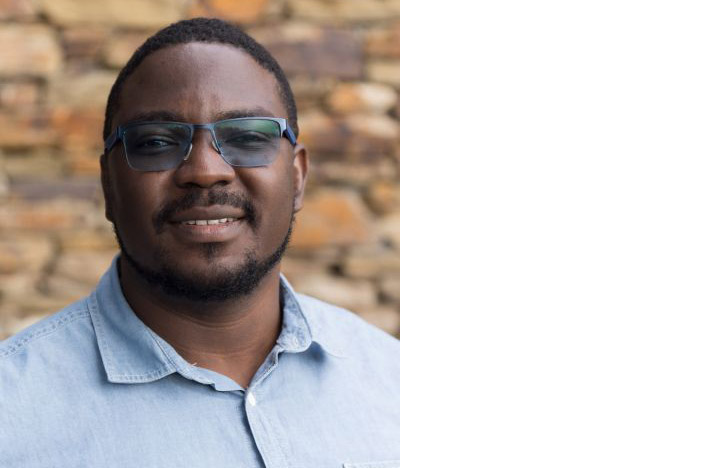
A mathematical model was developed by JCU researcher Dr Samson Ogunlade to measure the impact of the Wolbachia release program on seasonal dengue outbreaks in Townsville. It found the strategy reduced the ability of dengue-carrying mosquitoes to transmit the disease to humans by a massive 95 per cent.
PhD scholar and lecturer in biostatistics for public health, Dr Ogunlade, calculated that the likelihood of contracting dengue from the bite of an Aedes aegypti mosquito infected with Wolbachia was just five per cent of the risk of catching the disease from a wild uninfected mosquito.
“Our model estimates the dengue transmission probabilities per mosquito bite between humans and non-Wolbachia, and Wolbachia-infected mosquitoes, which in turn provides insight on the impact of Wolbachia introduction on dengue incidence,” he said.
Dr Ogunlade’s model, based on both pre- and post-Wolbachia rollout data, is the first to quantify the impact of the strategy on the incidence of dengue in Townsville by factoring in measured changes in mosquito population levels, alongside human dengue transmission figures. It incorporates both locally acquired and imported case numbers (the latter refers to residents who contracted dengue in another country).
During the Wolbachia rollout period (October 2014 — February 2017), mosquitoes infected with the bacteria were released fortnightly at 32 suburban locations in Townsville. Four million mosquitoes, in total, were unleashed over 28 months.
The mosquito release containers doubled as traps subsequently used to catch mosquitoes, in order to monitor the level of Wolbachia-infected mossies in each location. Meanwhile, the Wolbachia rollout team continued to release infected mosquitoes — until the proportion of infected mosquitoes caught in the traps (checked weekly) remained above 50 per cent for two consecutive weeks.
The meticulous collection of data on both infected mosquito releases and captures at all 32 sites, aggregated into monthly counts to gauge the proportion of Wolbachia-infected mosquitoes in Townsville, provided Dr Ogunlade with a wealth of information.
His data on Townsville dengue cases was originally sourced from the Queensland Health Communicable Disease Branch, which supplied details of all laboratory-confirmed and clinically probable diagnosis of symptomatic dengue cases from the beginning of 2001 to the first quarter of 2019, including month of illness onset and any history of foreign travel by patients in the 3–12 days before they fell ill.
Interestingly, Dr Ogunlade found imported dengue cases increased in the period following the introduction of Wolbachia, raising the bar even higher for the program to succeed.
“This increase likely reflects global trends in which there was a resurgence of dengue cases from 2015 to 2019 throughout the Southeast Asia region, which is the source of most imported dengue cases in Townsville,” he said.
But the rise in imported cases was more than offset by a significant reduction in locally acquired dengue infections. Based on estimated transmission rates, Dr Ogunlade calculated that the incidence of dengue fell by over 65 per cent during the Wolbachia rollout period. And it didn’t stop there. During the two-year period after the rollout concluded (February 2017 — February 2019) a total reduction of over 99 per cent was achieved.
The mathematician is keen to share his model with other countries considering the introduction of a Wolbachia release program, including Indonesia, Vietnam and Columbia, to aid their battle against dengue.
His PhD research paper, published in the prestigious scientific journal, Nature -scientific reports, includes an open-source code to his project model. It is publicly available here.
“It will help to predict the transmission rate of dengue from Wolbachia-infected mosquitoes to humans in their country — information that can inform their strategies to mitigate and reduce dengue,” Dr Ogunlade said.