
Australian Institute of Tropical Health and Medicine Our impact AITHM Stories Food Allergy Week
Food Allergy Week
- MRCMHR
- Future Students
- JCU Global Experience
- International Students
- Student experience
- Open Day
- How to apply
- Pathways to university
- Living on Campus
- Courses
- Publications
- Mature students
- Scholarships
- Entry options
- JCU Families
- JCU Heroes Programs
- Aboriginal and Torres Strait Islander in Marine Science
- Elite Athletes
- Defence
- Capability.Co
- AI@JCU
- AALL
- Current Students
- Student Ambassador Program
- New students
- JCU Orientation
- LearnJCU
- Placements
- EDQS
- Unicare Centre and Unicampus Kids
- Graduation
- Off-Campus Students
- JCU Job Ready
- Safety and Wellbeing
- JCU Prizes
- Professional Experience Placement
- Employability Edge
- Art of Academic Writing
- Art of Academic Editing
- Careers and Employability
- Health, Wellbeing and Belonging
- Career Ready Plan
- Careers at JCU
- Partners and Community
- School Outreach and Widening Participation
- Alumni
- International partnerships
- About JCU
- Reputation and Experience
- Chancellery
- Governance
- Celebrating 50 Years
- Academy
- Indigenous Engagement
- Education Division
- Research Festival
- Graduate Research School
- Research Division
- Research and Innovation Services
- CASE
- College of Business, Law and Governance
- College of Healthcare Sciences
- College of Medicine and Dentistry
- College of Science and Engineering
- MPE
- Anthropological Laboratory for Tropical Audiovisual Research (ALTAR)
- Rural Remote and Tropical Health Systems
- Agriculture Technology and Adoption Centre (AgTAC)
- Advanced Analytical Centre
- Australian Institute of Tropical Health and Medicine
- AMHHEC
- Aquaculture Solutions
- AMHRA
- JCU Digital Wellbeing Group
- ARCSTA
- Lions Marine Research Trust
- Australian Tropical Herbarium
- Australian Quantum & Classical Transport Physics Group
- Boating and Diving
- Clinical Psychedelic Research Lab
- Centre for Tropical Biosecurity
- Centre for Tropical Bioinformatics and Molecular Biology
- CITBA
- CMT
- Centre for Disaster Solutions
- CSTFA
- Cyclone Testing Station
- The Centre for Disaster Studies
- Daintree Rainforest Observatory
- Fletcherview
- JCU Eduquarium
- JCU Turtle Health Research
- MARFU
- Orpheus
- TESS
- JCU Ideas Lab
- CADSI
- CNL
- TARL
- eResearch
- Indigenous Education and Research Centre
- Past Course and Subject Handbooks
- Estate
- Work Health and Safety
- Staff
- Discover Nature at JCU
- Cyber Security Hub
- Association of Australian University Secretaries
- Services Division
- Environmental Research Complex [ERC]
- Foundation for Australian Literary Studies
- Gender Equity at JCU
- Give to JCU
- Indigenous Legal Needs Project
- Inherent Requirements
- IsoTropics Lab
- IT Services
- JCU Webinars
- JCU Events
- JCU Motorsports
- JCU Sport
- Library
- Mabo Decision: 30 years on
- Marine Geophysics Laboratory
- Office of the Vice Chancellor and President
- Outstanding Alumni
- Policy
- PAHL
- Queensland Research Centre for Peripheral Vascular Disease
- Rapid Assessment Unit
- RDIM
- Researcher Development Portal
- Roderick Centre for Australian Literature and Creative Writing
- Contextual Science for Tropical Coastal Ecosystems
- State of the Tropics
- Strategic Procurement
- Student profiles
- SWIRLnet
- TREAD
- TropEco for Staff and Students
- TropCOVID: Mapping COVID-19 Immunity in Far North Queensland
- TUDLab
- VAVS Home
- WHOCC for Vector-borne & NTDs
- Media
- Copyright and Terms of Use
- Australian Institute of Tropical Health & Medicine
- JCU Respect
- Pay review
- Research
30 May 2024
Australia has one of the highest rates of food allergies in the world, with more than 1.5 people living with a food allergy — and they’re on the rise. There has been a 51 per cent increase in anaphylaxis presentations to emergency departments over the past 5 years, growing to more than 11,500 per year.
This Food Allergy Week (26 May – 1 June), Allergy and Anaphylaxis Australia shines a spotlight on the increased risk of an allergic reaction when eating out of the home, with the theme ‘Eating Out: Always Ask, Always Tell’. Professor Andreas Lopata, Head of AITHM’s Molecular Allergy Research Laboratory (MARL), said increasing the understanding of food allergies in the community is essential to protect those at risk of fatal reactions.
“People, including those who prepare and serve food and those with allergies, need to be aware of how to avoid allergic reactions and how to manage them when they do occur,” he says.
“There are steps that can be taken to reduce the risk of eating out. First, always remember to carry an EpiPen, especially if you are known to have severe reactions. Second, be sure to clearly communicate allergies to whoever is cooking; if at a restaurant, tell waiters about the allergy and ask about what is in dishes, particularly in relation to condiments and sauces.”
Through MARL, Professor Lopata and his team are actively involved in supporting the increasing number of people developing food allergies during their lifetime.
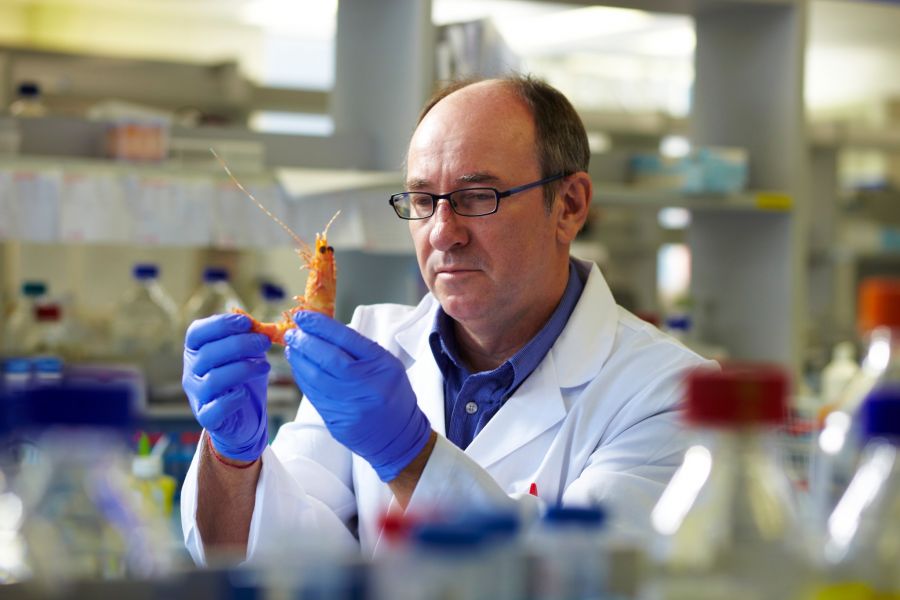
“Shellfish and fish allergies are the leading cause of severe food allergic reactions in Australia, and JCU is the number one institution in the world to work on these allergies: they are a focus of the MARL group, and we are working with many different companies and institutions to develop improved diagnostics and therapeutic treatments,” Professor Lopata says.
In particular, Professor Lopata and the MARL team work closely with the Centre for Food Allergy Research (CFAR) in Australia, which is funded by the National Health and Medical Research Council (NHMRC) and was recently once again recognised as a Centre of Excellence by the World Allergy Organisation.
“We also work closely with the JCU Singapore campus and are collaborating with the National University Hospital (NUH) in Singapore to develop the first immunotherapy for prawns,” he says. Immunotherapy involves giving patients small quantities of an allergen over a long period of time, so the body gradually builds a resistance to the food.
“This method of treatment has the best long-lasting effects and has been successfully used for years on inhalant allergens like pollen. But it was only as recent as last year that it was trialled for food allergens and the first therapeutic was develop for peanut allergies,” Professor Lopata says.
“In Singapore, prawn and shellfish allergies are the number one allergen amongst children and adults. So, we are working with the NUH to identify patients and define the type of prawn species that will be best utilised to develop an immunotherapy. Together with the hospital, we have also put in a grant application for over $1 million in funding to further this research.”
Evidence suggests that there is an increased prevalence of seafood allergy in countries where seafood consumption is high. Therefore, fish and shellfish are some of the most anaphylactic food sources in the Asia region. The diagnostic and treatment work conducted by Professor Lopata and his team in Singapore is crucial, as it leads to improved patient management benefiting not only Singapore but also neighbouring countries with high rates of allergies.
“Singapore is the gateway to Asia, where half a billion people reside. So, it is important that we have Higher Degree Research (HDR) students and postdocs actively involved in allergy research in Singapore that then has strong ties to allergy research in Australia,” he says.