
Australian Institute of Tropical Health and Medicine Our impact AITHM Stories Healing concussion with a 'big sniff'
Healing concussion with a 'big sniff'
- MRCMHR
- Future Students
- JCU Global Experience
- International Students
- Student experience
- Open Day
- How to apply
- Pathways to university
- Living on Campus
- Courses
- Publications
- Mature students
- Scholarships
- Entry options
- JCU Families
- JCU Heroes Programs
- Aboriginal and Torres Strait Islander in Marine Science
- Elite Athletes
- Defence
- Capability.Co
- AI@JCU
- AALL
- Current Students
- Student Ambassador Program
- New students
- JCU Orientation
- LearnJCU
- Placements
- EDQS
- Unicare Centre and Unicampus Kids
- Graduation
- Off-Campus Students
- JCU Job Ready
- Safety and Wellbeing
- JCU Prizes
- Professional Experience Placement
- Employability Edge
- Art of Academic Writing
- Art of Academic Editing
- Careers and Employability
- Health, Wellbeing and Belonging
- Career Ready Plan
- Careers at JCU
- Partners and Community
- School Outreach and Widening Participation
- Alumni
- International partnerships
- About JCU
- Reputation and Experience
- Chancellery
- Governance
- Celebrating 50 Years
- Academy
- Indigenous Engagement
- Education Division
- Research Festival
- Graduate Research School
- Research Division
- Research and Innovation Services
- CASE
- College of Business, Law and Governance
- College of Healthcare Sciences
- College of Medicine and Dentistry
- College of Science and Engineering
- MPE
- Anthropological Laboratory for Tropical Audiovisual Research (ALTAR)
- Rural Remote and Tropical Health Systems
- Agriculture Technology and Adoption Centre (AgTAC)
- Advanced Analytical Centre
- Australian Institute of Tropical Health and Medicine
- AMHHEC
- Aquaculture Solutions
- AMHRA
- JCU Digital Wellbeing Group
- ARCSTA
- Lions Marine Research Trust
- Australian Tropical Herbarium
- Australian Quantum & Classical Transport Physics Group
- Boating and Diving
- Clinical Psychedelic Research Lab
- Centre for Tropical Biosecurity
- Centre for Tropical Bioinformatics and Molecular Biology
- CITBA
- CMT
- Centre for Disaster Solutions
- CSTFA
- Cyclone Testing Station
- The Centre for Disaster Studies
- Daintree Rainforest Observatory
- Fletcherview
- JCU Eduquarium
- JCU Turtle Health Research
- MARFU
- Orpheus
- TESS
- JCU Ideas Lab
- CADSI
- CNL
- TARL
- eResearch
- Indigenous Education and Research Centre
- Past Course and Subject Handbooks
- Estate
- Work Health and Safety
- Staff
- Discover Nature at JCU
- Cyber Security Hub
- Association of Australian University Secretaries
- Services Division
- Environmental Research Complex [ERC]
- Foundation for Australian Literary Studies
- Gender Equity at JCU
- Give to JCU
- Indigenous Legal Needs Project
- Inherent Requirements
- IsoTropics Lab
- IT Services
- JCU Webinars
- JCU Events
- JCU Motorsports
- JCU Sport
- Library
- Mabo Decision: 30 years on
- Marine Geophysics Laboratory
- Office of the Vice Chancellor and President
- Outstanding Alumni
- Policy
- PAHL
- Queensland Research Centre for Peripheral Vascular Disease
- Rapid Assessment Unit
- RDIM
- Researcher Development Portal
- Roderick Centre for Australian Literature and Creative Writing
- Contextual Science for Tropical Coastal Ecosystems
- State of the Tropics
- Strategic Procurement
- Student profiles
- SWIRLnet
- TREAD
- TropEco for Staff and Students
- TropCOVID: Mapping COVID-19 Immunity in Far North Queensland
- TUDLab
- VAVS Home
- WHOCC for Vector-borne & NTDs
- Media
- Copyright and Terms of Use
- Australian Institute of Tropical Health & Medicine
- JCU Respect
- Pay review
- Research
16 April 2025
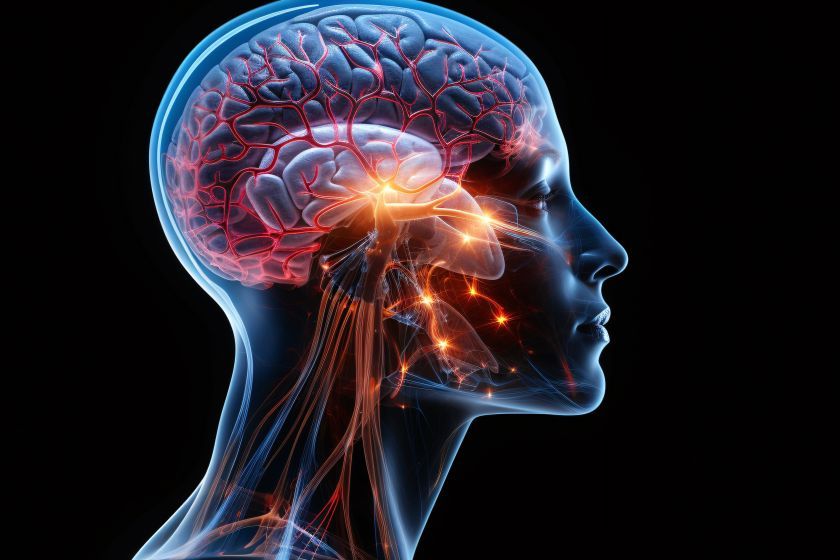
Traumatic brain injuries can happen to anyone, anytime. People sustain head injuries from assaults, while playing sports, in car accidents, or on the battlefield. So far, there is no known cure, and severe brain injuries can lead to chronic injury and death. The Australian Institute of Tropical Health and Medicine’s (AITHM) Professor Geoffrey Dobson and his team are working on a novel treatment that could speed up the healing process and prevent potential long-term consequences of a brain injury.
From mid-2021 to mid-2022, 17,700 people checked in at Australian Emergency Departments with traumatic brain injuries, including concussions. Of those, almost 11,000 had severe injuries and had to be hospitalised — for good reason. “Severe traumatic brain injury is a devastating injury with a mortality of around 25 to 30 per cent,” Professor Dobson said. “At the same time, there is no drug therapy available to reduce mortality.”
Just as the brain makes decisions about almost everything that happens in the body, an injured brain can become impaired from secondary injuries. This can have potentially severe consequences, such as acute inflammation and multiple organ dysfunction. Long term, moderate to severe brain injuries can also lead to dementia, stroke, post-traumatic stress disorder (PTSD) and a variety of chronic diseases.
“Imagine throwing a pebble into a pond. The pebble causes ripple effects in the water,” Professor Dobson said. “There's not much you can do about the pebble hitting the water — analogous to the primary injury to the head. But what you can do is reduce the ripple effects or secondary injury progression.”
Professor Dobson and his team, Dr Hayley Letson and Dr Jodie Morris, are looking to stop these secondary injuries from occurring by treating patients with ALM, a combination of three well-known drugs: Adenosine (A), Lidocaine (L) and Magnesium (M).
When combined in a single fluid, the team was surprised to find that ALM has different properties than each component on its own. This is why ALM is considered by the U.S. Food and Drug Administration (FDA) as a new drug.
ALM can help the body repair itself more quickly. This includes reducing internal bleeding after a severe injury, as well as preventing secondary injuries after a concussion. “ALM changes an injury phenotype into a healing one,” Professor Dobson said. “And it does it pretty quickly.”
The team is examining if ALM fluid therapy could serve as an alternative to the saline drip that is generally given to patients after an accident. Professor Dobson said patients would only need a fraction of the volume of saline solution that is usually given to a patient.
“With the ultra-small volume of ALM protection, you're allowing the body to help itself, to recover and protect itself, using its own mechanisms,” he said. “This way, the brain is being protected, and the heart is being protected.”
Professor Dobson envisions that ALM could also be used as a nasal spray for mild injuries such as concussions. “You could just have a 'big sniff'. Inhaling ALM would bypass the blood-brain barrier, that very special membrane that we have in our brain that can prevent drug entry,” he said. “This would help to get the ALM into the brain quickly and reduce secondary injury ‘ripples’ and its long-term chronic effects.
“The study we're doing at the moment is a prelude to human safety trials, and we are ready to test ALM in collaboration with military surgeons in San Antonio, Texas,” Professor Dobson said. “Once the ALM has been produced in an FDA-certified facility, we'll start the safety trial.”
Professor Dobson’s team is currently receiving funding from the US Department of Defense, as internal injuries, bleeding and brain injuries are a regular occurrence on the battlefield.
“Having lightweight, effective treatments is a priority for medics on the battlefield but also for aeromedical retrieval services in rural and remote Australia,” he said. “Whether you’re in a local hospital, a remote region, or on the battlefield, ALM may be instrumental in prehospital care and preventing long-term chronic injuries in people who sustain traumatic brain injuries.”