
Australian Institute of Tropical Health and Medicine Our impact AITHM Stories Protecting small island nations against dengue
Protecting small island nations against dengue
- MRCMHR
- Future Students
- JCU Global Experience
- International Students
- Student experience
- Open Day
- How to apply
- Pathways to university
- Living on Campus
- Courses
- Publications
- Mature students
- Scholarships
- Entry options
- JCU Families
- JCU Heroes Programs
- Aboriginal and Torres Strait Islander in Marine Science
- Elite Athletes
- Defence
- Capability.Co
- AI@JCU
- AALL
- Current Students
- Student Ambassador Program
- New students
- JCU Orientation
- LearnJCU
- Placements
- EDQS
- Unicare Centre and Unicampus Kids
- Graduation
- Off-Campus Students
- JCU Job Ready
- Safety and Wellbeing
- JCU Prizes
- Professional Experience Placement
- Employability Edge
- Art of Academic Writing
- Art of Academic Editing
- Careers and Employability
- Health, Wellbeing and Belonging
- Career Ready Plan
- Careers at JCU
- Partners and Community
- School Outreach and Widening Participation
- Alumni
- International partnerships
- About JCU
- Reputation and Experience
- Chancellery
- Governance
- Celebrating 50 Years
- Academy
- Indigenous Engagement
- Education Division
- Research Festival
- Graduate Research School
- Research Division
- Research and Innovation Services
- CASE
- College of Business, Law and Governance
- College of Healthcare Sciences
- College of Medicine and Dentistry
- College of Science and Engineering
- MPE
- Anthropological Laboratory for Tropical Audiovisual Research (ALTAR)
- Rural Remote and Tropical Health Systems
- Agriculture Technology and Adoption Centre (AgTAC)
- Advanced Analytical Centre
- Australian Institute of Tropical Health and Medicine
- AMHHEC
- Aquaculture Solutions
- AMHRA
- JCU Digital Wellbeing Group
- ARCSTA
- Lions Marine Research Trust
- Australian Tropical Herbarium
- Australian Quantum & Classical Transport Physics Group
- Boating and Diving
- Clinical Psychedelic Research Lab
- Centre for Tropical Biosecurity
- Centre for Tropical Bioinformatics and Molecular Biology
- CITBA
- CMT
- Centre for Disaster Solutions
- CSTFA
- Cyclone Testing Station
- The Centre for Disaster Studies
- Daintree Rainforest Observatory
- Fletcherview
- JCU Eduquarium
- JCU Turtle Health Research
- MARFU
- Orpheus
- TESS
- JCU Ideas Lab
- CADSI
- CNL
- TARL
- eResearch
- Indigenous Education and Research Centre
- Past Course and Subject Handbooks
- Estate
- Work Health and Safety
- Staff
- Discover Nature at JCU
- Cyber Security Hub
- Association of Australian University Secretaries
- Services Division
- Environmental Research Complex [ERC]
- Foundation for Australian Literary Studies
- Gender Equity at JCU
- Give to JCU
- Indigenous Legal Needs Project
- Inherent Requirements
- IsoTropics Lab
- IT Services
- JCU Webinars
- JCU Events
- JCU Motorsports
- JCU Sport
- Library
- Mabo Decision: 30 years on
- Marine Geophysics Laboratory
- Office of the Vice Chancellor and President
- Outstanding Alumni
- Policy
- PAHL
- Queensland Research Centre for Peripheral Vascular Disease
- Rapid Assessment Unit
- RDIM
- Researcher Development Portal
- Roderick Centre for Australian Literature and Creative Writing
- Contextual Science for Tropical Coastal Ecosystems
- State of the Tropics
- Strategic Procurement
- Student profiles
- SWIRLnet
- TREAD
- TropEco for Staff and Students
- TropCOVID: Mapping COVID-19 Immunity in Far North Queensland
- TUDLab
- VAVS Home
- WHOCC for Vector-borne & NTDs
- Media
- Copyright and Terms of Use
- Australian Institute of Tropical Health & Medicine
- JCU Respect
- Pay review
- Research
30 April 2025
As the planet is heating up, dangerous mosquito-borne diseases such as dengue and chikungunya are spreading to more countries than ever before. This is especially problematic in small island nations with even smaller health budgets. Australian Institute of Tropical Health and Medicine (AITHM) researcher Professor Emma McBryde and PhD candidate Mr Mohabeer Teeluck are developing software that helps predict future outbreaks.
Mr Teeluck, originally from Mauritius (population 1.3 million), has witnessed firsthand the growing threat of mosquito-borne diseases in his home country. “While diseases such as dengue are not endemic in Mauritius, we’ve had cyclic outbreaks of dengue every few years as well as some imported cases of other mosquito-borne diseases,” he said.
“Post-COVID, Mauritius has recorded a surge in imported cases of mosquito-borne diseases such as lymphatic filariasis and chikungunya, and we are very concerned of the increasing risk of endemicity,” he said. “The region also had a flooding event in January 2024. Soon after, we had more than 6,000 dengue cases for the first time.”
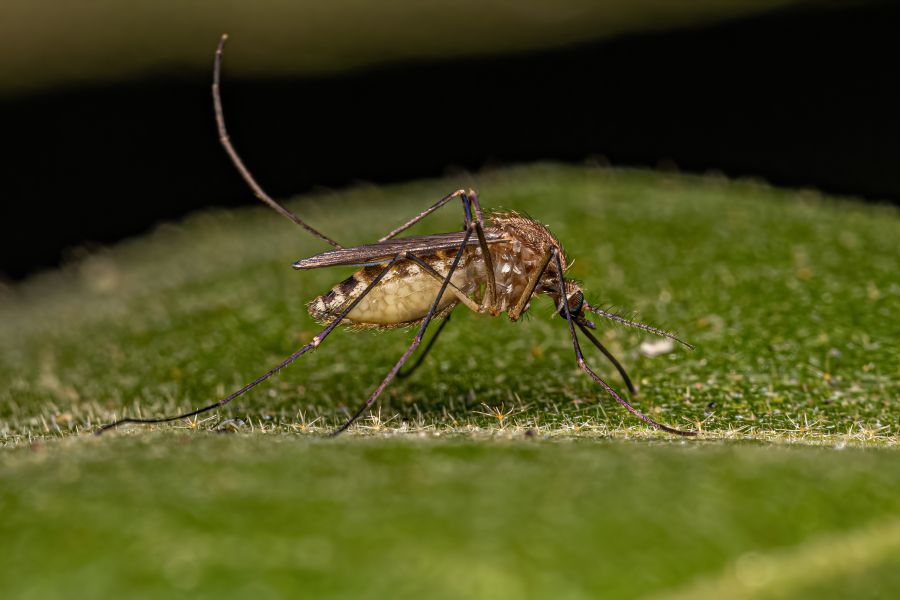
In Mauritius, mosquito-borne diseases are primarily spread by the Asian tiger mosquito (Aedes albopictus) and the southern house mosquito (Culex quinquefasciatus). Mr Teeluck’s research focuses on how environmental factors such as temperature, rainfall and humidity affect these mosquito populations. His previous research suggests that while higher rainfall and higher humidity can result in more mosquitoes and more dengue cases, the relationship is not always straightforward.
Professor McBryde said that there's a strong need for more information. “The findings of other studies we examined have been heavily weighted to just one country. We also found that the outcomes are not that easily predictable, and that it’s important to have models like Amar’s that are bespoke for a specific country,” she said.
For his research in Mauritius, Mr Teeluck said that the availability of reliable weather data is essential. “We have received access to free weather data from OpenWeather, under their Student and Healthcare Initiative programs, as well as the ERA5 data set,” he said. ERA5 data is published by the European Centre for Medium-Range Weather Forecasts (ECMWF) and it provides hourly weather data from 1940 to the present.
Mr Teeluck said that not only the weather but also other factors, such as travel to and from the neighbouring islands and overseas, have an impact on the number of cases. The increasing urbanisation of Mauritius similarly has an impact on the spread of mosquito-borne diseases on the island. “The population is increasingly moving inland from the coast as the climate is cooler in the interior of the country,” he said.
“We are going to use some machine learning for certain parts of the project, as well as semi-mechanistic and mechanistic models, where we draw on our knowledge about how these diseases spread, and put them inside a statistical model,” Professor McBryde said.
“CIRAD, the French Agricultural Research Centre for International Development, is currently providing technical support to both the Public Health Unit of the Ministry of Health and Wellness and our French neighbours on the island of Reunion,” Mr Teeluck said. “I’m very excited about this cooperation.”
Once finished, Mr Teeluck’s research aims to construct more accurate forecasts of future outbreaks of dengue and other mosquito-borne diseases in Mauritius. “This is why we are also using data from the ‘Building Resilience in the Indian Ocean’ (BRIO) project which produces future trends of temperature, rainfall and other data.”
Mr Teeluck said that knowing when a future outbreak was expected would provide the government and community with more time to be better prepared.
He is planning to finish his PhD research by the beginning of 2027. “Once my research project is completed, we will be able to implement the outcomes in Mauritius, in collaboration with the Mauritius Ministry of Health and Wellness,” he said. “I’m hopeful that this will have a positive impact on supporting the country’s vector borne surveillance and preparedness activities.”