
Australian Institute of Tropical Health and Medicine Our impact AITHM Stories Through the worm hole to new pharma remedies
Through the worm hole to new pharma remedies
- MRCMHR
- Future Students
- JCU Global Experience
- International Students
- Student experience
- Open Day
- How to apply
- Pathways to university
- Living on Campus
- Courses
- Publications
- Mature students
- Scholarships
- Entry options
- JCU Families
- JCU Heroes Programs
- Aboriginal and Torres Strait Islander in Marine Science
- Elite Athletes
- Defence
- Capability.Co
- AI@JCU
- AALL
- Current Students
- Student Ambassador Program
- New students
- JCU Orientation
- LearnJCU
- Placements
- EDQS
- Unicare Centre and Unicampus Kids
- Graduation
- Off-Campus Students
- JCU Job Ready
- Safety and Wellbeing
- JCU Prizes
- Professional Experience Placement
- Employability Edge
- Art of Academic Writing
- Art of Academic Editing
- Careers and Employability
- Health, Wellbeing and Belonging
- Career Ready Plan
- Careers at JCU
- Partners and Community
- School Outreach and Widening Participation
- Alumni
- International partnerships
- About JCU
- Reputation and Experience
- Chancellery
- Governance
- Celebrating 50 Years
- Academy
- Indigenous Engagement
- Education Division
- Research Festival
- Graduate Research School
- Research Division
- Research and Innovation Services
- CASE
- College of Business, Law and Governance
- College of Healthcare Sciences
- College of Medicine and Dentistry
- College of Science and Engineering
- MPE
- Anthropological Laboratory for Tropical Audiovisual Research (ALTAR)
- Rural Remote and Tropical Health Systems
- Agriculture Technology and Adoption Centre (AgTAC)
- Advanced Analytical Centre
- Australian Institute of Tropical Health and Medicine
- AMHHEC
- Aquaculture Solutions
- AMHRA
- JCU Digital Wellbeing Group
- ARCSTA
- Lions Marine Research Trust
- Australian Tropical Herbarium
- Australian Quantum & Classical Transport Physics Group
- Boating and Diving
- Clinical Psychedelic Research Lab
- Centre for Tropical Biosecurity
- Centre for Tropical Bioinformatics and Molecular Biology
- CITBA
- CMT
- Centre for Disaster Solutions
- CSTFA
- Cyclone Testing Station
- The Centre for Disaster Studies
- Daintree Rainforest Observatory
- Fletcherview
- JCU Eduquarium
- JCU Turtle Health Research
- MARFU
- Orpheus
- TESS
- JCU Ideas Lab
- CADSI
- CNL
- TARL
- eResearch
- Indigenous Education and Research Centre
- Past Course and Subject Handbooks
- Estate
- Work Health and Safety
- Staff
- Discover Nature at JCU
- Cyber Security Hub
- Association of Australian University Secretaries
- Services Division
- Environmental Research Complex [ERC]
- Foundation for Australian Literary Studies
- Gender Equity at JCU
- Give to JCU
- Indigenous Legal Needs Project
- Inherent Requirements
- IsoTropics Lab
- IT Services
- JCU Webinars
- JCU Events
- JCU Motorsports
- JCU Sport
- Library
- Mabo Decision: 30 years on
- Marine Geophysics Laboratory
- Office of the Vice Chancellor and President
- Outstanding Alumni
- Policy
- PAHL
- Queensland Research Centre for Peripheral Vascular Disease
- Rapid Assessment Unit
- RDIM
- Researcher Development Portal
- Roderick Centre for Australian Literature and Creative Writing
- Contextual Science for Tropical Coastal Ecosystems
- State of the Tropics
- Strategic Procurement
- Student profiles
- SWIRLnet
- TREAD
- TropEco for Staff and Students
- TropCOVID: Mapping COVID-19 Immunity in Far North Queensland
- TUDLab
- VAVS Home
- WHOCC for Vector-borne & NTDs
- Media
- Copyright and Terms of Use
- Australian Institute of Tropical Health & Medicine
- JCU Respect
- Pay review
- Research
31 August 2023
Inflammatory bowel disease (IBD) includes debilitating conditions such as ulcerative colitis (UC) and Crohn’s disease. IBD affects more than six million people worldwide, including over 100,000 Australians. Current drug treatment, including antibiotics and steroids, can have serious side effects and often becomes ineffective over time. New therapies are desperately needed.
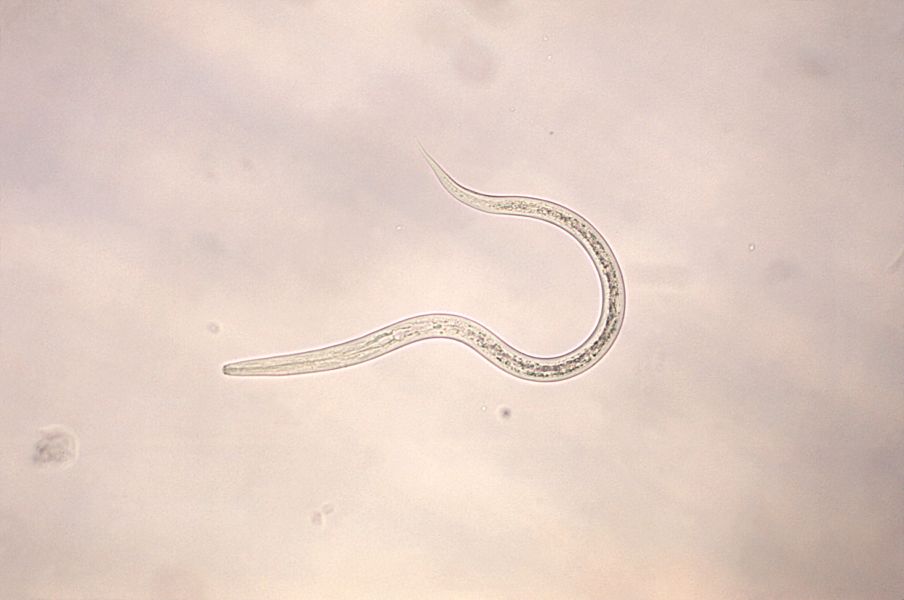
In a world first, a JCU PhD researcher, backed by a crack interdisciplinary research team, has identified protein families with significant anti-inflammatory benefits – in hookworm saliva. The discovery paves the way for developing conventional treatment delivery, such as capsules or injections, to supersede infecting patients with live worms to achieve similar results.
“The rationale behind my project was steeped in 20 years of JCU research. It’s going back to basics, in terms of looking to nature to find novel therapeutics. At the same time, it’s ahead of the game,” said Dr Stephanie Ryan.
JCU has pioneered clinical trials into the safety and efficacy of using live hookworm infection to treat a range of conditions, including metabolic disorders, such as heightened insulin resistance – a precursor to Type 2 diabetes, as well as Inflammatory Bowel Disease.
The clinical results have been promising. Over millennia, hookworms and other parasitic worms have developed ways to safely co-exist with their human hosts/evade expulsion by regulating the host’s immune (inflammatory) response to their presence. Worm secretions, fondly dubbed “worm spit” by scientists, are suspected to contain a goldmine of anti-inflammatory molecules, including proteins.
But how best to harness the hookworm’s potential to treat human diseases? Logistically, it is difficult to produce and distribute clinically standardised live hookworm larvae to inoculate patients. Then there is the “ick factor”.
JCU scientists had already detected hundreds of different proteins in hookworm secretions. The next step was to screen as many recombinants (genetically engineered replicas) of these proteins as possible to ascertain which had the most anti-inflammatory potential. An arduous task. Dr Ryan, biomedical scientist and former research assistant with Cambridge and Edinburgh Universities, and the London School of Hygiene and Tropical Medicine, was up for the job.
She tested 78 recombinant hookworm proteins in mouse models with induced acute colitis symptoms and crunched the resulting data to identify the top 20 anti-inflammatory performers. The six most promising proteins were then re-engineered in the lab using standard pharma industry methods (mammalian cell lines) and tested on IBD gut biopsy tissue donated to the study by patients, via gastroenterologist colleagues in Brisbane.
The results exceeded the expectations of Dr Ryan and her colleagues. She found three distinct protein leads that not only alleviated colitis in the mouse models, but also significantly reduced the release of inflammatory cytokines (immune-triggered molecules) in the donated intestinal tissue of ulcerative colitis patients.
None of these protein families had previously been reported to have anti-inflammatory properties when produced by parasitic worms.
Dr Ryan’s PhD supervisor, AITHM Deputy Director Distinguished Professor Alex Loukas, said once they had worked out the best delivery method – “our absolute goal is an oral formulation” – the next step would be to evaluate the efficacy of one of the proteins in a clinical (human) trial, hopefully within the next two to three years.
But the research will not stop there. In fact, it is still in its infancy.
“There's still an awful lot we can learn in terms of drug discovery and development from these worms,” observed Professor Loukas. “People have become familiar with the term microbiome. Welcome to the macrobiome; large creatures you can see in the gut with the naked eye.
“I'd like to encourage younger students and postdocs to put their big brains towards finding new ways that we can harness this remarkable display of evolutionary biology.”