
Australian Institute of Tropical Health and Medicine Our impact AITHM Stories Uncovering bat fly viruses for pandemic prevention
Uncovering bat fly viruses for pandemic prevention
- MRCMHR
- Future Students
- JCU Global Experience
- International Students
- Student experience
- Open Day
- How to apply
- Pathways to university
- Living on Campus
- Courses
- Publications
- Mature students
- Scholarships
- Entry options
- JCU Families
- JCU Heroes Programs
- Aboriginal and Torres Strait Islander in Marine Science
- Elite Athletes
- Defence
- Capability.Co
- AI@JCU
- AALL
- Current Students
- Student Ambassador Program
- New students
- JCU Orientation
- LearnJCU
- Placements
- EDQS
- Unicare Centre and Unicampus Kids
- Graduation
- Off-Campus Students
- JCU Job Ready
- Safety and Wellbeing
- JCU Prizes
- Professional Experience Placement
- Employability Edge
- Art of Academic Writing
- Art of Academic Editing
- Careers and Employability
- Health, Wellbeing and Belonging
- Career Ready Plan
- Careers at JCU
- Partners and Community
- School Outreach and Widening Participation
- Alumni
- International partnerships
- About JCU
- Reputation and Experience
- Chancellery
- Governance
- Celebrating 50 Years
- Academy
- Indigenous Engagement
- Education Division
- Research Festival
- Graduate Research School
- Research Division
- Research and Innovation Services
- CASE
- College of Business, Law and Governance
- College of Healthcare Sciences
- College of Medicine and Dentistry
- College of Science and Engineering
- MPE
- Anthropological Laboratory for Tropical Audiovisual Research (ALTAR)
- Rural Remote and Tropical Health Systems
- Agriculture Technology and Adoption Centre (AgTAC)
- Advanced Analytical Centre
- Australian Institute of Tropical Health and Medicine
- AMHHEC
- Aquaculture Solutions
- AMHRA
- JCU Digital Wellbeing Group
- ARCSTA
- Lions Marine Research Trust
- Australian Tropical Herbarium
- Australian Quantum & Classical Transport Physics Group
- Boating and Diving
- Clinical Psychedelic Research Lab
- Centre for Tropical Biosecurity
- Centre for Tropical Bioinformatics and Molecular Biology
- CITBA
- CMT
- Centre for Disaster Solutions
- CSTFA
- Cyclone Testing Station
- The Centre for Disaster Studies
- Daintree Rainforest Observatory
- Fletcherview
- JCU Eduquarium
- JCU Turtle Health Research
- MARFU
- Orpheus
- TESS
- JCU Ideas Lab
- CADSI
- CNL
- TARL
- eResearch
- Indigenous Education and Research Centre
- Past Course and Subject Handbooks
- Estate
- Work Health and Safety
- Staff
- Discover Nature at JCU
- Cyber Security Hub
- Association of Australian University Secretaries
- Services Division
- Environmental Research Complex [ERC]
- Foundation for Australian Literary Studies
- Gender Equity at JCU
- Give to JCU
- Indigenous Legal Needs Project
- Inherent Requirements
- IsoTropics Lab
- IT Services
- JCU Webinars
- JCU Events
- JCU Motorsports
- JCU Sport
- Library
- Mabo Decision: 30 years on
- Marine Geophysics Laboratory
- Office of the Vice Chancellor and President
- Outstanding Alumni
- Policy
- PAHL
- Queensland Research Centre for Peripheral Vascular Disease
- Rapid Assessment Unit
- RDIM
- Researcher Development Portal
- Roderick Centre for Australian Literature and Creative Writing
- Contextual Science for Tropical Coastal Ecosystems
- State of the Tropics
- Strategic Procurement
- Student profiles
- SWIRLnet
- TREAD
- TropEco for Staff and Students
- TropCOVID: Mapping COVID-19 Immunity in Far North Queensland
- TUDLab
- VAVS Home
- WHOCC for Vector-borne & NTDs
- Media
- Copyright and Terms of Use
- Australian Institute of Tropical Health & Medicine
- JCU Respect
- Pay review
- Research
02 April 2025
Bats are not only natural hosts for many common viruses but are also home to a suite of parasites — one being the blood-sucking bat fly. While not much is known about bat flies, these mysterious creatures have co-evolved with bats over millions of years and their survival depends entirely on their hosts. Now, researchers at the Australian Institute of Tropical Health and Medicine (AITHM) are studying this unique relationship to uncover how it might influence disease transmission.
In recent years, bats have become increasingly recognised as carriers of zoonotic diseases due to their role in the spread of viruses like COVID-19 and Hendra virus. James Cook University (JCU) Master’s student and AITHM researcher Mrs Robyn Pearce is investigating the interactions between bat flies, their hosts and the viruses they both carry.
“Bats harbour some really significant viruses that can affect human health,” Mrs Pearce said. “And bat flies, while they don’t directly bite humans, may be responsible for helping viruses spread throughout bat populations. So, understanding bat flies helps us predict and monitor potential disease outbreaks.”
Bat flies are tiny ectoparasites (meaning they are external, living on the outside of a body) that feed on bat blood to survive. Depending on the species of bat fly, they can range in size from about 2 to 6 millimetres. Although technically a fly, Mrs Pearce describes them as a cross between a spider and a tick, with 6 legs and a flattened body.
“Some species of bat flies have wings, while others don’t. There’s a lot of variation between different species, and very little is known about them in Australia,” she said. “Certain species were originally reported decades ago, but there’s been almost no follow-up research. My goal is to catalogue the species we have here and understand which bat flies are associated with which species of bat, and what diseases they may carry.”
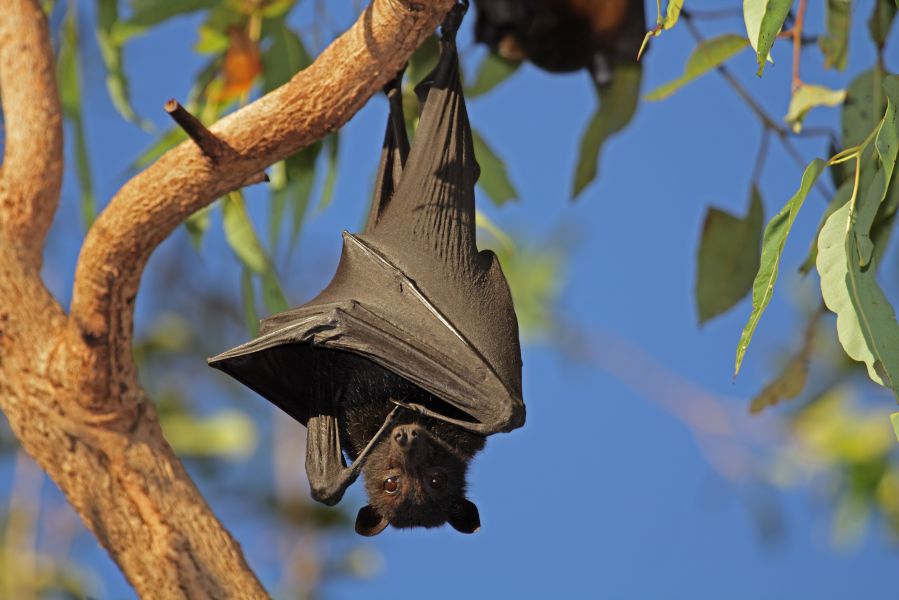
Working closely with wildlife carers in North Queensland, Mrs Pearce is gathering bat flies that live on two types of bats: black flying foxes (Pteropus alecto) and little red flying foxes (Pteropus scapulatus).
“When a bat comes into care, generally a carer will remove as many of the bat flies as possible. For my project, I’ve asked them to collect and preserve the insects for me. I’m currently using morphology — which involves examining their physical features under a microscope — and DNA sequencing to identify the different species of bat fly,” she said.
“The next part of my project will focus on examining the viruses found in bat flies and seeing if the types of viruses differ depending on the species of bat they live on. I'm really excited about this stage because it will help us better understand how diseases spread within bat populations. I also expect to discover some new viruses that haven’t been found in bat flies in Australia before."
Ultimately, Mrs Pearce hopes this research will improve understanding on how diseases spread through bat populations in order to better protect people from future outbreaks that cross the species boundary.
“Bat flies are fascinating little creatures,” she said. “By studying them, we’re not just learning about these parasites — we’re uncovering valuable information about bats, ecosystems and the diseases that may eventually help us to predict and prevent future pandemics.”