
College of Medicine and Dentistry News and stories From Immersion to Innovation: How a Hands-On Experience Sparked Alanna Sorenson’s Biomedical Career
From Immersion to Innovation: How a Hands-On Experience Sparked Alanna Sorenson’s Biomedical Career
- MRCMHR
- Future Students
- JCU Global Experience
- International Students
- Student experience
- Open Day
- How to apply
- Pathways to university
- Living on Campus
- Courses
- Publications
- Mature students
- Scholarships
- Entry options
- JCU Families
- JCU Heroes Programs
- Aboriginal and Torres Strait Islander in Marine Science
- Elite Athletes
- Defence
- Capability.Co
- AI@JCU
- AALL
- Current Students
- Student Ambassador Program
- New students
- JCU Orientation
- LearnJCU
- Placements
- EDQS
- Unicare Centre and Unicampus Kids
- Graduation
- Off-Campus Students
- JCU Job Ready
- Safety and Wellbeing
- JCU Prizes
- Professional Experience Placement
- Employability Edge
- Art of Academic Writing
- Art of Academic Editing
- Careers and Employability
- Health, Wellbeing and Belonging
- Career Ready Plan
- Careers at JCU
- Partners and Community
- School Outreach and Widening Participation
- Alumni
- International partnerships
- About JCU
- Reputation and Experience
- Chancellery
- Governance
- Celebrating 50 Years
- Academy
- Indigenous Engagement
- Education Division
- Research Festival
- Graduate Research School
- Research Division
- Research and Innovation Services
- CASE
- College of Business, Law and Governance
- College of Healthcare Sciences
-
College of Medicine and Dentistry
- About CMD
-
Research
-
Project Portal
- CMD research project asset list
- Chronic Pelvic Pain Faecal Microbiome Study
- Service delivery strategies for rural/ remote allied health
- TREAD: Translational Research in Endocrinology and Diabetes 'Multiple projects'
- Australia's burden from peripheral artery disease
- Glucose control and outcome of peripheral revascularisation
- Outcome for abdominal aortic aneurysm admissions across Australia
- Diet and vascular disease
- Genetics of abdominal aortic aneurysm
- Biomarkers of aortic aneurysm and peripheral artery disease outcome
- Testing novel treatments for peripheral artery disease and abdominal aortic aneurysm
- Clinical trials of novel treatments for peripheral artery disease, diabetes-related foot disease and abdominal aortic aneurysm
- Multiple projects in Microbiology and infectious Diseases
- Piloting a continuous quality improvement framework to strengthen quality of care in Aboriginal residential aged care.
- Strengthening primary health care to promote healthy ageing and reduce risk factors associated with dementia in Aboriginal and Torres Strait Islander communities
- Multiple research opportunities in Psychiatry
- The role of partner dancing on biopsychosocial status of older adults and their significant others
- Multiplex diagnostic technology development for respiratory viruses
- Multiple projects in strengthening health workforce policy
- Post a Research Project
- Biomedicine
- Research Centres & Institutes
- PHTM
- Molecular & Cell Biology
-
Project Portal
- News and stories
- Industry and community
-
Study and training
- Clinical Electives for Non-JCU students
-
Dentistry resources: responding to domestic and sexual violence
- DSV Resource Launch Video
- The Basics
- The Full Skill Set
- Trauma Informed approach
- Legal and Ethical Considerations
- Working with First Nations Australians
- Considering Unintended Consequences
- Private Practice Scenario A: Subtle Signs of Domestic Violence with Long-Term Patients
- Private Practice Scenario B: Managing Family Dynamics: Prioritising Victim-Survivors and Their Safety
- Information for Educators
- Contact us
- Contact us
- College of Science and Engineering
- MPE
- Anthropological Laboratory for Tropical Audiovisual Research (ALTAR)
- Rural Remote and Tropical Health Systems
- Agriculture Technology and Adoption Centre (AgTAC)
- Advanced Analytical Centre
- Australian Institute of Tropical Health and Medicine
- AMHHEC
- Aquaculture Solutions
- AMHRA
- JCU Digital Wellbeing Group
- ARCSTA
- Lions Marine Research Trust
- Australian Tropical Herbarium
- Australian Quantum & Classical Transport Physics Group
- Boating and Diving
- Clinical Psychedelic Research Lab
- Centre for Tropical Biosecurity
- Centre for Tropical Bioinformatics and Molecular Biology
- CITBA
- CMT
- Centre for Disaster Solutions
- CSTFA
- Cyclone Testing Station
- The Centre for Disaster Studies
- Daintree Rainforest Observatory
- Fletcherview
- JCU Eduquarium
- JCU Turtle Health Research
- MARFU
- Orpheus
- TESS
- JCU Ideas Lab
- CADSI
- CNL
- TARL
- eResearch
- Indigenous Education and Research Centre
- Past Course and Subject Handbooks
- Estate
- Work Health and Safety
- Staff
- Discover Nature at JCU
- Cyber Security Hub
- Association of Australian University Secretaries
- Services Division
- Environmental Research Complex [ERC]
- Foundation for Australian Literary Studies
- Gender Equity at JCU
- Give to JCU
- Indigenous Legal Needs Project
- Inherent Requirements
- IsoTropics Lab
- IT Services
- JCU Webinars
- JCU Events
- JCU Motorsports
- JCU Sport
- Library
- Mabo Decision: 30 years on
- Marine Geophysics Laboratory
- Office of the Vice Chancellor and President
- Outstanding Alumni
- Policy
- PAHL
- Queensland Research Centre for Peripheral Vascular Disease
- Rapid Assessment Unit
- RDIM
- Researcher Development Portal
- Roderick Centre for Australian Literature and Creative Writing
- Contextual Science for Tropical Coastal Ecosystems
- State of the Tropics
- Strategic Procurement
- Student profiles
- SWIRLnet
- TREAD
- TropEco for Staff and Students
- TropCOVID: Mapping COVID-19 Immunity in Far North Queensland
- TUDLab
- VAVS Home
- WHOCC for Vector-borne & NTDs
- Media
- Copyright and Terms of Use
- Australian Institute of Tropical Health & Medicine
- JCU Respect
- Pay review
- Research
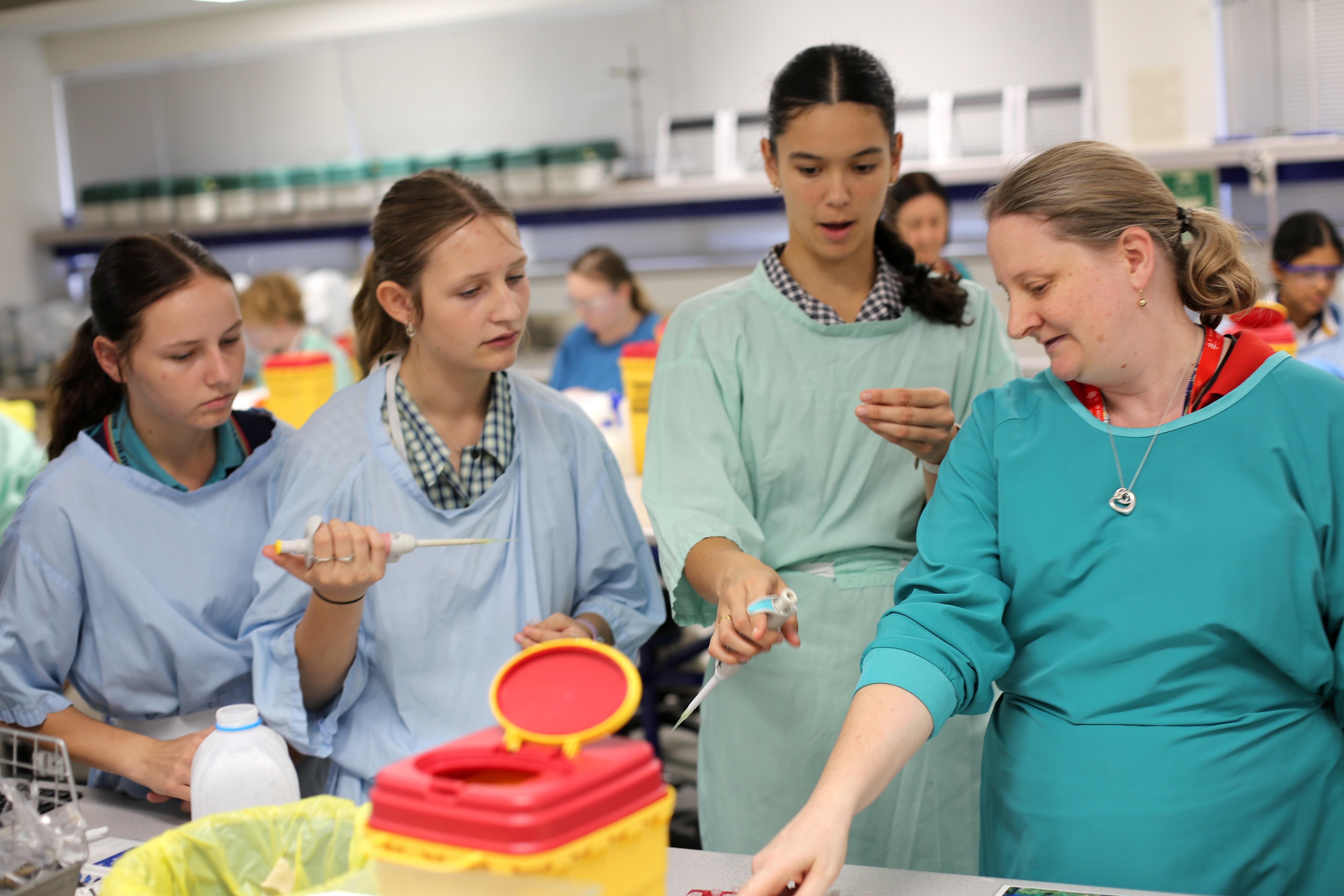
For Dr Alanna Sorenson, a biomedical scientist and senior lecturer in molecular and cell biology at James Cook University (JCU), the path to a fulfilling career in research and teaching began with a single event—a high school immersion experience held at the same university where she now works.
As a high school student, Alanna was unsure of her future. She toyed with the idea of studying astrophysics at QUT, but a visit to JCU’s Biomedical Science Immersion Program changed everything. “Biomed just had a bit of everything,” she recalls. “Anatomy, microbiology, biochemistry—it all clicked. It seemed like a good fit.”
That one immersive experience opened the door to biomedicine and Alanna has never looked back. She went on to complete her Bachelor of Biomedical Sciences at JCU, followed by Honours and a PhD focusing on Q fever, a disease affecting both humans and animals. She later undertook postdoctoral research in drug discovery, and in 2018, became a lecturer at the very university where it all began.
Today, Alanna balances her time between lecturing and research, a mix she finds both challenging and rewarding. “I’ve always been quite introverted, so lecturing to a big theatre isn’t my favourite thing,” she says. “But I really enjoy practicals—being in the lab with students, showing them how it all works.”
Alanna’s working week is interesting and varied, just how she likes it. “I’m usually juggling multiple projects. Some of my work involves fluorescent proteins, which we use as a biosensor to detect things like temperature, heavy metals or biological activity,” she says.
“Fluorescent proteins glow when exposed to certain light … the fluorescent glow makes it easy to track and measure biological processes.”
A biomedical degree can take graduates and many different paths, according to Alanna. She knows of graduates who work in laboratories, in research, other areas of health and even science journalism.
Alanna is also passionate about showing others what a career in biomedical science can look like—especially high school students who, like her younger self, may not know what options are out there. She plays a key role in JCU’s Biomedical Science Immersion Experience, a hands-on program where students explore biochemistry, microbiology, genetics, anatomy, and more.
“We run real lab activities—blood grouping, fruit fly genetics, fluorescent protein demos,” she says. “It gives students a taste of what biomedical science involves. You just don’t know these careers exist unless you’re exposed to them.”
Alanna’s journey from high school student to biomedical lecturer is a testament to the power of early exposure, practical experience, and following your curiosity. “Biomed can take you in so many directions,” she says. “For some it’s a pathway to medicine or dentistry; for others, it leads to research, diagnostics, or even science communication. It’s a degree that opens doors.”