
College of Medicine and Dentistry Study and training Dentistry resources: responding to domestic and sexual violence Trauma Informed approach
Trauma Informed approach
- MRCMHR
- Future Students
- JCU Global Experience
- International Students
- Student experience
- Open Day
- How to apply
- Pathways to university
- Living on Campus
- Courses
- Publications
- Mature students
- Scholarships
- Entry options
- JCU Families
- JCU Heroes Programs
- Aboriginal and Torres Strait Islander in Marine Science
- Elite Athletes
- Defence
- Capability.Co
- AI@JCU
- AALL
- Current Students
- Student Ambassador Program
- New students
- JCU Orientation
- LearnJCU
- Placements
- EDQS
- Unicare Centre and Unicampus Kids
- Graduation
- Off-Campus Students
- JCU Job Ready
- Safety and Wellbeing
- JCU Prizes
- Professional Experience Placement
- Employability Edge
- Art of Academic Writing
- Art of Academic Editing
- Careers and Employability
- Health, Wellbeing and Belonging
- Career Ready Plan
- Careers at JCU
- Partners and Community
- School Outreach and Widening Participation
- Alumni
- International partnerships
- About JCU
- Reputation and Experience
- Chancellery
- Governance
- Celebrating 50 Years
- Academy
- Indigenous Engagement
- Education Division
- Research Festival
- Graduate Research School
- Research Division
- Research and Innovation Services
- CASE
- College of Business, Law and Governance
- College of Healthcare Sciences
-
College of Medicine and Dentistry
- About CMD
-
Research
-
Project Portal
- CMD research project asset list
- Chronic Pelvic Pain Faecal Microbiome Study
- Service delivery strategies for rural/ remote allied health
- TREAD: Translational Research in Endocrinology and Diabetes 'Multiple projects'
- Australia's burden from peripheral artery disease
- Glucose control and outcome of peripheral revascularisation
- Outcome for abdominal aortic aneurysm admissions across Australia
- Diet and vascular disease
- Genetics of abdominal aortic aneurysm
- Biomarkers of aortic aneurysm and peripheral artery disease outcome
- Testing novel treatments for peripheral artery disease and abdominal aortic aneurysm
- Clinical trials of novel treatments for peripheral artery disease, diabetes-related foot disease and abdominal aortic aneurysm
- Multiple projects in Microbiology and infectious Diseases
- Piloting a continuous quality improvement framework to strengthen quality of care in Aboriginal residential aged care.
- Strengthening primary health care to promote healthy ageing and reduce risk factors associated with dementia in Aboriginal and Torres Strait Islander communities
- Multiple research opportunities in Psychiatry
- The role of partner dancing on biopsychosocial status of older adults and their significant others
- Multiplex diagnostic technology development for respiratory viruses
- Multiple projects in strengthening health workforce policy
- Post a Research Project
- Biomedicine
- Research Centres & Institutes
- PHTM
- Molecular & Cell Biology
-
Project Portal
- News and stories
- Industry and community
-
Study and training
- Clinical Electives for Non-JCU students
-
Dentistry resources: responding to domestic and sexual violence
- DSV Resource Launch Video
- The Basics
- The Full Skill Set
- Trauma Informed approach
- Legal and Ethical Considerations
- Working with First Nations Australians
- Considering Unintended Consequences
- Private Practice Scenario A: Subtle Signs of Domestic Violence with Long-Term Patients
- Private Practice Scenario B: Managing Family Dynamics: Prioritising Victim-Survivors and Their Safety
- Information for Educators
- Contact us
- Contact us
- College of Science and Engineering
- MPE
- Anthropological Laboratory for Tropical Audiovisual Research (ALTAR)
- Rural Remote and Tropical Health Systems
- Agriculture Technology and Adoption Centre (AgTAC)
- Advanced Analytical Centre
- Australian Institute of Tropical Health and Medicine
- AMHHEC
- Aquaculture Solutions
- AMHRA
- JCU Digital Wellbeing Group
- ARCSTA
- Lions Marine Research Trust
- Australian Tropical Herbarium
- Australian Quantum & Classical Transport Physics Group
- Boating and Diving
- Clinical Psychedelic Research Lab
- Centre for Tropical Biosecurity
- Centre for Tropical Bioinformatics and Molecular Biology
- CITBA
- CMT
- Centre for Disaster Solutions
- CSTFA
- Cyclone Testing Station
- The Centre for Disaster Studies
- Daintree Rainforest Observatory
- Fletcherview
- JCU Eduquarium
- JCU Turtle Health Research
- MARFU
- Orpheus
- TESS
- JCU Ideas Lab
- CADSI
- CNL
- TARL
- eResearch
- Indigenous Education and Research Centre
- Past Course and Subject Handbooks
- Estate
- Work Health and Safety
- Staff
- Discover Nature at JCU
- Cyber Security Hub
- Association of Australian University Secretaries
- Services Division
- Environmental Research Complex [ERC]
- Foundation for Australian Literary Studies
- Gender Equity at JCU
- Give to JCU
- Indigenous Legal Needs Project
- Inherent Requirements
- IsoTropics Lab
- IT Services
- JCU Webinars
- JCU Events
- JCU Motorsports
- JCU Sport
- Library
- Mabo Decision: 30 years on
- Marine Geophysics Laboratory
- Office of the Vice Chancellor and President
- Outstanding Alumni
- Policy
- PAHL
- Queensland Research Centre for Peripheral Vascular Disease
- Rapid Assessment Unit
- RDIM
- Researcher Development Portal
- Roderick Centre for Australian Literature and Creative Writing
- Contextual Science for Tropical Coastal Ecosystems
- State of the Tropics
- Strategic Procurement
- Student profiles
- SWIRLnet
- TREAD
- TropEco for Staff and Students
- TropCOVID: Mapping COVID-19 Immunity in Far North Queensland
- TUDLab
- VAVS Home
- WHOCC for Vector-borne & NTDs
- Media
- Copyright and Terms of Use
- Australian Institute of Tropical Health & Medicine
- JCU Respect
- Pay review
- Research
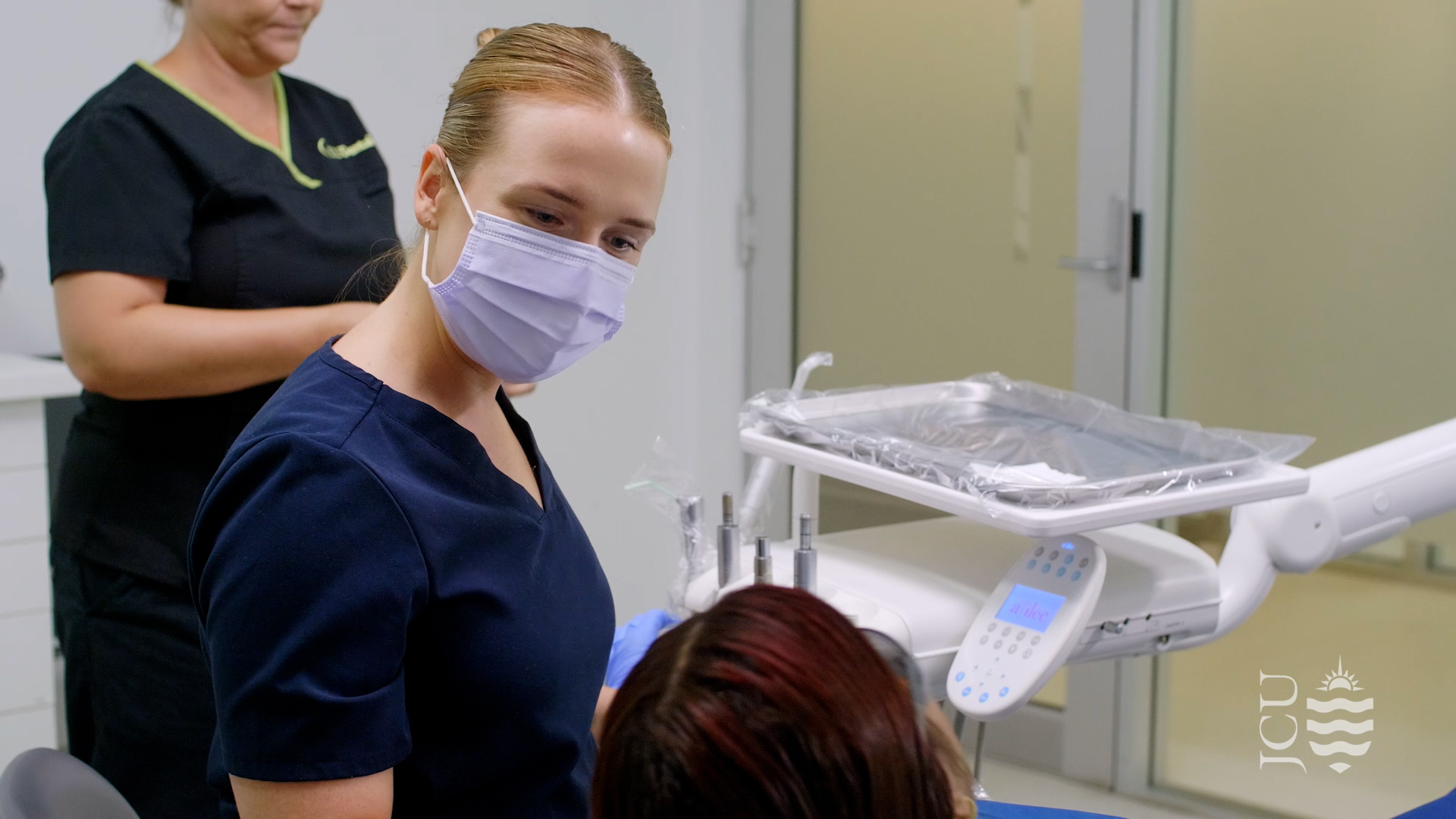
This scenario demonstrates a dentist applying a trauma-informed approach and adapting general dental practices to create a safe environment for a patient who is a victim-survivor of domestic and sexual violence. This covers building rapport and trust with the patient, confidentiality, history taking and screening for domestic violence, identifying triggers and engaging with patients to safely navigate those triggers and to best support them in the clinic.
Objectives of the Scenario
- Demonstrate understanding of a trauma-informed approach to working with people who are victim-survivors of domestic and sexual violence.
- Demonstrate skills in building rapport and trust with the patient, discussing confidentiality, completing history taking and screening for domestic and sexual violence.
- Demonstrate skills in engaging with patients who have experienced domestic and sexual violence in identifying triggers and adapting general dental practices to create a safe environment for the patient.
Video resource
This scenario demonstrates a dentist applying a trauma-informed approach and adapting general dental practices to create a safe environment for a patient who is a victim-survivor of domestic and sexual violence. The length of this video is 8:21 minutes
Print resource
This print resources includes:
- Prompts to discuss the content in the video
- Critical reflective questions
- Links to relevant resources
The following scripts are examples of how you can communicate with patients who are victim-survivors of DSV:
- Screening
- Opening the conversation
- Risk assessment
- Confidentiality
- Potentially breaking confidentiality
- Documentation
- Trauma informed practice (following a disclosure of DSV)
Please note
Each of the following scripts are examples only, and you will need to adapt them so they sound more ‘natural’ to you. Each time you use these scripts with a patient, you need to consider:
- the patient’s particular circumstances
- organisational policy and procedure
- State/Territory legislative requirements
- National legislative requirements
- Requirements of your professional association.
Points to consider
- self-care refers to activities to take care of our mental, emotional, and physiological well-being.
- when working with people who have / are experiencing DSV, be attentive to signs of vicarious trauma.
- concepts related to vicarious trauma include stress, secondary traumatic stress, compassion fatigue, empathetic distress, and burnout.
- see the resources below for detailed information on the indicators of vicarious trauma and associated concepts.
- ensure your workplace is enacting strategies to mitigate negative impacts of your work in general, and specifically in relation to vicarious trauma.
Relevant resources
There are many excellent resources on self-care and worker well-being available online or through specific worker training. Here are a few places you can start building your knowledge and skill set in relation to self-care, and mitigating vicarious trauma:
- 1800RESPECT (1800 737 732):
- Wellbeing and self-care
- Work-induced stress and vicarious trauma
- Vicarious trauma: Looking after yourself at work
- Dental Practitioner Support: An anonymous national health and wellbeing support service for dental practitioners
- For dental students: contact with your university’s student well-being service
- For dentists employed in an organisation: contact the ‘employee assistance program’ connected with your organisation.
- For dentists in private practice: contact the ‘Dental Practitioner Support’ service listed previously.
- CRANA plus: has a 24 hour ‘Bush’ hotline in addition to online resources:
- Mental health and well-being resources, with a focus on working in rural and remote locations.
- Supporting yourself after a traumatic event
- Burnout and self-care in dentistry: an article by Dr Kaejenn Tchia
Acknowledgements
This collaborative project to develop video scenarios and print resources involved many people from dentistry, social work, the domestic and sexual violence sector, and victim-survivors of domestic and sexual violence. We extend our sincere appreciation to:
- The following organisations: James Cook University Social Work; James Cook University Dentistry; JCU Dental Clinic; Cairns Regional Domestic Violence Service; Be Conscious; Warringu Aboriginal and Torres Strait Islander Corporation; Hudson Films; ADA-Dental Health Foundation.
- The dentists who provided expert advice: Adjunct Associate Professor Andrew Lee, JCU; Dr Julee Birch, Australian Dental Health Foundation.
- The people and organisations who participated in research that informed, and evaluated, the video scenarios and print resources.
The research team: Dr Ann Carrington, Senior Lecturer, Social Work, James Cook University (JCU); Dr Felicity Croker, Adjunct Associate Professor, Dentistry, JCU; Dr Alex Dancyger, Lecturer, Dentistry, JCU; Simone Dewar, Research Assistant, Social Work, JCU; Dr Vinnitta Mosby, Lecturer, Social Work JCU – First Nations advisor.
We also acknowledge the kindly contributions of the dentist, dental staff, and actor in this video:
- Dentist: Dr. Hannah Treston
- Actor: Michelle George
- Dental Staff: Victoria Cushway
With special thanks to the victim-survivors of domestic and sexual violence who participated in this research, and generously and courageously shared their stories.

This project was funded by Queensland Government Department of Justice and Attorney General.