AALL Keynote speakers
- MRCMHR
- Future Students
- JCU Global Experience
- International Students
- Student experience
- Open Day
- How to apply
- Pathways to university
- Living on Campus
- Courses
- Publications
- Mature students
- Scholarships
- Entry options
- JCU Families
- JCU Heroes Programs
- Aboriginal and Torres Strait Islander in Marine Science
- Elite Athletes
- Defence
- Capability.Co
- AI@JCU
- AALL
- Current Students
- Student Ambassador Program
- New students
- JCU Orientation
- LearnJCU
- Placements
- EDQS
- Unicare Centre and Unicampus Kids
- Graduation
- Off-Campus Students
- JCU Job Ready
- Safety and Wellbeing
- JCU Prizes
- Professional Experience Placement
- Employability Edge
- Art of Academic Writing
- Art of Academic Editing
- Careers and Employability
- Health, Wellbeing and Belonging
- Career Ready Plan
- Careers at JCU
- Partners and Community
- School Outreach and Widening Participation
- Alumni
- International partnerships
- About JCU
- Reputation and Experience
- Chancellery
- Governance
- Celebrating 50 Years
- Academy
- Indigenous Engagement
- Education Division
- Research Festival
- Graduate Research School
- Research Division
- Research and Innovation Services
- CASE
- College of Business, Law and Governance
- College of Healthcare Sciences
- College of Medicine and Dentistry
- College of Science and Engineering
- MPE
- Anthropological Laboratory for Tropical Audiovisual Research (ALTAR)
- Rural Remote and Tropical Health Systems
- Agriculture Technology and Adoption Centre (AgTAC)
- Advanced Analytical Centre
- Australian Institute of Tropical Health and Medicine
- AMHHEC
- Aquaculture Solutions
- AMHRA
- JCU Digital Wellbeing Group
- ARCSTA
- Lions Marine Research Trust
- Australian Tropical Herbarium
- Australian Quantum & Classical Transport Physics Group
- Boating and Diving
- Clinical Psychedelic Research Lab
- Centre for Tropical Biosecurity
- Centre for Tropical Bioinformatics and Molecular Biology
- CITBA
- CMT
- Centre for Disaster Solutions
- CSTFA
- Cyclone Testing Station
- The Centre for Disaster Studies
- Daintree Rainforest Observatory
- Fletcherview
- JCU Eduquarium
- JCU Turtle Health Research
- MARFU
- Orpheus
- TESS
- JCU Ideas Lab
- CADSI
- CNL
- TARL
- eResearch
- Indigenous Education and Research Centre
- Past Course and Subject Handbooks
- Estate
- Work Health and Safety
- Staff
- Discover Nature at JCU
- Cyber Security Hub
- Association of Australian University Secretaries
- Services Division
- Environmental Research Complex [ERC]
- Foundation for Australian Literary Studies
- Gender Equity at JCU
- Give to JCU
- Indigenous Legal Needs Project
- Inherent Requirements
- IsoTropics Lab
- IT Services
- JCU Webinars
- JCU Events
- JCU Motorsports
- JCU Sport
- Library
- Mabo Decision: 30 years on
- Marine Geophysics Laboratory
- Office of the Vice Chancellor and President
- Outstanding Alumni
- Policy
- PAHL
- Queensland Research Centre for Peripheral Vascular Disease
- Rapid Assessment Unit
- RDIM
- Researcher Development Portal
- Roderick Centre for Australian Literature and Creative Writing
- Contextual Science for Tropical Coastal Ecosystems
- State of the Tropics
- Strategic Procurement
- Student profiles
- SWIRLnet
- TREAD
- TropEco for Staff and Students
- TropCOVID: Mapping COVID-19 Immunity in Far North Queensland
- TUDLab
- VAVS Home
- WHOCC for Vector-borne & NTDs
- Media
- Copyright and Terms of Use
- Australian Institute of Tropical Health & Medicine
- JCU Respect
- Pay review
- Research
Program
The 17th Biennial Association for Academic Language and Learning (AALL) Conference is scheduled to take place from December 3–5, 2025, at James Cook University in Townsville, Queensland.
The conference program is now available here (last update 10 November) — please note this version is subject to change.
Attendees can anticipate a comprehensive schedule featuring keynote presentations, interactive workshops, and engaging panel discussions.
We look forward to welcoming you to Townsville for this enriching event.
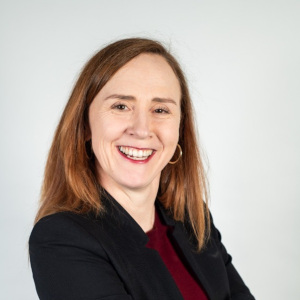
Keynote Speakers
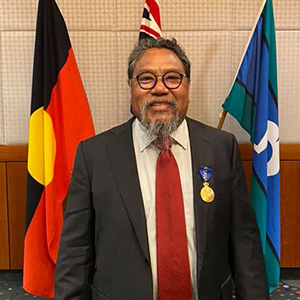
Keynote 1: Professor Martin Nakata
Hyper-Personalised Learning Support Systems
Professor N M Nakata, Deputy Vice-Chancellor Indigenous Education & Strategy — James Cook University
Universities are under increasing pressure to reach new markets of students but remain trapped in old models of student support services that were never built for them. When a system emerges that works for underprepared learners, the instinctive response is: Nice, but it can't scale. This presentation challenges that reflex. It presents a nine-year, data-rich student learning support system that addresses Bloom's 2-sigma problem to highlight what’s possible with AI-enhanced learning support systems. The question for universities in these new times is no longer whether such systems can work but whether institutions are ready to shift the structures that continue to resist them.

Professor Martin Nakata is Deputy Vice-Chancellor Indigenous Education & Strategy at James Cook University and a life member of AALL.
A leading Indigenous academic in Australia, and the first Torres Strait Islander to graduate with a PhD. He has had an extensive academic career in the fields of Indigenous education, Indigenous Studies, and Indigenous Knowledge. His research work includes a longitudinal study of the academic preparation of Indigenous students for university studies.
He has presented over seventy plenary and keynote addresses at professional conferences in Iceland, Norway, Scotland, Greece, South Africa, Papua New Guinea, Philippines, Thailand, Malaysia, Taiwan, South Korea, Japan, Canada, United States, Peru, Aotearoa (NZ) and Australia, and has published extensively on Australian Indigenous education issues in national and international academic journals, anthologies, and books.
Keynote 2: Dr Alicja Syska and Dr Carina Buckley
The essential role of Learning Developers in building spaces of trust, connection, and joy in higher education
Dr Alicja Syska and Dr Carina Buckley — University of Plymouth and Southampton Solent University
At a time when higher education grapples with critical questions about its purpose and worth, Learning Development must likewise confront its identity, value and future. This keynote explores what becomes possible when we stop defending our existence and start claiming our essential role. Drawing from our book and recent practice, we’ll examine how trust, connection, and joy aren’t nice-to-haves but fundamental to meaningful learning. We’ll consider how LD’s unique institutional positioning – often seen as a vulnerability – might actually be our greatest strategic advantage, even a superpower. Join us for a provocative conversation about legacy, transformation, and why Learning Development has never been more vital.
Appearing online from the UK, Carina Buckley and Alicja Syska are active members of our sister association, ALDinHE (Association for Learning Development in Higher Education), and editors of How to Be a Learning Developer in Higher Education: Critical Perspectives, Community and Practice(2024), an essential guide for new and established practitioners concerned with student learning and development.
Dr Alicja Syska is a Learning Development Advisor at the University of Plymouth where she also holds lecturing posts in Education and History. Alicja has a Ph.D. in American Studies from Saint Louis University, USA, is a Senior Fellow of Advance HE and an ALDinHE Certified Leading Practitioner. She is Editor-In-Chief at the Journal of Learning Development in Higher Education, which she has led since 2019, and a co-host of the Learning Development Project podcast. Her research interests include writing, community building, Third Space identity, and researcher development.

Dr Carina Buckley is the Learning Design Manager at Southampton Solent University. She has a Ph.D. in Archaeology, and is an Advance HE Principal Fellow and a Certified Leading Practitioner in Learning Development.
She is a co-host of the Learning Development Project podcast and a member of the Editorial Board of the Journal of Learning Development in Higher Education. Her research focuses on the intersection of writing and identity. She is a trained facilitator in Lego Serious Play.

Keynote 3: Dr Alexandra Garcia and Katherine Olston
Obstacles and enablers of uptake of Academic Language Development offerings
Dr Alexandra Garcia and Katherine Olsten — The University of Sydney
Increased access to tertiary education has highlighted the need to provide access to effective academic language development (ALD) offerings. Universities are increasingly opting for the implementation of Post Entry Language Assessments (PELAs) to identify those students most in need of support. The University of Sydney has implemented a non-compulsory model of language screening and follow-up support through the Student Communication and Needs Analysis (SCANA) initiative. Given recent legislative changes requiring universities to evidence effective, early support to facilitate student success, it is crucial to identify the factors that either enable or hinder uptake of opportunities for ALD. This presentation reports on a study used demographic data from over 8000 students, surveys and focus groups to identify the obstacles and enablers of uptake of an online language screening task and accompanying support workshops.
Dr Alexandra García is the Learning Hub Lead – Academic Language and Learning at the University of Sydney. She holds a PhD in Linguistics from Macquarie University. She is a member of the AALL professional development committee, a co-editor of the Journal of Academic Language and Learning and a member of the editorial board of the Australian Review of Applied Linguistics. She is currently researching the obstacles and enablers of uptake of academic language development offerings amongst first-year university students.
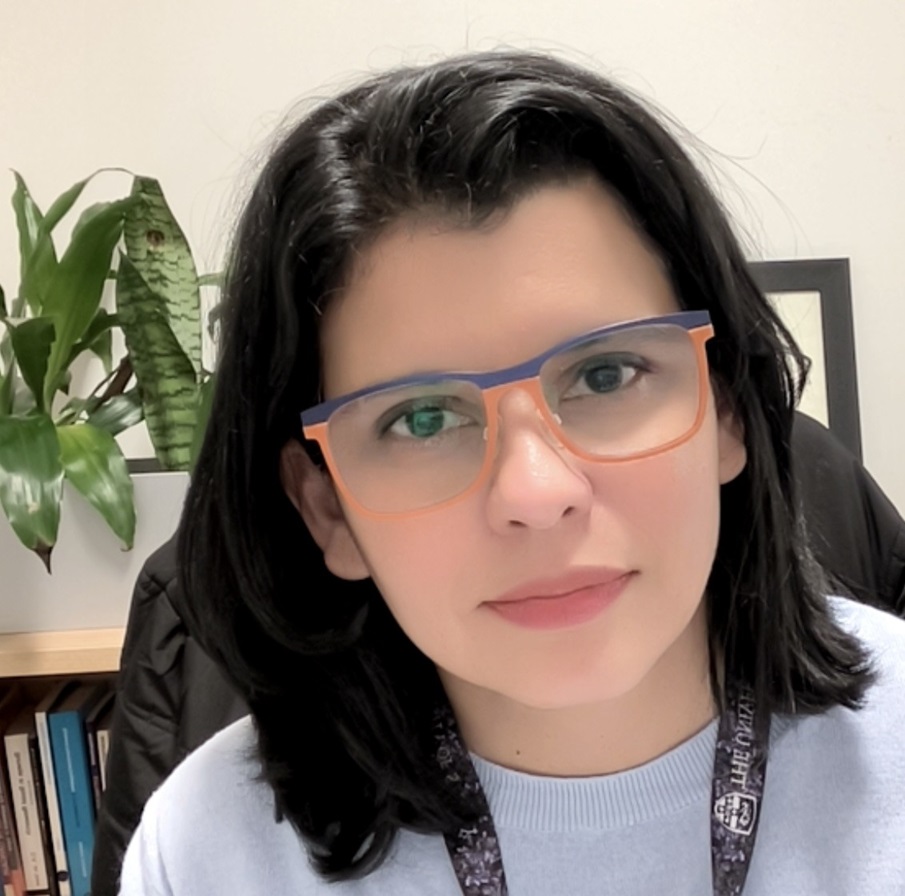
Katherine Olston is the Director of the Learning Hub & Centre for English Teaching at The University of Sydney. She has also been convenor of the English Australia Post-entry English & Academic language SIG, and a board member of NEAS Australia and UECA Australia. Her PhD research is investigating the challenge faced by tertiary education to prepare students to develop graduate attributes to meet the demands of a rapidly changing and uncertain future.