
Agriculture Technology and Adoption Centre (AgTAC) Research Impact While the pigs are kept away, the turtles can play.
While the pigs are kept away, the turtles can play.
- MRCMHR
- Future Students
- JCU Global Experience
- International Students
- Student experience
- Open Day
- How to apply
- Pathways to university
- Living on Campus
- Courses
- Publications
- Mature students
- Scholarships
- Entry options
- JCU Families
- JCU Heroes Programs
- Aboriginal and Torres Strait Islander in Marine Science
- Elite Athletes
- Defence
- Capability.Co
- AI@JCU
- AALL
- Current Students
- Student Ambassador Program
- New students
- JCU Orientation
- LearnJCU
- Placements
- EDQS
- Unicare Centre and Unicampus Kids
- Graduation
- Off-Campus Students
- JCU Job Ready
- Safety and Wellbeing
- JCU Prizes
- Professional Experience Placement
- Employability Edge
- Art of Academic Writing
- Art of Academic Editing
- Careers and Employability
- Health, Wellbeing and Belonging
- Career Ready Plan
- Careers at JCU
- Partners and Community
- School Outreach and Widening Participation
- Alumni
- International partnerships
- About JCU
- Reputation and Experience
- Chancellery
- Governance
- Celebrating 50 Years
- Academy
- Indigenous Engagement
- Education Division
- Research Festival
- Graduate Research School
- Research Division
- Research and Innovation Services
- CASE
- College of Business, Law and Governance
- College of Healthcare Sciences
- College of Medicine and Dentistry
- College of Science and Engineering
- MPE
- Anthropological Laboratory for Tropical Audiovisual Research (ALTAR)
- Rural Remote and Tropical Health Systems
- Agriculture Technology and Adoption Centre (AgTAC)
- Advanced Analytical Centre
- Australian Institute of Tropical Health and Medicine
- AMHHEC
- Aquaculture Solutions
- AMHRA
- JCU Digital Wellbeing Group
- ARCSTA
- Lions Marine Research Trust
- Australian Tropical Herbarium
- Australian Quantum & Classical Transport Physics Group
- Boating and Diving
- Clinical Psychedelic Research Lab
- Centre for Tropical Biosecurity
- Centre for Tropical Bioinformatics and Molecular Biology
- CITBA
- CMT
- Centre for Disaster Solutions
- CSTFA
- Cyclone Testing Station
- The Centre for Disaster Studies
- Daintree Rainforest Observatory
- Fletcherview
- JCU Eduquarium
- JCU Turtle Health Research
- MARFU
- Orpheus
- TESS
- JCU Ideas Lab
- CADSI
- CNL
- TARL
- eResearch
- Indigenous Education and Research Centre
- Past Course and Subject Handbooks
- Estate
- Work Health and Safety
- Staff
- Discover Nature at JCU
- Cyber Security Hub
- Association of Australian University Secretaries
- Services Division
- Environmental Research Complex [ERC]
- Foundation for Australian Literary Studies
- Gender Equity at JCU
- Give to JCU
- Indigenous Legal Needs Project
- Inherent Requirements
- IsoTropics Lab
- IT Services
- JCU Webinars
- JCU Events
- JCU Motorsports
- JCU Sport
- Library
- Mabo Decision: 30 years on
- Marine Geophysics Laboratory
- Office of the Vice Chancellor and President
- Outstanding Alumni
- Policy
- PAHL
- Queensland Research Centre for Peripheral Vascular Disease
- Rapid Assessment Unit
- RDIM
- Researcher Development Portal
- Roderick Centre for Australian Literature and Creative Writing
- Contextual Science for Tropical Coastal Ecosystems
- State of the Tropics
- Strategic Procurement
- Student profiles
- SWIRLnet
- TREAD
- TropEco for Staff and Students
- TropCOVID: Mapping COVID-19 Immunity in Far North Queensland
- TUDLab
- VAVS Home
- WHOCC for Vector-borne & NTDs
- Media
- Copyright and Terms of Use
- Australian Institute of Tropical Health & Medicine
- JCU Respect
- Pay review
- Research
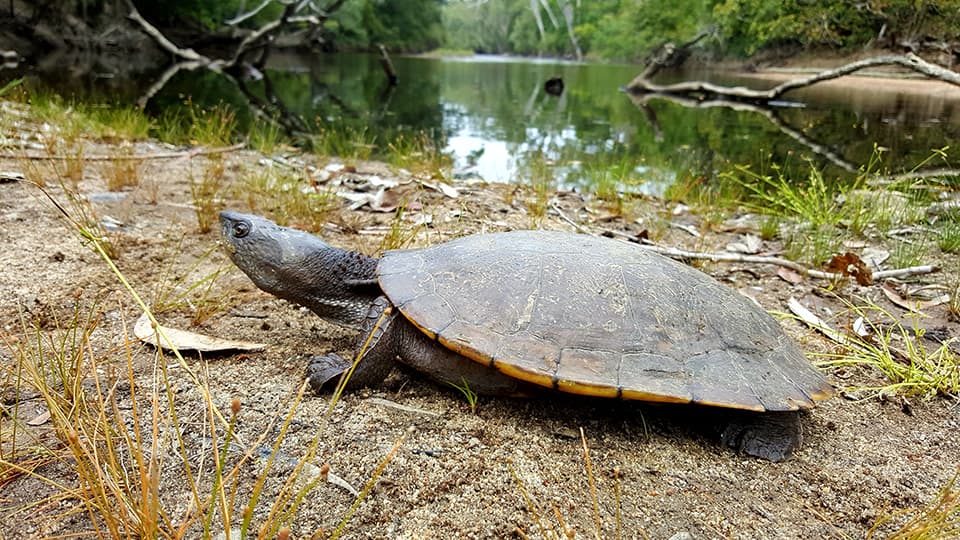
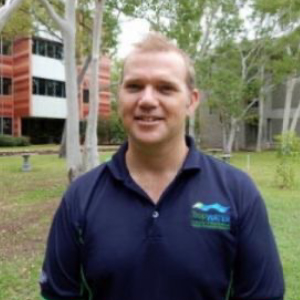
Associate Professor Nathan Waltham has been working with a team of JCU scientists, the North Australian Indigenous Land and Sea Management Alliance and Traditional Owners in Cape York to hold at bay the feral pig invasion of agricultural lands and coastal wetlands whilst still allowing freshwater turtles safe access between water bodies.
Associate Professor Nathan Waltham
“This research project has been so rewarding on many levels, working with the Ranger group to solve the problem of freshwater turtle movement where fences are installed to protect wetlands from pig damage has been very successful.”
Feral pigs are the worst invasive mammal in Australia. These feral animals are destroying agricultural grazing and cropping lands, contaminating water sources, and decimating coastal wetlands which are crucial habitats for native plants and animals.
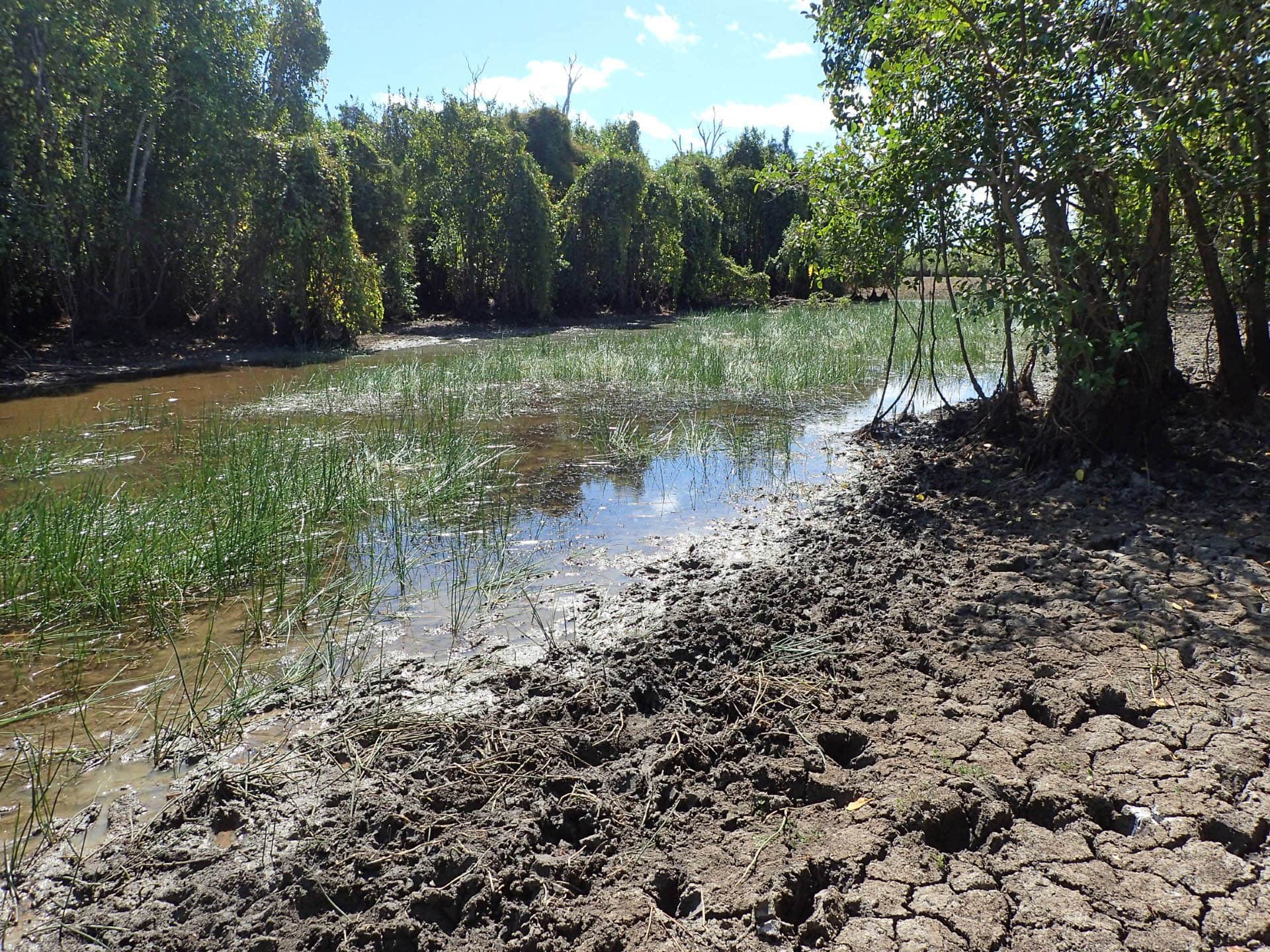
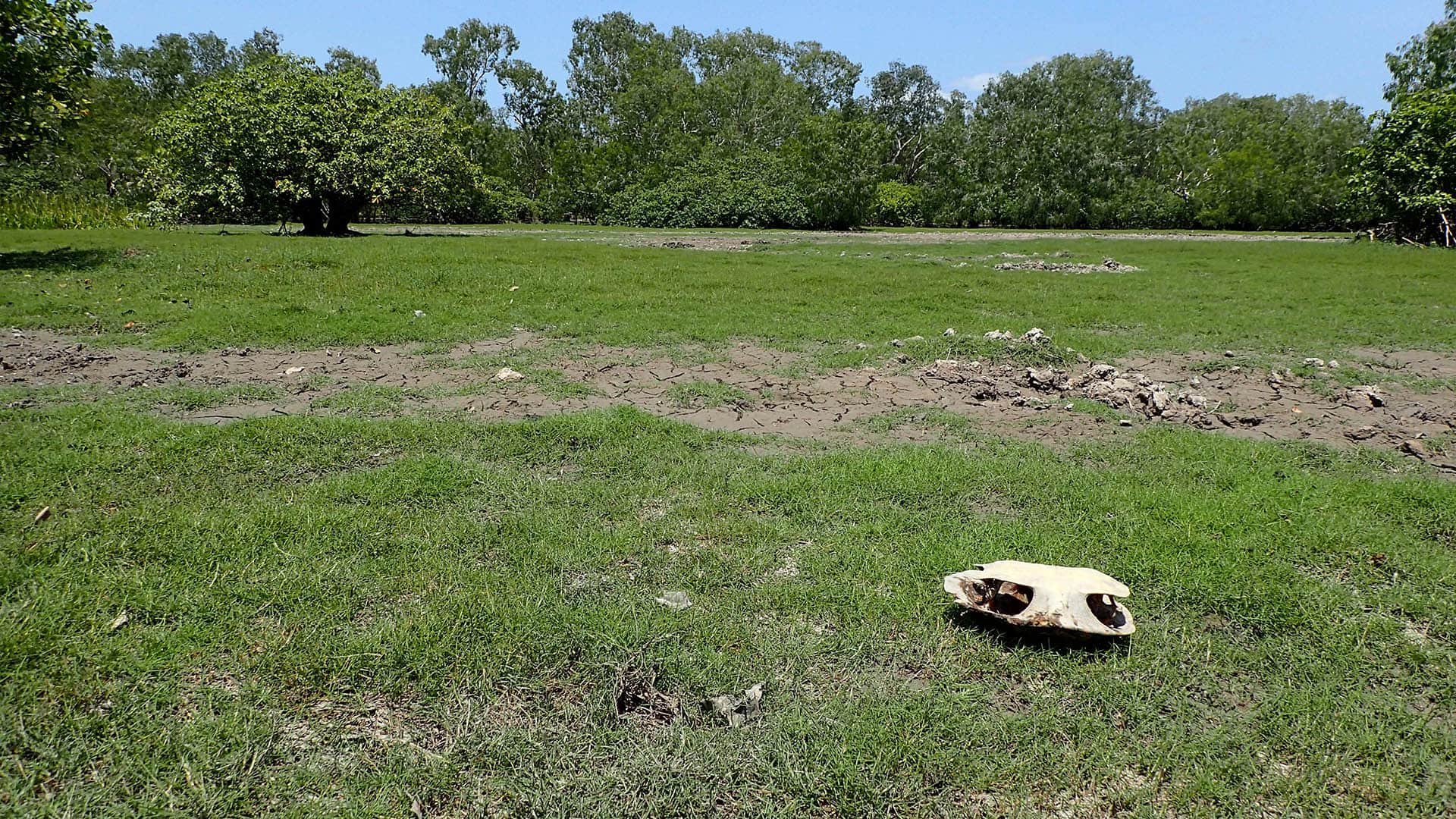
Image left: Creek and wetland damage caused by feral pigs. Image right: Environmental impacts caused by feral pigs
Fencing is a common management practice for agricultural properties and, when well-maintained have been a successful solution. Aak Puul Ngantam (APN) and Kalan Enterprises, project partners on Cape York, have also been using exclusion fences to protect the wetlands for many years.
The challenge to date has been keeping the balance right between excluding the feral pigs whilst allowing the native species to continue to traverse the land between water sources. Freshwater turtles are one species that rely on moving between water bodies during critical lifecycle periods and when migrating between rivers and creeks during the dry season to avoid dehydration or starvation.
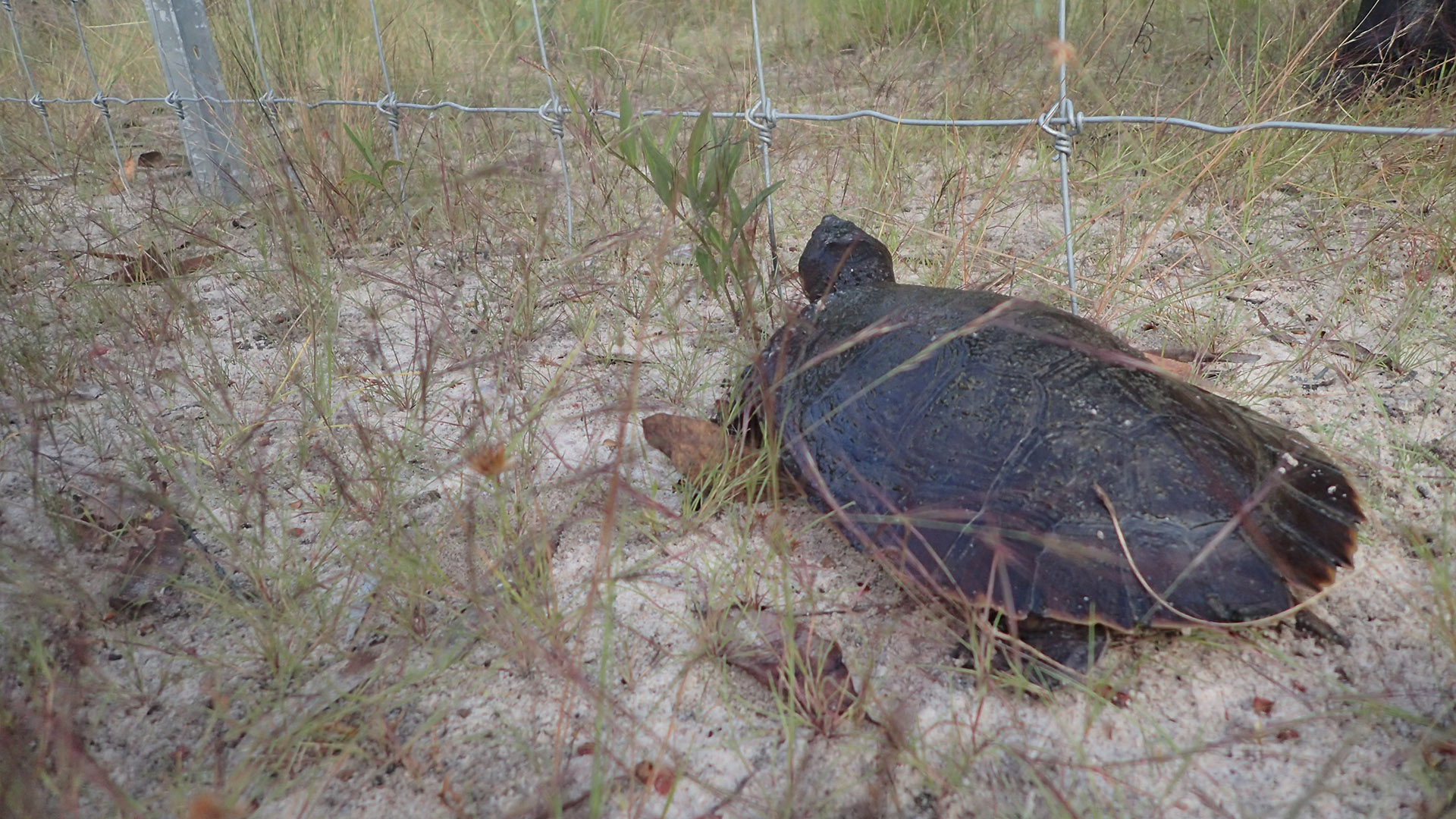
Image: Fencing creates challenges for traversing turtles
To allow the turtles to continue this practice without getting trapped in fencing around agricultural properties or wetlands, a research team led by JCU TropWATER & AgTAC’s Associate Professor Nathan Waltham has developed “turtle gates”. These gates are a fast and cost-effective way to modify common exclusion fences with little more than a pair of pliers.
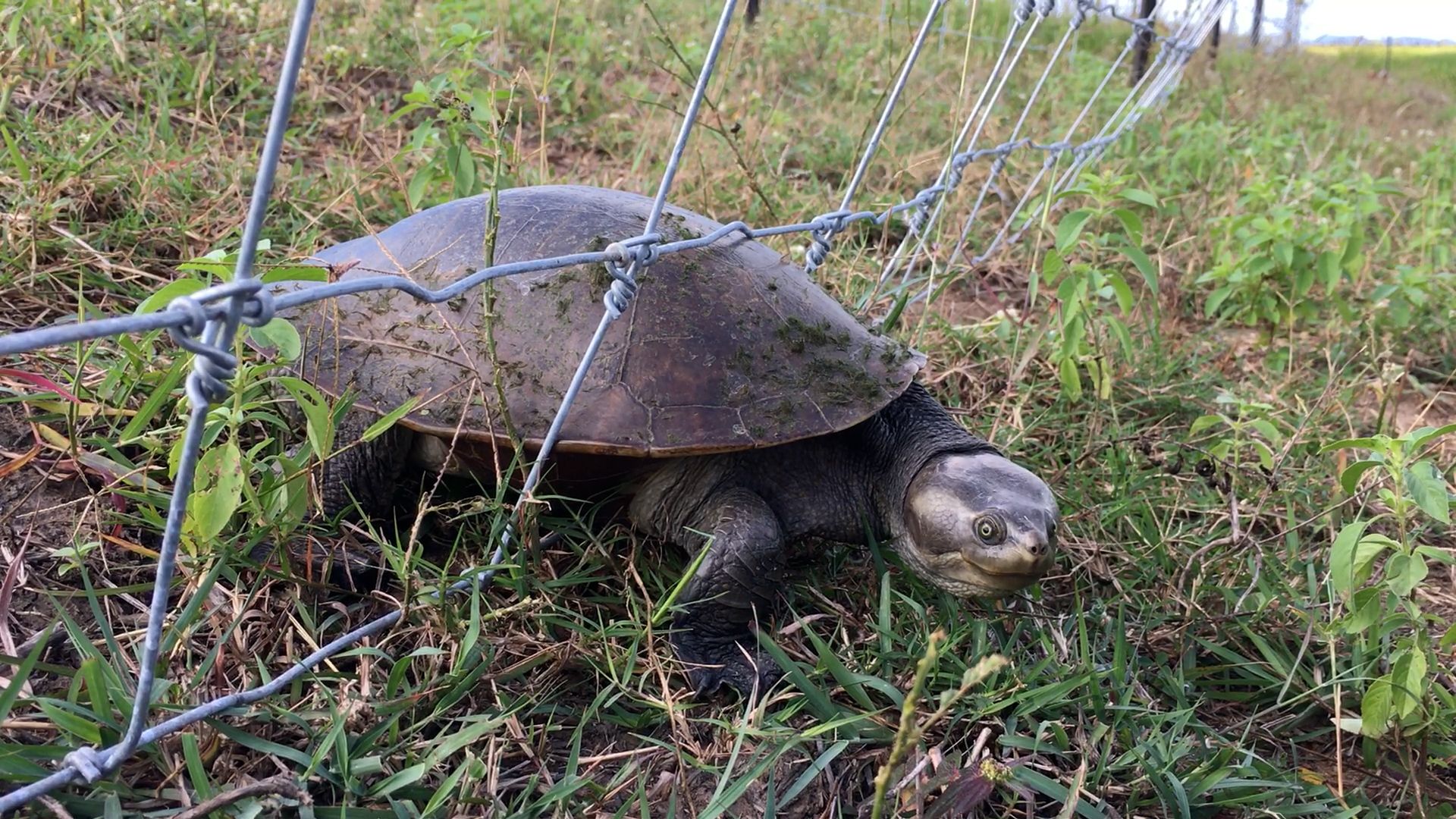
Image: Turtle friendly gate providing a solution
This research was funded by the Australian Government’s National Environmental Science Program through the Northern Australia Environmental Resources Hub.
Contact details
Associate Professor Nathan Waltham
Senior Principal Research Officer, TropWATER and CSE, James Cook University

Project Research Publications
Simple fence modification increases land movement prospects for freshwater turtles on floodplains - Wildlife Biology