
Australian Tropical Herbarium Herbarium Staff Daniel Montesinos
Daniel Montesinos
- MRCMHR
- Future Students
- JCU Global Experience
- International Students
- Student experience
- Open Day
- How to apply
- Pathways to university
- Living on Campus
- Courses
- Publications
- Mature students
- Scholarships
- Entry options
- JCU Families
- JCU Heroes Programs
- Aboriginal and Torres Strait Islander in Marine Science
- Elite Athletes
- Defence
- Capability.Co
- AI@JCU
- AALL
- Current Students
- Student Ambassador Program
- New students
- JCU Orientation
- LearnJCU
- Placements
- EDQS
- Unicare Centre and Unicampus Kids
- Graduation
- Off-Campus Students
- JCU Job Ready
- Safety and Wellbeing
- JCU Prizes
- Professional Experience Placement
- Employability Edge
- Art of Academic Writing
- Art of Academic Editing
- Careers and Employability
- Health, Wellbeing and Belonging
- Career Ready Plan
- Careers at JCU
- Partners and Community
- School Outreach and Widening Participation
- Alumni
- International partnerships
- About JCU
- Reputation and Experience
- Chancellery
- Governance
- Celebrating 50 Years
- Academy
- Indigenous Engagement
- Education Division
- Research Festival
- Graduate Research School
- Research Division
- Research and Innovation Services
- CASE
- College of Business, Law and Governance
- College of Healthcare Sciences
- College of Medicine and Dentistry
- College of Science and Engineering
- MPE
- Anthropological Laboratory for Tropical Audiovisual Research (ALTAR)
- Rural Remote and Tropical Health Systems
- Agriculture Technology and Adoption Centre (AgTAC)
- Advanced Analytical Centre
- AMHHEC
- Aquaculture Solutions
- AMHRA
- JCU Digital Wellbeing Group
- ARCSTA
- Lions Marine Research Trust
-
Australian Tropical Herbarium
- About the Herbarium
-
Research and Programs
- Theme 1 – Tropical Biodiversity Science
- Theme 2 – Education, Knowledge Capture and Translation, Expert Advice
- Theme 3 –Biodiversity in a Changing World
- Theme 4 – Economic Botany
- Theme 5 – Tropical Biosecurity
- Tropical Indigenous Ethnobotany Centre (TIEC)
- Publications
- Online Keys to Australian Tropical Rainforest Plants
- Plant Identification Workshops
- Public Reference Collection
- Herbarium Staff
- Australian Quantum & Classical Transport Physics Group
- Boating and Diving
- Clinical Psychedelic Research Lab
- Centre for Tropical Biosecurity
- Centre for Tropical Bioinformatics and Molecular Biology
- CITBA
- CMT
- Centre for Disaster Solutions
- CSTFA
- Cyclone Testing Station
- The Centre for Disaster Studies
- Daintree Rainforest Observatory
- Fletcherview
- JCU Eduquarium
- JCU Turtle Health Research
- MARFU
- Orpheus
- TESS
- JCU Ideas Lab
- CADSI
- CNL
- TARL
- eResearch
- Indigenous Education and Research Centre
- Past Course and Subject Handbooks
- Estate
- Work Health and Safety
- Staff
- Discover Nature at JCU
- Cyber Security Hub
- Association of Australian University Secretaries
- Services Division
- Environmental Research Complex [ERC]
- Foundation for Australian Literary Studies
- Gender Equity at JCU
- Give to JCU
- Indigenous Legal Needs Project
- Inherent Requirements
- IsoTropics Lab
- IT Services
- JCU Webinars
- JCU Events
- JCU Motorsports
- JCU Sport
- Library
- Mabo Decision: 30 years on
- Marine Geophysics Laboratory
- Office of the Vice Chancellor and President
- Outstanding Alumni
- Policy
- PAHL
- Queensland Research Centre for Peripheral Vascular Disease
- Rapid Assessment Unit
- RDIM
- Researcher Development Portal
- Roderick Centre for Australian Literature and Creative Writing
- Contextual Science for Tropical Coastal Ecosystems
- State of the Tropics
- Strategic Procurement
- Student profiles
- SWIRLnet
- TREAD
- TropEco for Staff and Students
- TropCOVID: Mapping COVID-19 Immunity in Far North Queensland
- TUDLab
- VAVS Home
- WHOCC for Vector-borne & NTDs
- Media
- Copyright and Terms of Use
- Australian Institute of Tropical Health & Medicine
- JCU Respect
- Pay review
- Research
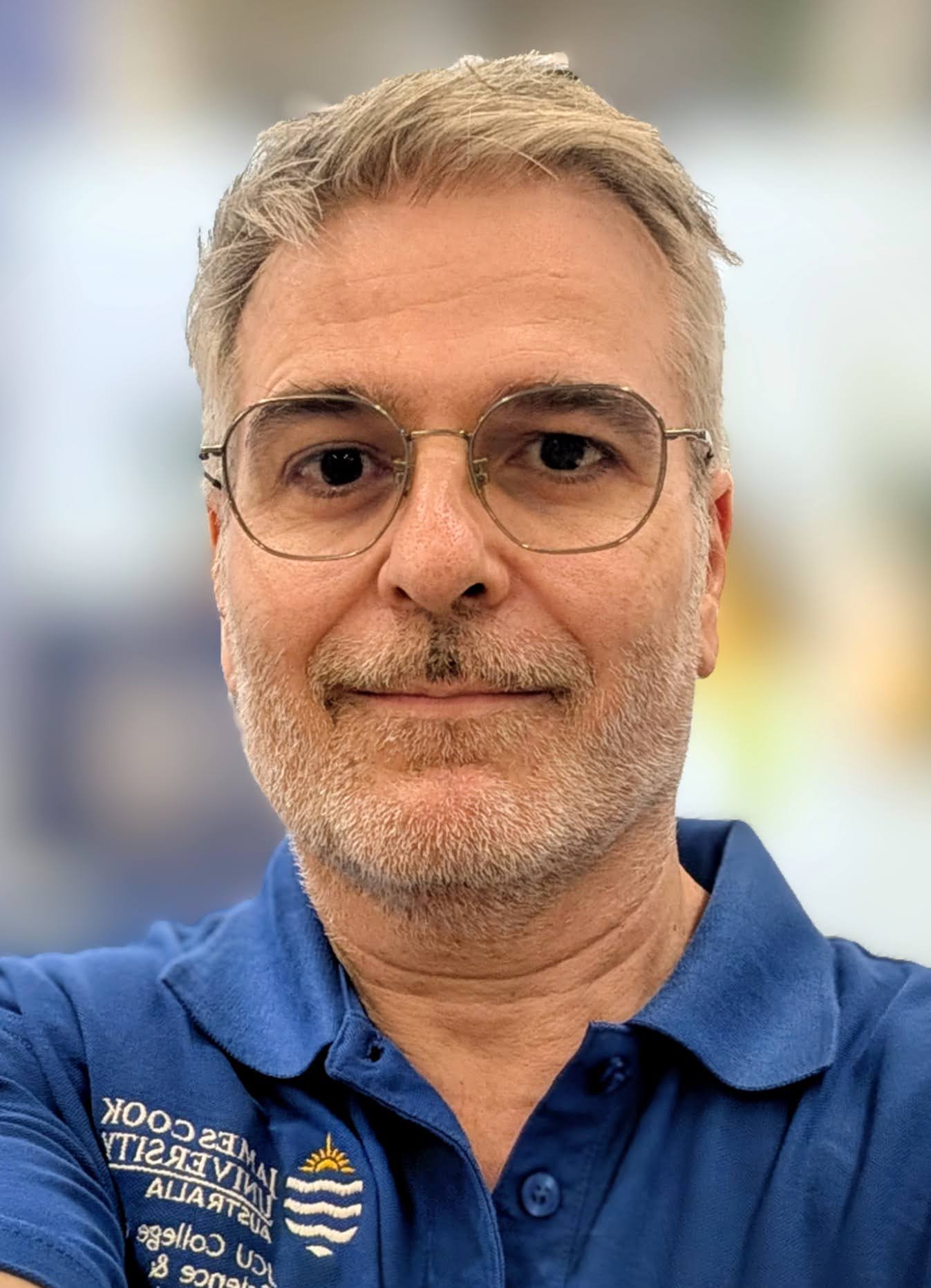
Senior Research FellowPhD, CSIC/University of Valencia, 2007 MSc, Biodiversity and Evolutionary Biology, CIBEB/University of Valencia, 2002 BSc, Biology, University of Valencia, 1999 |
Affiliations | |
Editor in Chief: |
Office: | E2.204, Sir Robert Norman Building (E2), James Cook University, PO Box 6811, Cairns, QLD 4870 |
Phone: | +61 (0)7 4232 1584 |
Email: | |
JCU profile: | https://portfolio.jcu.edu.au/Researchers/daniel.montesinos |
External profiles
Research
I am broadly interested in the evolutionary ecology of plants. My main focus of research is on the rapid evolution of locally adapted traits of invasive species across large biogeographical regions, with a special focus on reproduction, reproductive systems, and seed ecology.
- Invasive plant ecology: Invasive plants are unique "unplanned experiments" that allow us to study "in real time" how local adaptation and evolution in allopatry develop, and how natural communities respond to them. My approach is based on three angles: biogeography, reproductive ecology, and seed ecology.
- Plant conservation: About 36% of all landmasses are located within the tropics. However, tropical areas hold between 60 to 80% of all the world’s terrestrial biodiversity. Northern Australia is a unique location with immense opportunities for biodiversity research and to develop conservation projects, containing numerous endemic plants with highly restricted distributions, many of them threatened.
- Biogeography: Biogeographic comparisons of closely related invasive and non-invasive species provide novel insights into invasive ecology. My work exemplifies how even non-invasive exotic species are adapting constantly to their non-native ranges, and that many of the trait-shifts detected between native and non-native ranges of invasive species are frequently found also for less successful non-invasive exotics. My studies indicate that local adaptation and reproductive isolation can occur at faster rates than was previously thought, and have broad biogeographic implications for the understanding of allopatry and speciation processes.
- Reproductive ecology: I have pioneered the discovery of reproductive barriers arising between native and non-native populations of an invasive species. These incipient reproductive barriers can result from the accumulation of locally adaptive traits. Locally adapted traits themselves can be inherited in different ways, and the mode of inheritance contributes to determine the of evolutionary dynamics that will follow. My work has shown that some locally adapted invasive traits present intermediate inheritance; e.g., the offspring of a strong and a weak competitor presents intermediate competitive ability. In the presence of significant gene flow, this would be consistent with homogenising gene flow, in which population admixture leads to individuals with intermediate fitness. However, some other invasive species present dominant inheritance of at least some fitness traits, when admixture between strong and weak competitor genotypes results in an offspring of strong competitors.
- Seed ecology: Seeds are crucial for the establishment and persistence of invasive weeds. Seed ecology and soil seed bank management is thus an essential component of plant invasions, and my research aims to understand weed seed dynamics and to take advantage of that knowledge to be able to effectively and efficiently manage plant invasions.
Work with me
PhD, Masters, Honours, and Postdoc opportunities. I am always open for expressions of interest for motivated students and researchers willing to take advantage of the ideal conditions offered by the ATH and the College of Science and Engineering at JCU, in the Australian tropics. Contact me to explore potential areas of mutual interest and feasible funding sources.
JCU's offers PhD scholarships, for both domestic and international candidates. Interested candidates need to make contact well in advance to assess suitability and to prepare a viable proposal. The Australian Research Council offers several opportunities for Postdoctoral research in Australia, including the DECRA for early-career, and Future Fellowships for mid-career researchers. I am also a suitable host for Marie Sklodowska-Curie global fellowships by the European Commission, and for other calls and organisations.
\