
JCU Ideas Lab Blog Bringing manufacturing back to regional Australia
JCU Founder-in-residence aiming to bring manufacturing back to regional Australia
- MRCMHR
- Future Students
- JCU Global Experience
- International Students
- Student experience
- Open Day
- How to apply
- Pathways to university
- Living on Campus
- Courses
- Publications
- Mature students
- Scholarships
- Entry options
- JCU Families
- JCU Heroes Programs
- Aboriginal and Torres Strait Islander in Marine Science
- Elite Athletes
- Defence
- Capability.Co
- AI@JCU
- AALL
- Current Students
- Student Ambassador Program
- New students
- JCU Orientation
- LearnJCU
- Placements
- EDQS
- Unicare Centre and Unicampus Kids
- Graduation
- Off-Campus Students
- JCU Job Ready
- Safety and Wellbeing
- JCU Prizes
- Professional Experience Placement
- Employability Edge
- Art of Academic Writing
- Art of Academic Editing
- Careers and Employability
- Health, Wellbeing and Belonging
- Career Ready Plan
- Careers at JCU
- Partners and Community
- School Outreach and Widening Participation
- Alumni
- International partnerships
- About JCU
- Reputation and Experience
- Chancellery
- Governance
- Celebrating 50 Years
- Academy
- Indigenous Engagement
- Education Division
- Research Festival
- Graduate Research School
- Research Division
- Research and Innovation Services
- CASE
- College of Business, Law and Governance
- College of Healthcare Sciences
- College of Medicine and Dentistry
- College of Science and Engineering
- MPE
- Anthropological Laboratory for Tropical Audiovisual Research (ALTAR)
- Rural Remote and Tropical Health Systems
- Agriculture Technology and Adoption Centre (AgTAC)
- Advanced Analytical Centre
- Australian Institute of Tropical Health and Medicine
- AMHHEC
- Aquaculture Solutions
- AMHRA
- JCU Digital Wellbeing Group
- ARCSTA
- Lions Marine Research Trust
- Australian Tropical Herbarium
- Australian Quantum & Classical Transport Physics Group
- Boating and Diving
- Clinical Psychedelic Research Lab
- Centre for Tropical Biosecurity
- Centre for Tropical Bioinformatics and Molecular Biology
- CITBA
- CMT
- Centre for Disaster Solutions
- CSTFA
- Cyclone Testing Station
- The Centre for Disaster Studies
- Daintree Rainforest Observatory
- Fletcherview
- JCU Eduquarium
- JCU Turtle Health Research
- MARFU
- Orpheus
- TESS
- JCU Ideas Lab
- CADSI
- CNL
- TARL
- eResearch
- Indigenous Education and Research Centre
- Past Course and Subject Handbooks
- Estate
- Work Health and Safety
- Staff
- Discover Nature at JCU
- Cyber Security Hub
- Association of Australian University Secretaries
- Services Division
- Environmental Research Complex [ERC]
- Foundation for Australian Literary Studies
- Gender Equity at JCU
- Give to JCU
- Indigenous Legal Needs Project
- Inherent Requirements
- IsoTropics Lab
- IT Services
- JCU Webinars
- JCU Events
- JCU Motorsports
- JCU Sport
- Library
- Mabo Decision: 30 years on
- Marine Geophysics Laboratory
- Office of the Vice Chancellor and President
- Outstanding Alumni
- Policy
- PAHL
- Queensland Research Centre for Peripheral Vascular Disease
- Rapid Assessment Unit
- RDIM
- Researcher Development Portal
- Roderick Centre for Australian Literature and Creative Writing
- Contextual Science for Tropical Coastal Ecosystems
- State of the Tropics
- Strategic Procurement
- Student profiles
- SWIRLnet
- TREAD
- TropEco for Staff and Students
- TropCOVID: Mapping COVID-19 Immunity in Far North Queensland
- TUDLab
- VAVS Home
- WHOCC for Vector-borne & NTDs
- Media
- Copyright and Terms of Use
- Australian Institute of Tropical Health & Medicine
- JCU Respect
- Pay review
- Research
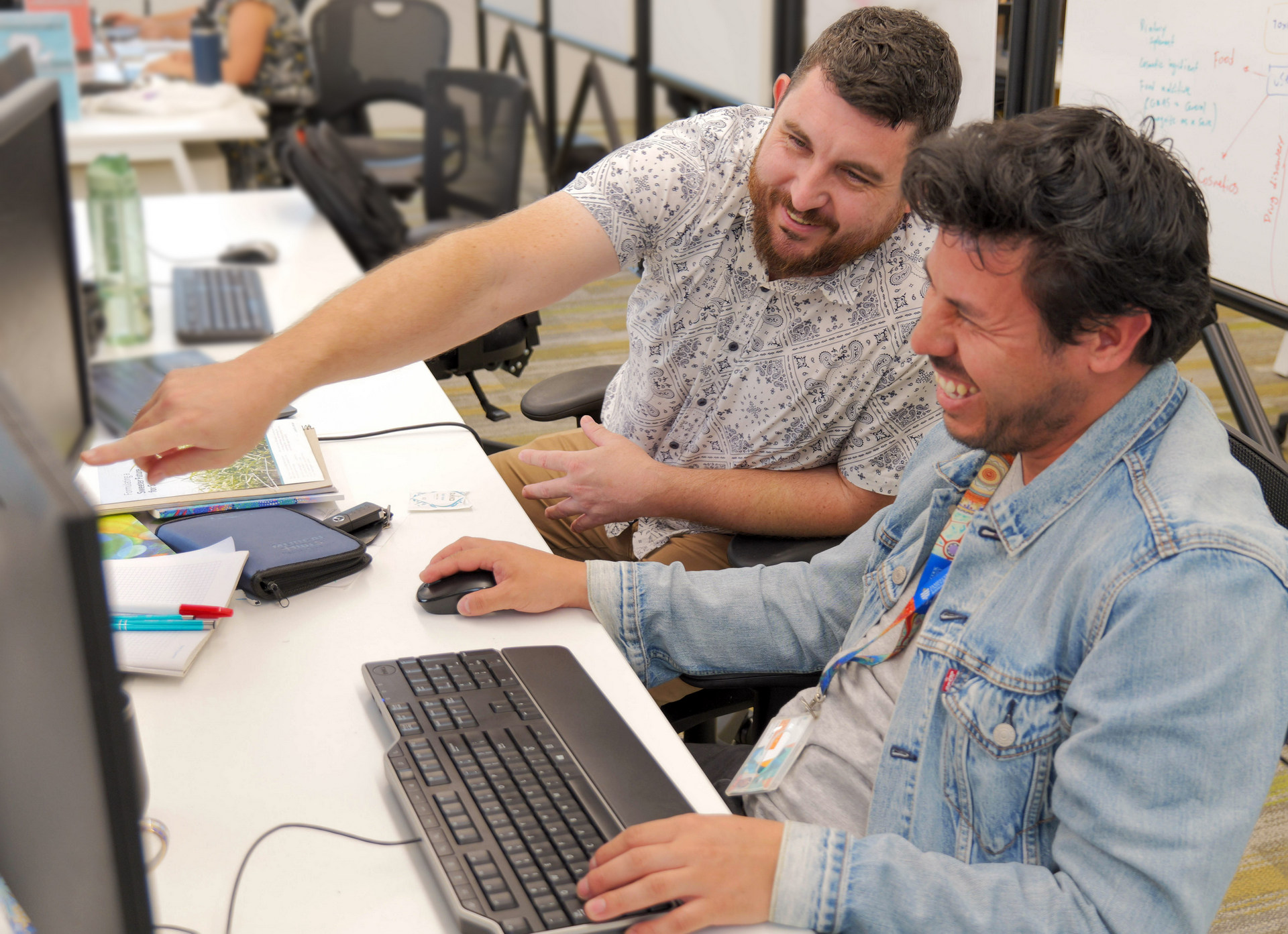
Kim Bender (left) and Ag Intellisense co-founder Andres Ruiz (right)
Kim Bender didn’t have to go far after graduating with a Bachelor of Engineering (Honours) from JCU to find a home for his new startup. He simply moved into the Ideas Lab as a Founder in Residence in 2023. Now he’s embarking on a new adventure: a PhD@Work at JCU.
“Working for myself and founding my own business was my whole reason for going to university,” Kim says. “So, I finished my IoT and embedded systems engineering degree at JCU in 2023, and I started IOTIS (Innovators in IOT Solutions) right away.
"Starting a business is challenging, and especially in Far North Queensland, for such a niche industry," Kim says. "IOTIS initially focused on product design for external customers, and building that initial client base took time. Fortunately, some of our first clients were other founders here at the Ideas Lab.”
That was in 2023, and Kim says he has now started moving away from client work and towards designing his own AI-powered products. “One example would be a smart speaker, which uses a local large language model,” he says. “Unlike other products on the market, users will be able to talk to the speaker without being connected to the internet. Their data will be their own and not sent anywhere else.”
PhD@Work
Aside from being involved in as a co-founder of the CAVE at the JCU Ideas Lab with Dr Samantha J Horseman, and a second startup, Ag Intellisense, Kim is currently applying for the PhD@Work program at JCU. “My PhD@Work project is based on manufacturing. I’m planning to design my own products for IOTIS and to manufacture them here in Cairns in an automated micro factory,” he says.
“My PhD research project will focus on reducing the costs involved with setting up manufacturing, particularly for small manufacturers and micro factories.”
Kim's research will investigate how AI can significantly reduce the setup costs that deter small manufacturers from adopting automation. "The programming of a robotic arm costs quite a bit," he says. "The robotic arm itself might cost around $30,000, but it might also cost $30,000 to program it to do a simple task.”
This is why Kim is planning to change how automated systems are programmed, as well as trying to reduce the related setup costs. “That will be my PhD@Work project - using large language models, so you can have a speech-based communication with a robotic arm.”
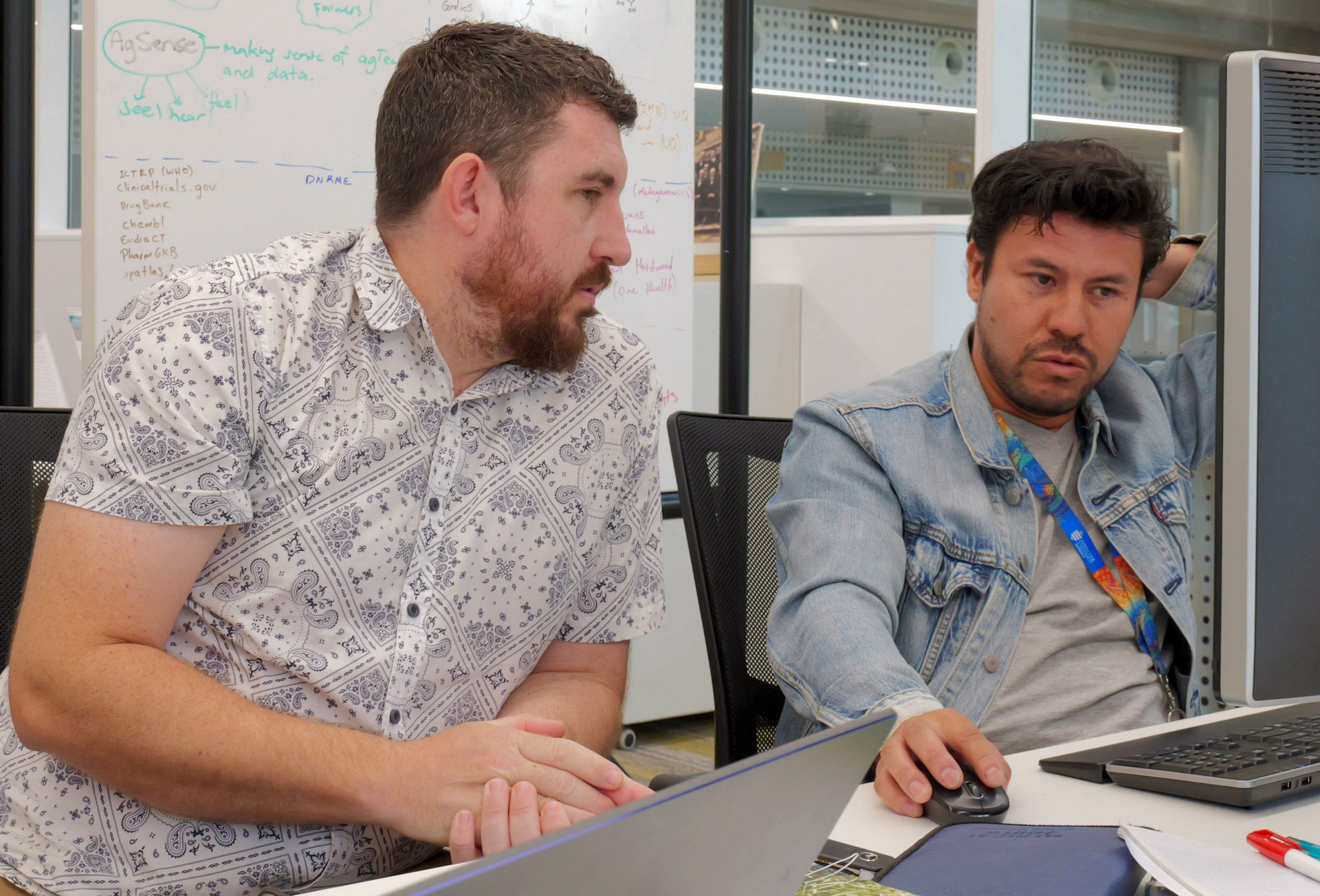
Kim Bender (left) and Ag Intellisense co-founder Andres Ruiz (right)
Kim envisions having small hyper-automated factories based around robotic arms where the manufacturer can quickly change what the production line is building. “The idea is not to have huge factory buildings, but a smaller facility that can be adjusted to build different products.” This manufacturing process will enable local, on-demand manufacturing. Kim says his smart speaker will be one of the products to be built locally in regional Australia.
Of course, a single micro factory can not support all aspects of the product development. “You need plastic extrusion machines to make the plastic parts for your products, so other micro factories with supporting capacities will be needed,” he says.
Kim says his research project is still early stage, but he sees a large demand for this type of industry improvement in regional areas. ”Locally produced products will help alleviate pressure, especially when businesses are isolated, for instance due to flooding or other events that have become increasingly common,” he says.
Once Kim has been accepted as a PhD@Work candidate at JCU, he is expecting that his project could take him anywhere between 2 to 3 years to complete.
Are you interested the PhD@Work pilot program? Get in touch with the team now.