
JCU Ideas Lab Blog Digital Twin Student
Digital Twin Student: Personalising the student learning experience
- MRCMHR
- Future Students
- JCU Global Experience
- International Students
- Student experience
- Open Day
- How to apply
- Pathways to university
- Living on Campus
- Courses
- Publications
- Mature students
- Scholarships
- Entry options
- JCU Families
- JCU Heroes Programs
- Aboriginal and Torres Strait Islander in Marine Science
- Elite Athletes
- Defence
- Capability.Co
- AI@JCU
- AALL
- Current Students
- Student Ambassador Program
- New students
- JCU Orientation
- LearnJCU
- Placements
- EDQS
- Unicare Centre and Unicampus Kids
- Graduation
- Off-Campus Students
- JCU Job Ready
- Safety and Wellbeing
- JCU Prizes
- Professional Experience Placement
- Employability Edge
- Art of Academic Writing
- Art of Academic Editing
- Careers and Employability
- Health, Wellbeing and Belonging
- Career Ready Plan
- Careers at JCU
- Partners and Community
- School Outreach and Widening Participation
- Alumni
- International partnerships
- About JCU
- Reputation and Experience
- Chancellery
- Governance
- Celebrating 50 Years
- Academy
- Indigenous Engagement
- Education Division
- Research Festival
- Graduate Research School
- Research Division
- Research and Innovation Services
- CASE
- College of Business, Law and Governance
- College of Healthcare Sciences
- College of Medicine and Dentistry
- College of Science and Engineering
- MPE
- Anthropological Laboratory for Tropical Audiovisual Research (ALTAR)
- Rural Remote and Tropical Health Systems
- Agriculture Technology and Adoption Centre (AgTAC)
- Advanced Analytical Centre
- Australian Institute of Tropical Health and Medicine
- AMHHEC
- Aquaculture Solutions
- AMHRA
- JCU Digital Wellbeing Group
- ARCSTA
- Lions Marine Research Trust
- Australian Tropical Herbarium
- Australian Quantum & Classical Transport Physics Group
- Boating and Diving
- Clinical Psychedelic Research Lab
- Centre for Tropical Biosecurity
- Centre for Tropical Bioinformatics and Molecular Biology
- CITBA
- CMT
- Centre for Disaster Solutions
- CSTFA
- Cyclone Testing Station
- The Centre for Disaster Studies
- Daintree Rainforest Observatory
- Fletcherview
- JCU Eduquarium
- JCU Turtle Health Research
- MARFU
- Orpheus
- TESS
- JCU Ideas Lab
- CADSI
- CNL
- TARL
- eResearch
- Indigenous Education and Research Centre
- Past Course and Subject Handbooks
- Estate
- Work Health and Safety
- Staff
- Discover Nature at JCU
- Cyber Security Hub
- Association of Australian University Secretaries
- Services Division
- Environmental Research Complex [ERC]
- Foundation for Australian Literary Studies
- Gender Equity at JCU
- Give to JCU
- Indigenous Legal Needs Project
- Inherent Requirements
- IsoTropics Lab
- IT Services
- JCU Webinars
- JCU Events
- JCU Motorsports
- JCU Sport
- Library
- Mabo Decision: 30 years on
- Marine Geophysics Laboratory
- Office of the Vice Chancellor and President
- Outstanding Alumni
- Policy
- PAHL
- Queensland Research Centre for Peripheral Vascular Disease
- Rapid Assessment Unit
- RDIM
- Researcher Development Portal
- Roderick Centre for Australian Literature and Creative Writing
- Contextual Science for Tropical Coastal Ecosystems
- State of the Tropics
- Strategic Procurement
- Student profiles
- SWIRLnet
- TREAD
- TropEco for Staff and Students
- TropCOVID: Mapping COVID-19 Immunity in Far North Queensland
- TUDLab
- VAVS Home
- WHOCC for Vector-borne & NTDs
- Media
- Copyright and Terms of Use
- Australian Institute of Tropical Health & Medicine
- JCU Respect
- Pay review
- Research
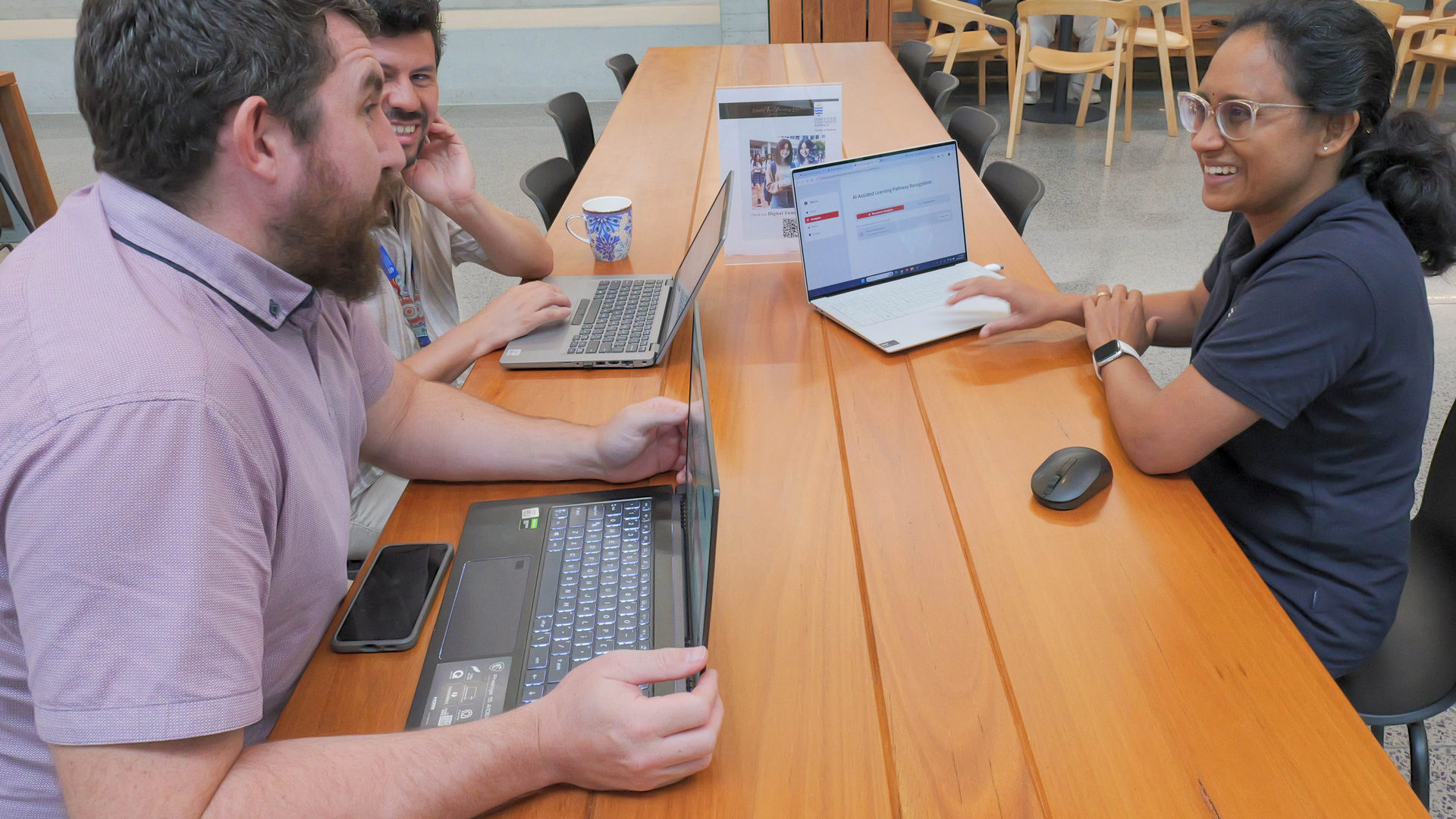
Studying at a university can be challenging, especially when you are enrolled as a hybrid or online student. James Cook University (JCU) IT lecturer Dr Kranthi Addanki is working on a new AI assistant, or ‘digital twin’, that aims to make it easier for students to achieve their goals at universities around the world.
For her PhD in IT, Dr Kranthi Addanki researched how to offer personalised learning experiences for adult learners with the aid of artificial intelligence (AI) and advanced analytics.
Kranthi says that right now, there are two sides to the student learning experience: the administration side and the student and their needs.
“Universities have so many systems, like enrolment, learning management systems and other systems working to help a student, but they are all working in isolation. We want to connect all the systems to offer an improved learning experience for the student,” Kranthi says.
At the same time, it’s also about making sure that students are receiving the best possible support. “Once we enrol the students, it's our responsibility to monitor how the students are doing. We need to take care of each and every student,” Kranthi says.
“But to truly understand each student is beyond human capability, especially when the classes are bigger than 20 students. We need advanced analytics and AI systems to understand the complexity of individual students and their needs.”
Achieving more with a digital twin
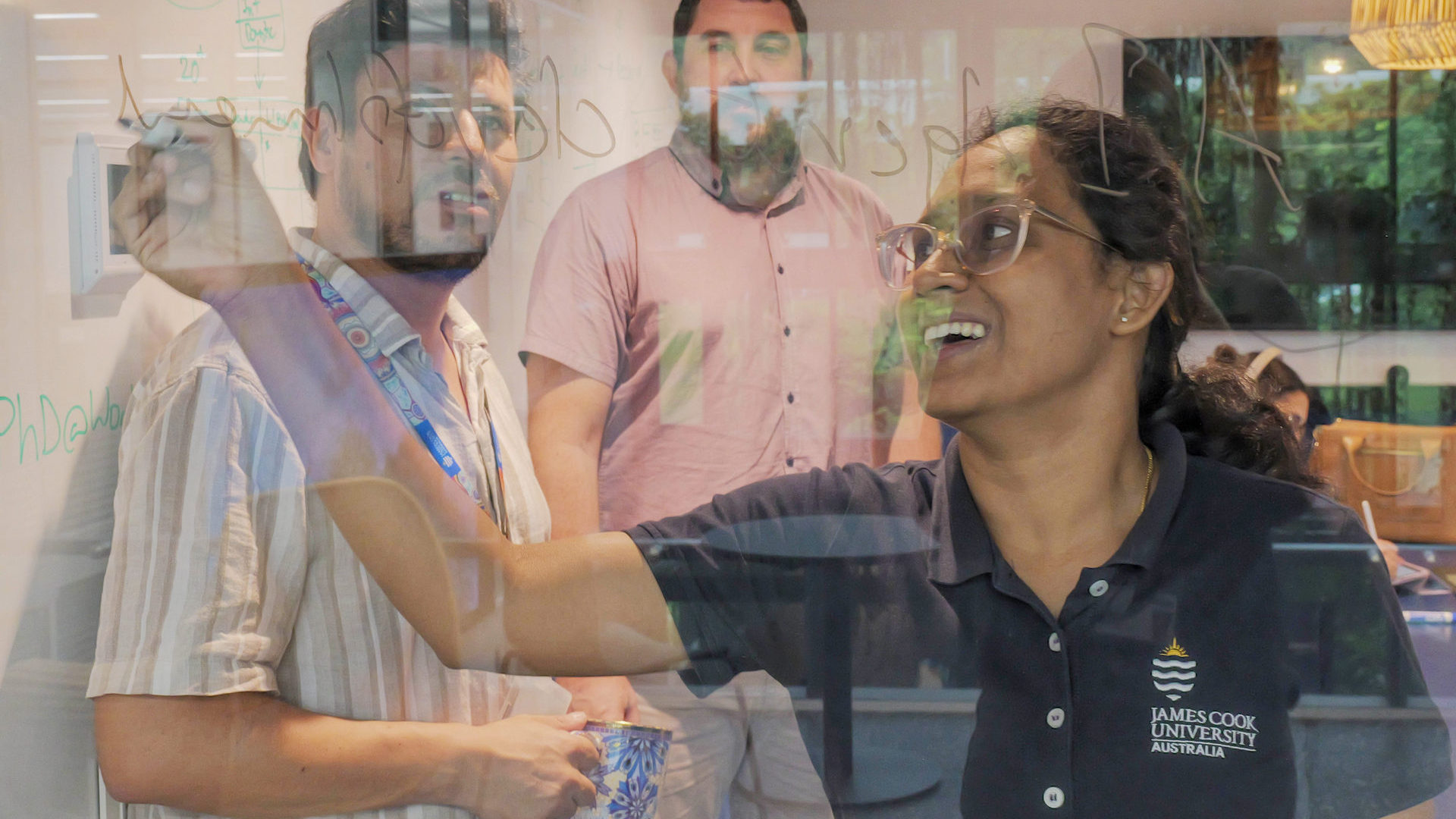
Kranthi thinks that a seamless connection between everything that relates to a student’s journey at their university – or a ‘digital twin’ – can help educators and students alike to achieve the best possible results.
“Digital twin is a technology which has many uses, from medicine to urban planning and from agriculture to rocket science,” Kranthi says, “but in our case, we are applying this technology in the education sector to empower students.
“We are working on visualising the learning journey of a student. So, when they are walking into the classroom, their educator already knows what the students need.”
Together with her husband Narayan Addanki, a Senior Business Analyst, Kranthi has contacted 200 potential customers from Australia, the United States, the United Kingdom and India to discuss their needs. “We received good feedback, and we started working on a minimum viable product (MVP) – a product that offers the functionalities that will attract our first buyers,” Narayan says.
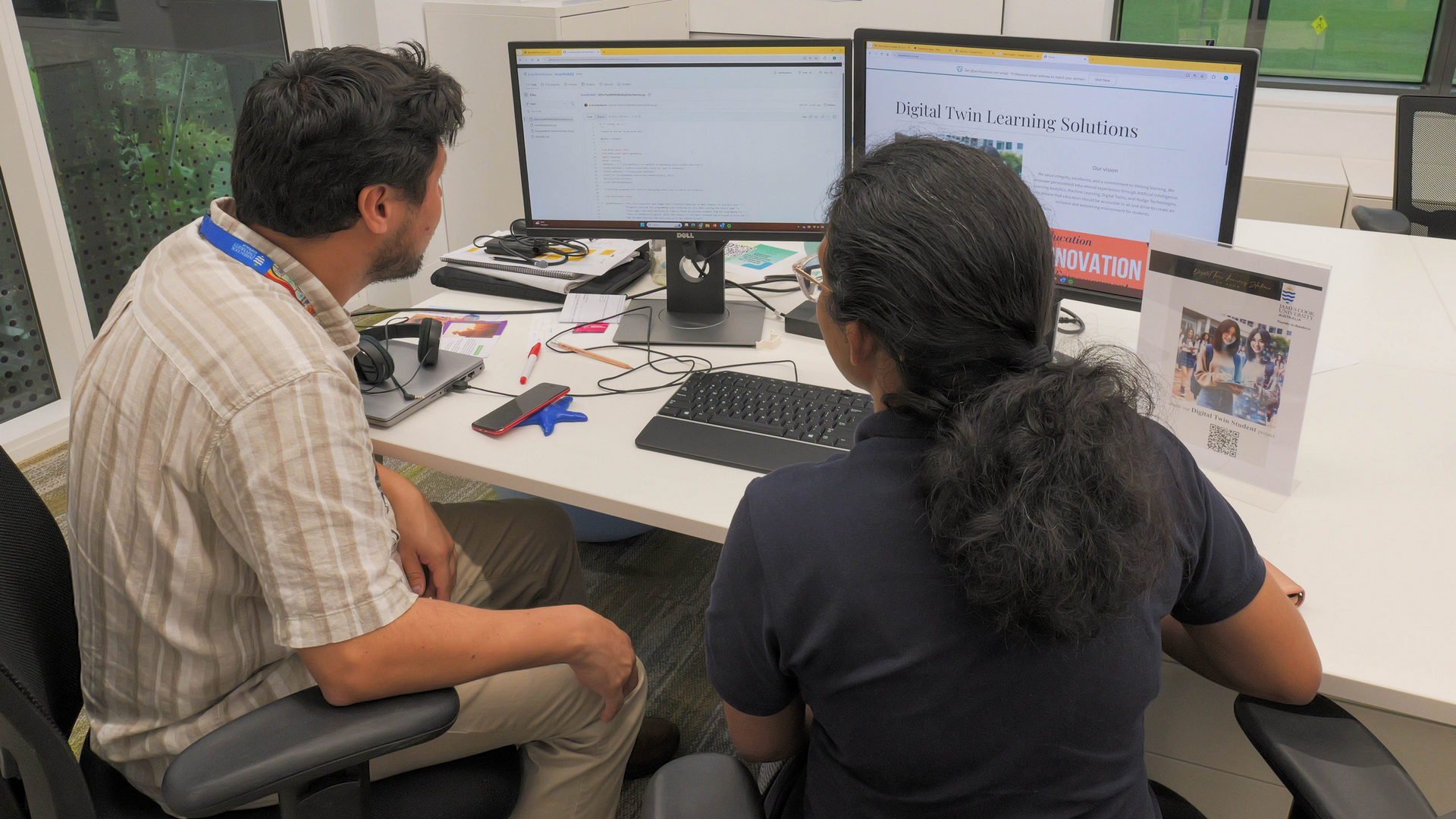
“We developed a machine learning model which is deployed on Microsoft’s Azure platform to refine it,” Narayan says. “We track the data of the student from the learning management system, and we analyse how they engage with the material.
“We then provide that information as a dashboard to the educator,” Kranthi says. “This will allow a lecturer or a tutor, for example, to see how challenging a certain exercise is for a student.”
A fitness tracker focused on the learning experience
Kranthi explains that the final digital twin software will encourage students by praising them if they have done well, and by giving ‘nudges’ to students when they need to be motivated. “In future, students will want reminders and nudging systems, similar to a fitness tracker,” Kranthi says.
“We believe that the merging of a ‘human touch’ with learner-centric and technologically advanced platforms can drastically reduce dropout rates and create a more engaging and supportive learning environment for students.”
AI assistants in the education sector
Kranthi and Narayan are currently focusing on universities, but they say their product could also be used in other learning contexts. “Organisations spend a lot of time and money on training for their employees. Personalised learning can help new employees to get familiar with everything they need to know to be a productive team member more quickly,” Narayan says.
The JCU Impact 10X program
Kranthi participated twice in the JCU Impact 10X program. She says the program was an eye-opener for her. “Many PhD students start with an idea to get their PhD degree and use this to improve their employment opportunities, whether it's a lecturer role or an industry position,” she says.
“Impact 10X sensitised me to the value of my research in terms of economic or social benefits – to the community, and to the world,” Kranthi says. “It made me think about what I can do from my research, that it's not something that should remain in my lab or my university. I started to think about that big picture. That's what I got from participating in Impact 10X.”
After winning a $ 5,000 prize for their digital twin student project in the CSIRO’s ON Prime program in Sydney in 2024, the couple is now one of the Founders in Residence at the JCU Ideas Lab. “We are inviting partners and collaborators, especially in edTech companies, such as Blackboard, Canvas or Moodle, but also other AI developers who are interested in creating educational tools.
"We are also working very closely with the PhD@Work initiative at JCU alongside Dr Samantha Horseman and Professor Stephan Riek to add innovative solutions and AI/dep tech to advance the PhD candidate experience in this industry based research venture."
Learn more about Impact 10X
JCU will offer two Impact 10X programs for people with promising business ideas in the IT space and related areas in 2025.
Story and photos by Bianca de Loryn.