
CADSI Our impact areas Economies Non-Destructive, High-throughput Phenotyping for Aquaculture: NIR Spectroscopy for the “Forensic” Chemical Analysis of Akoya Oyster and Red Algae
Non-Destructive, High-throughput Phenotyping for Aquaculture: NIR Spectroscopy for the “Forensic” Chemical Analysis of Akoya Oyster and Red Algae
- MRCMHR
- Future Students
- JCU Global Experience
- International Students
- Student experience
- Open Day
- How to apply
- Pathways to university
- Living on Campus
- Courses
- Publications
- Mature students
- Scholarships
- Entry options
- JCU Families
- JCU Heroes Programs
- Aboriginal and Torres Strait Islander in Marine Science
- Elite Athletes
- Defence
- Capability.Co
- AI@JCU
- AALL
- Current Students
- Student Ambassador Program
- New students
- JCU Orientation
- LearnJCU
- Placements
- EDQS
- Unicare Centre and Unicampus Kids
- Graduation
- Off-Campus Students
- JCU Job Ready
- Safety and Wellbeing
- JCU Prizes
- Professional Experience Placement
- Employability Edge
- Art of Academic Writing
- Art of Academic Editing
- Careers and Employability
- Health, Wellbeing and Belonging
- Career Ready Plan
- Careers at JCU
- Partners and Community
- School Outreach and Widening Participation
- Alumni
- International partnerships
- About JCU
- Reputation and Experience
- Chancellery
- Governance
- Celebrating 50 Years
- Academy
- Indigenous Engagement
- Education Division
- Research Festival
- Graduate Research School
- Research Division
- Research and Innovation Services
- CASE
- College of Business, Law and Governance
- College of Healthcare Sciences
- College of Medicine and Dentistry
- College of Science and Engineering
- MPE
- Anthropological Laboratory for Tropical Audiovisual Research (ALTAR)
- Rural Remote and Tropical Health Systems
- Agriculture Technology and Adoption Centre (AgTAC)
- Advanced Analytical Centre
- Australian Institute of Tropical Health and Medicine
- AMHHEC
- Aquaculture Solutions
- AMHRA
- JCU Digital Wellbeing Group
- ARCSTA
- Lions Marine Research Trust
- Australian Tropical Herbarium
- Australian Quantum & Classical Transport Physics Group
- Boating and Diving
- Clinical Psychedelic Research Lab
- Centre for Tropical Biosecurity
- Centre for Tropical Bioinformatics and Molecular Biology
- CITBA
- CMT
- Centre for Disaster Solutions
- CSTFA
- Cyclone Testing Station
- The Centre for Disaster Studies
- Daintree Rainforest Observatory
- Fletcherview
- JCU Eduquarium
- JCU Turtle Health Research
- MARFU
- Orpheus
- TESS
- JCU Ideas Lab
-
CADSI
- About us
-
Our impact areas
-
Nature
- AutoWeed: AI Sport Spraying for Smarter Weed Control
- Automated Detection and Counting of Flying-Foxes from Thermal Imagery
- Smart Detection of Marine Invasive Species for Biosecurity
- 3D LiDAR Mapping of Coral Restoration Gardens and Mangrove Ecosystems in Bali and Lombok, Indonesia
- Hyperspectral Satellite Monitoring of Post-Cyclone Water Quality in the Great Barrier Reef
- Automated Estimation of Snail Shell Volume and Morphology
- Health
-
Economies
- Smart Sugarcane Health Monitoring Platform with Satellite Remote Sensing and Machine Learning
- AutoFish: AI Phenotyping for Tropical Aquaculture
- Detecting Variety Contamination in Sugarcane Plots
- Automating South Sea Pearl Phenotyping Through Masking and Deep Learning Algorithms
- Non-Destructive, High-throughput Phenotyping for Aquaculture: NIR Spectroscopy for the “Forensic” Chemical Analysis of Akoya Oyster and Red Algae
- Remote Sensing and Hydrodynamic Modelling for Flood-Driven Soil Erosion in Northern Queensland
- Smart Aquaculture and Fisheries Water-Quality Optimisation
- Advanced Thermal Management and Energy Storage Systems
- Physics-Informed AI and Digital Twins for Critical-Minerals Processing
-
Communities
- Digital Twin Student
- The Place of AI in Higher Education Teaching, Learning and Assessment
- Beyond the Text: Exploring student engagement and perceptions of AI generated podcasts and infographics in higher education
- Guardrails or Handbrakes? How Australian Universities Frame AI in Policy, and the Dominance of Misconduct Narratives
- Equitable GenAI Co-Pilot for Engineering Education
- VEtheRBlocks: Teaching the Internet with AR and Toy Bricks
- Corrugation Control in Unsealed Roads: Mechanisms and Sustainable Solutions
- Physics-Informed AI and Digital Twins for Environmental Control
-
Nature
- Capabilities
- Our people
- News
- Contact us
- CNL
- TARL
- eResearch
- Indigenous Education and Research Centre
- Past Course and Subject Handbooks
- Estate
- Work Health and Safety
- Staff
- Discover Nature at JCU
- Cyber Security Hub
- Association of Australian University Secretaries
- Services Division
- Environmental Research Complex [ERC]
- Foundation for Australian Literary Studies
- Gender Equity at JCU
- Give to JCU
- Indigenous Legal Needs Project
- Inherent Requirements
- IsoTropics Lab
- IT Services
- JCU Webinars
- JCU Events
- JCU Motorsports
- JCU Sport
- Library
- Mabo Decision: 30 years on
- Marine Geophysics Laboratory
- Office of the Vice Chancellor and President
- Outstanding Alumni
- Policy
- PAHL
- Queensland Research Centre for Peripheral Vascular Disease
- Rapid Assessment Unit
- RDIM
- Researcher Development Portal
- Roderick Centre for Australian Literature and Creative Writing
- Contextual Science for Tropical Coastal Ecosystems
- State of the Tropics
- Strategic Procurement
- Student profiles
- SWIRLnet
- TREAD
- TropEco for Staff and Students
- TropCOVID: Mapping COVID-19 Immunity in Far North Queensland
- TUDLab
- VAVS Home
- WHOCC for Vector-borne & NTDs
- Media
- Copyright and Terms of Use
- Australian Institute of Tropical Health & Medicine
- JCU Respect
- Pay review
- Research
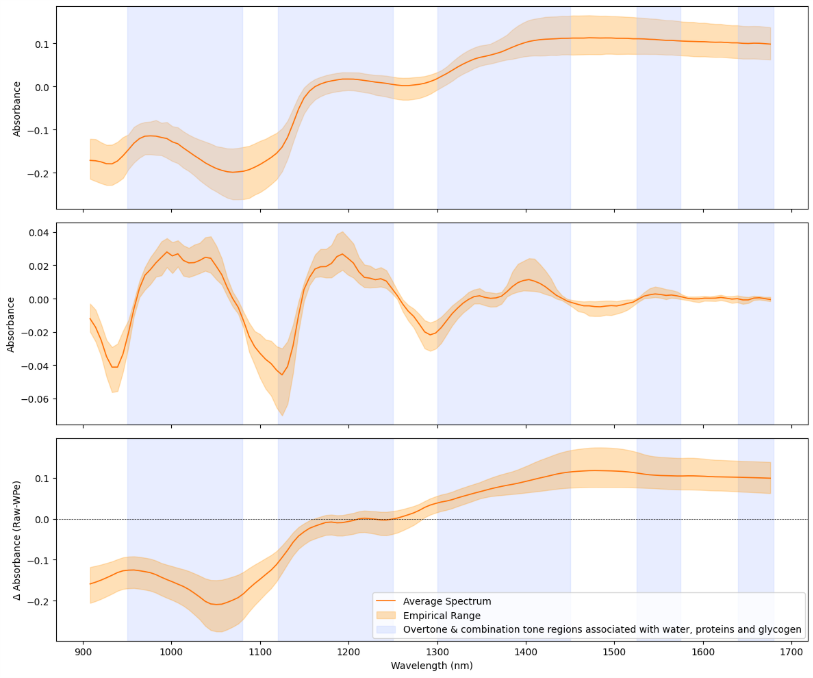
The absence of a cost-effective, scalable, rapid, and non-destructive method for product quality assessment limits aquaculture marketability and breeding programs. Near-infrared spectroscopy (NIRS) addresses these challenges by providing a portable approach for compound quantification. This research project aims to develop NIRS models to estimate glycogen concentrations in whole pearl oyster (Pinctada imbricata) samples and bromoform (CHBr₃) levels in Asparagopsis taxiformis oil extracts, enabling a commercially viable quality assessment tool.
Project Team and Collaborators:
JCU Team: Lenel Ahwan , Carla Ewels, Dean Jerry and Anna Wilson
Industry Partners: Broken Bay Pearl and Sea Forest