
CSTFA Our People Academic staff
Academic staff
- MRCMHR
- Future Students
- JCU Global Experience
- International Students
- Student experience
- Open Day
- How to apply
- Pathways to university
- Living on Campus
- Courses
- Publications
- Mature students
- Scholarships
- Entry options
- JCU Families
- JCU Heroes Programs
- Aboriginal and Torres Strait Islander in Marine Science
- Elite Athletes
- Defence
- Capability.Co
- AI@JCU
- AALL
- Current Students
- Student Ambassador Program
- New students
- JCU Orientation
- LearnJCU
- Placements
- EDQS
- Unicare Centre and Unicampus Kids
- Graduation
- Off-Campus Students
- JCU Job Ready
- Safety and Wellbeing
- JCU Prizes
- Professional Experience Placement
- Employability Edge
- Art of Academic Writing
- Art of Academic Editing
- Careers and Employability
- Health, Wellbeing and Belonging
- Career Ready Plan
- Careers at JCU
- Partners and Community
- School Outreach and Widening Participation
- Alumni
- International partnerships
- About JCU
- Reputation and Experience
- Chancellery
- Governance
- Celebrating 50 Years
- Academy
- Indigenous Engagement
- Education Division
- Research Festival
- Graduate Research School
- Research Division
- Research and Innovation Services
- CASE
- College of Business, Law and Governance
- College of Healthcare Sciences
- College of Medicine and Dentistry
- College of Science and Engineering
- MPE
- Anthropological Laboratory for Tropical Audiovisual Research (ALTAR)
- Rural Remote and Tropical Health Systems
- Agriculture Technology and Adoption Centre (AgTAC)
- Advanced Analytical Centre
- Australian Institute of Tropical Health and Medicine
- AMHHEC
- Aquaculture Solutions
- AMHRA
- JCU Digital Wellbeing Group
- ARCSTA
- Lions Marine Research Trust
- Australian Tropical Herbarium
- Australian Quantum & Classical Transport Physics Group
- Boating and Diving
- Clinical Psychedelic Research Lab
- Centre for Tropical Biosecurity
- Centre for Tropical Bioinformatics and Molecular Biology
- CITBA
- CMT
- Centre for Disaster Solutions
- CSTFA
- Cyclone Testing Station
- The Centre for Disaster Studies
- Daintree Rainforest Observatory
- Fletcherview
- JCU Eduquarium
- JCU Turtle Health Research
- MARFU
- Orpheus
- TESS
- JCU Ideas Lab
- CADSI
- CNL
- TARL
- eResearch
- Indigenous Education and Research Centre
- Past Course and Subject Handbooks
- Estate
- Work Health and Safety
- Staff
- Discover Nature at JCU
- Cyber Security Hub
- Association of Australian University Secretaries
- Services Division
- Environmental Research Complex [ERC]
- Foundation for Australian Literary Studies
- Gender Equity at JCU
- Give to JCU
- Indigenous Legal Needs Project
- Inherent Requirements
- IsoTropics Lab
- IT Services
- JCU Webinars
- JCU Events
- JCU Motorsports
- JCU Sport
- Library
- Mabo Decision: 30 years on
- Marine Geophysics Laboratory
- Office of the Vice Chancellor and President
- Outstanding Alumni
- Policy
- PAHL
- Queensland Research Centre for Peripheral Vascular Disease
- Rapid Assessment Unit
- RDIM
- Researcher Development Portal
- Roderick Centre for Australian Literature and Creative Writing
- Contextual Science for Tropical Coastal Ecosystems
- State of the Tropics
- Strategic Procurement
- Student profiles
- SWIRLnet
- TREAD
- TropEco for Staff and Students
- TropCOVID: Mapping COVID-19 Immunity in Far North Queensland
- TUDLab
- VAVS Home
- WHOCC for Vector-borne & NTDs
- Media
- Copyright and Terms of Use
- Australian Institute of Tropical Health & Medicine
- JCU Respect
- Pay review
- Research
Leadership team
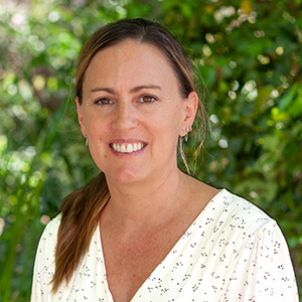
Professor Amy Diedrich
Head of the Centre for Sustainable Tropical Fisheries and Aquaculture
+61 7 4781 4627
Amy is an environmental social scientist, focusing on understanding the interactions between people and marine environments. Specifically, she seeks to identify socio-economic and cultural factors that influence sustainable livelihoods.

Dr Mark Cyrus
Deputy Head of the Centre for Sustainable Tropical Fisheries and Aquaculture
Dr Cyrus's research focus is largely on new species development (particularly low tropic species), and the incorporation of macroalgae to improve many aspects of aquaculture production including larval settlement, feed development, and the recycling of nutrients for alternative crops through Integrated Multi-Trophic Aquaculture (IMTA).
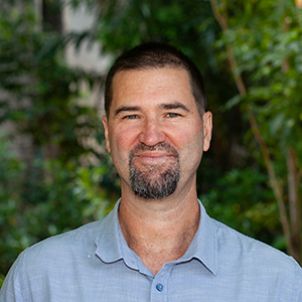
Associate Professor Leo Nankervis
Executive Committee
Theme Leader: Aquaculture and Animal Health
+61 7 4781 6524
Leo’s research interests include using physiology to solve commercially relevant production bottlenecks, raw materials for aquafeeds, nutrient requirements, digestive processes in aquatic organisms, taste and palatability.
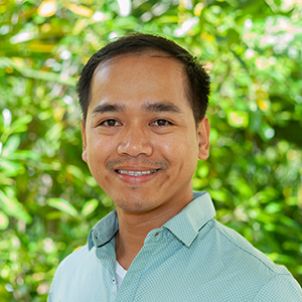
Associate Professor Reniel Cabral
Executive Committee
Theme Leader: Fisheries Science and Management
Dr. Cabral combines ecological and economic theories and methods, big data analytics, and computation to find solutions to fisheries and conservation problems. He is particularly interested in problems where science and scientific innovations can help overcome bottlenecks to effectively address fisheries and conservation challenges.
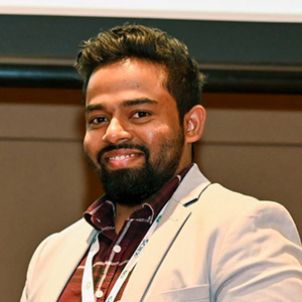
Dr Shaymaviswanathan Karnaneedi
Executive Committee
Theme Leader: Seafood and Human Health
shaymaviswanathan.karnaneedi@jcu.edu.au
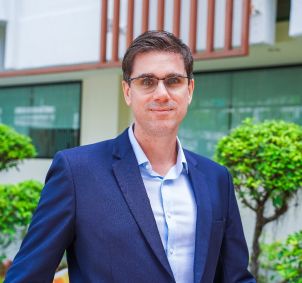
Professor Jose Domingos
Executive Committee
Theme: Aquaculture and Animal Health
Jose’s research focuses on the development of efficient breeding programs for tropical aquaculture species. He is passionate about marine finfish propagation (reproduction, genomics, selective breeding) and its integration with nutrition and fish health for the development of fast-growing and disease-resistant strains.
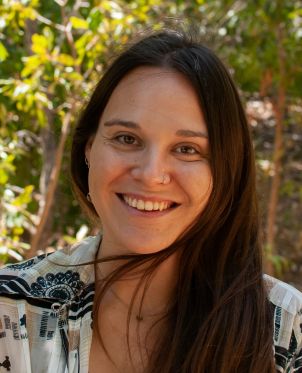
Dr Bethany Smith
Executive Committee
Theme Leader: Livelihoods, Equity and Governance
Bethany is an applied environmental social scientist and Postdoctoral Research Fellow. Her research supports sustainable and equitable rural livelihoods in the tropics applying participatory methods, risk analysis, and spatial science. Through her work, she supports locally relevant and inclusive decision-making under complex environmental and social challenges.
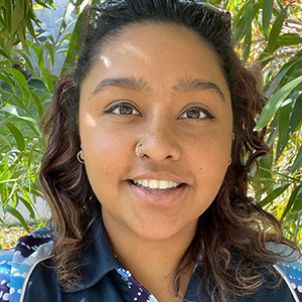
Varsha Balu
Executive Committee
Leader for Postgraduate Students
Research project: exploring the role of early on-farm pathogen detection as a means to manage and ultimately prevent disease outbreaks in aquaculture systems. Her project will determine if early pathogen detection using eDNA, eRNA and environmental proteins can help us understand the disease outbreak triggers of Cryptocaryon irritans (Marine Ich) in barramundi aquaculture.
Academic staff by theme
Fisheries Science and Management
Livelihoods, Equity and Governance