
Indigenous Education and Research Centre Research and Projects Our Research Current Projects
Current Projects
- MRCMHR
- Future Students
- JCU Global Experience
- International Students
- Student experience
- Open Day
- How to apply
- Pathways to university
- Living on Campus
- Courses
- Publications
- Mature students
- Scholarships
- Entry options
- JCU Families
- JCU Heroes Programs
- Aboriginal and Torres Strait Islander in Marine Science
- Elite Athletes
- Defence
- Capability.Co
- AI@JCU
- AALL
- Current Students
- Student Ambassador Program
- New students
- JCU Orientation
- LearnJCU
- Placements
- EDQS
- Unicare Centre and Unicampus Kids
- Graduation
- Off-Campus Students
- JCU Job Ready
- Safety and Wellbeing
- JCU Prizes
- Professional Experience Placement
- Employability Edge
- Art of Academic Writing
- Art of Academic Editing
- Careers and Employability
- Health, Wellbeing and Belonging
- Career Ready Plan
- Careers at JCU
- Partners and Community
- School Outreach and Widening Participation
- Alumni
- International partnerships
- About JCU
- Reputation and Experience
- Chancellery
- Governance
- Celebrating 50 Years
- Academy
- Indigenous Engagement
- Education Division
- Research Festival
- Graduate Research School
- Research Division
- Research and Innovation Services
- CASE
- College of Business, Law and Governance
- College of Healthcare Sciences
- College of Medicine and Dentistry
- College of Science and Engineering
- MPE
- Anthropological Laboratory for Tropical Audiovisual Research (ALTAR)
- Rural Remote and Tropical Health Systems
- Agriculture Technology and Adoption Centre (AgTAC)
- Advanced Analytical Centre
- Australian Institute of Tropical Health and Medicine
- AMHHEC
- Aquaculture Solutions
- AMHRA
- JCU Digital Wellbeing Group
- ARCSTA
- Lions Marine Research Trust
- Australian Tropical Herbarium
- Australian Quantum & Classical Transport Physics Group
- Boating and Diving
- Clinical Psychedelic Research Lab
- Centre for Tropical Biosecurity
- Centre for Tropical Bioinformatics and Molecular Biology
- CITBA
- CMT
- Centre for Disaster Solutions
- CSTFA
- Cyclone Testing Station
- The Centre for Disaster Studies
- Daintree Rainforest Observatory
- Fletcherview
- JCU Eduquarium
- JCU Turtle Health Research
- MARFU
- Orpheus
- TESS
- JCU Ideas Lab
- CADSI
- CNL
- TARL
- eResearch
-
Indigenous Education and Research Centre
- Experience and prepare for uni
- Study with IERC at JCU
-
New and current students
- Students - Indigenous Peer Assisted Learning (IPAL) Tutoring Program
- Indigenous Student support staff and services
- Fees and financial support
- Making the move from home to JCU
- Getting ready for your first day
- Welcome to Orientation at the IERC
- Expand your social life and build your resume
- External and online students
- Exam preparation, support and tips
- Tutors - Indigenous Peer Assisted Learning (IPAL) Tutoring Program
- Information for families
- News and Events
- Scholarships
- Student Success Stories
- Research and Projects
- Indigenous Research Support Network
- About our centre
- Discover JCU's IERC
- Past Course and Subject Handbooks
- Estate
- Work Health and Safety
- Staff
- Discover Nature at JCU
- Cyber Security Hub
- Association of Australian University Secretaries
- Services Division
- Environmental Research Complex [ERC]
- Foundation for Australian Literary Studies
- Gender Equity at JCU
- Give to JCU
- Indigenous Legal Needs Project
- Inherent Requirements
- IsoTropics Lab
- IT Services
- JCU Webinars
- JCU Events
- JCU Motorsports
- JCU Sport
- Library
- Mabo Decision: 30 years on
- Marine Geophysics Laboratory
- Office of the Vice Chancellor and President
- Outstanding Alumni
- Policy
- PAHL
- Queensland Research Centre for Peripheral Vascular Disease
- Rapid Assessment Unit
- RDIM
- Researcher Development Portal
- Roderick Centre for Australian Literature and Creative Writing
- Contextual Science for Tropical Coastal Ecosystems
- State of the Tropics
- Strategic Procurement
- Student profiles
- SWIRLnet
- TREAD
- TropEco for Staff and Students
- TropCOVID: Mapping COVID-19 Immunity in Far North Queensland
- TUDLab
- VAVS Home
- WHOCC for Vector-borne & NTDs
- Media
- Copyright and Terms of Use
- Australian Institute of Tropical Health & Medicine
- JCU Respect
- Pay review
- Research
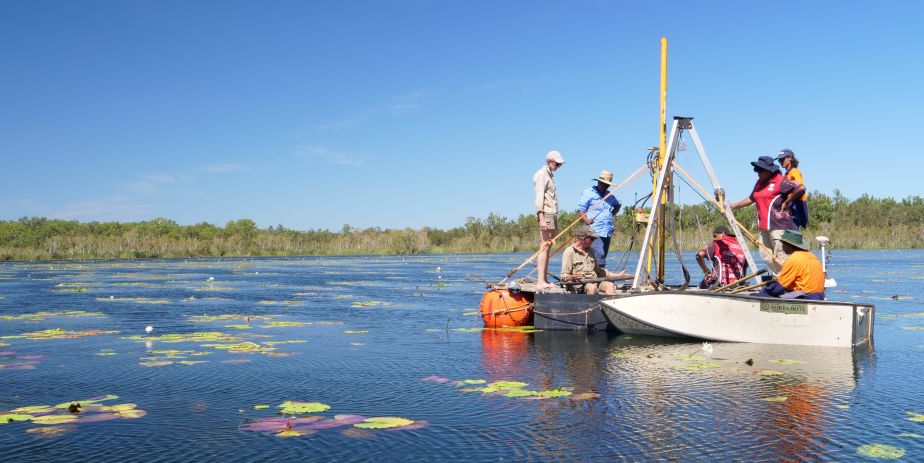
Image: Working with Larrakia Indigenous Rangers at Girraween Lagoon, Northern Territory (Project: ARC Centre of Excellence for Australian Biodiversity and Heritage)
Indigenous STEM Project
The Indigenous STEM project developed from a partnership project between CABAH and Tagai State College to improve the academic performance of Indigenous students in STEM education. The project involves 1600+ Prep to Year 12 Indigenous students across seventeen schools in remote area of Australia.
Contact Professor Martin Nakata
Addressing the gap between policy and implementation
Strategies for improving educational outcomes of Indigenous students
The study is a partnership between five universities to identify best practice and opportunities for change inside universities and other higher education providers to identify the factors that are either facilitators or barriers to successful completion of study for Indigenous students. The project aims to trial strategies to improve recruitment, retention and successful completions of Aboriginal and Torres Strait Islander students in higher education.
Contact Professor Felecia Watkin
ARC Centre of Excellence CIEHF 2024 - 2031
The ARC Centre of Excellence for Indigenous and Environmental Histories and Futures (CIEHF) brings together Indigenous knowledge systems and Western science to understand and respond to long-term environmental and cultural change. Its purpose is to co-develop sustainable land and sea management practices through authentic partnerships with Aboriginal and Torres Strait Islander communities. CIEHF achieves this through interdisciplinary research, co-designed projects, and capacity-building programs that centre Indigenous leadership and priorities.
Related Link: https://ciehf.au/
Contact Professor Martin Nakata (CI), Professor Felecia Watkin Lui (CI); Dr Ailie McDowall (AI); Dr Kyly Mills (AI); Mr Geoff Lui (PhD)
ARC Discovery Indigenous Navigating the Carceral Interface (2023-2028)
This project acknowledges the overrepresentation of young Indigenous people in child protection and incarceration rates. It aims to address the gap in knowledge of how young Indigenous people experience the carceral system and document how Indigenous community organisations support and provide vital contributions to building safer more supportive communities, which is one of the targets of the Closing the Gap policy framework. This project will develop a theoretical model of a trauma- and culturally-informed response to improving experiences of young Indigenous people between the ages of 10–24 who come into contact with the carceral system, transferring the knowledge gained from the research back to Indigenous communities.
Contact Associate Professor Marlene Longbottom ( DAATSIA Fellow)
ARC Discovery Indigenous Navigating the Tides of Change (commencing 2025)
This project seeks to undertake a landmark study into how Torres Strait Islanders have navigated the external influences in their communities over the past century. The project will be led by Torres Strait Islander researchers with a long track record of working with Indigenous communities and their leaders, building capacity of community researchers, early career researchers, graduating research students, and delivering projects on time. The significance of this study is the potential for it to assist current negotiations with governments to better align their organisations and services to meet the needs and interests of Islanders, and to benefit all Indigenous communities.
Contact Associate Professor Sana Nakata (DAATSIA Fellow); Professor Felecia Watkin Lui (CI); Professor Martin Nakata (CI); Professor Adrian Little (CI, University of Melbourne)
ARC Discovery Settlement agreements between First Peoples and Australian governments (commencing 2025)
This project aims to examine settlement agreements between Indigenous groups and Australian Governments. New knowledge about this type of agreement-making will be created by investigating cases from Western Australia and Victoria where settlement agreements have been established under two separate legislative instruments; the Native Titel Act 1993 (Cth) and Traditional Owern Settlement Act 2010 (Vic). The findings promise to provide new conceptual and theoretical arguments about settlement agreements in respect to Indigenous sovereignty and self-determination, while providing valuable insights into the factors which underpin their negotiation, implementation and management.
$700,332
Contact Dr Bart Stanford (Lead CI); Prof Ciaran O’Faircheallaigh (CI, Griffith University)
ARC Discovery Progressive Education and Race (2020-2024)
This project will provide a new history of progressive education in Australia in the mid-twentieth century by investigating its neglected relationship to and effect upon Indigenous education and colonial governance. Using transnational and comparative methods, it will examine how international progressive ideas informed local initiatives, explore the role of Indigenous advocacy for educational reform and build a genealogy of educability and colonial childhood. Brought together for the first time, these investigations will strengthen understanding of Australian Aboriginal and educational history in global and regional contexts and contribute new knowledge and
perspectives to current debates about equity, race and divided educational futures.
Contact Associate Professor Sana Nakata (CI); Professor Julie McLeod (Lead CI, University of Melbourne); Professor Fiona Paisley (CI, Griffith University); Professor Tony Ballantyne (CI, University of Otago)
ARC Linkage Visualising Humanitarian Crises: Transforming Images and Aid Policy (2020-2026)
$694,366
Contact Associate Professor Sana Nakata (CI), Professor Roland Bleiker (Lead CI, UQ), Associate Professor Emma Hutchison (CI, UQ), Professor Matthew Hornsey (CI, UQ), Professor Cassandra Chapman (CI, UQ), Professor Bina D'Costa (CI, ANU), Honorary Professor David Campbell (PI, UQ), Honorary Professor Fiona Terry (PI, UQ)