
Indigenous Education and Research Centre About our centre Indigenous Student Success Program (ISSP)
Indigenous Student Success Program (ISSP)
- MRCMHR
- Future Students
- JCU Global Experience
- International Students
- Student experience
- Open Day
- How to apply
- Pathways to university
- Living on Campus
- Courses
- Publications
- Mature students
- Scholarships
- Entry options
- JCU Families
- JCU Heroes Programs
- Aboriginal and Torres Strait Islander in Marine Science
- Elite Athletes
- Defence
- Capability.Co
- AI@JCU
- AALL
- Current Students
- Student Ambassador Program
- New students
- JCU Orientation
- LearnJCU
- Placements
- EDQS
- Unicare Centre and Unicampus Kids
- Graduation
- Off-Campus Students
- JCU Job Ready
- Safety and Wellbeing
- JCU Prizes
- Professional Experience Placement
- Employability Edge
- Art of Academic Writing
- Art of Academic Editing
- Careers and Employability
- Health, Wellbeing and Belonging
- Career Ready Plan
- Careers at JCU
- Partners and Community
- School Outreach and Widening Participation
- Alumni
- International partnerships
- About JCU
- Reputation and Experience
- Chancellery
- Governance
- Celebrating 50 Years
- Academy
- Indigenous Engagement
- Education Division
- Research Festival
- Graduate Research School
- Research Division
- Research and Innovation Services
- CASE
- College of Business, Law and Governance
- College of Healthcare Sciences
- College of Medicine and Dentistry
- College of Science and Engineering
- MPE
- Anthropological Laboratory for Tropical Audiovisual Research (ALTAR)
- Rural Remote and Tropical Health Systems
- Agriculture Technology and Adoption Centre (AgTAC)
- Advanced Analytical Centre
- Australian Institute of Tropical Health and Medicine
- AMHHEC
- Aquaculture Solutions
- AMHRA
- JCU Digital Wellbeing Group
- ARCSTA
- Lions Marine Research Trust
- Australian Tropical Herbarium
- Australian Quantum & Classical Transport Physics Group
- Boating and Diving
- Clinical Psychedelic Research Lab
- Centre for Tropical Biosecurity
- Centre for Tropical Bioinformatics and Molecular Biology
- CITBA
- CMT
- Centre for Disaster Solutions
- CSTFA
- Cyclone Testing Station
- The Centre for Disaster Studies
- Daintree Rainforest Observatory
- Fletcherview
- JCU Eduquarium
- JCU Turtle Health Research
- MARFU
- Orpheus
- TESS
- JCU Ideas Lab
- CADSI
- CNL
- TARL
- eResearch
-
Indigenous Education and Research Centre
- Experience and prepare for uni
- Study with IERC at JCU
-
New and current students
- Students - Indigenous Peer Assisted Learning (IPAL) Tutoring Program
- Indigenous Student support staff and services
- Fees and financial support
- Making the move from home to JCU
- Getting ready for your first day
- Welcome to Orientation at the IERC
- Expand your social life and build your resume
- External and online students
- Exam preparation, support and tips
- Tutors - Indigenous Peer Assisted Learning (IPAL) Tutoring Program
- Information for families
- News and Events
- Scholarships
- Student Success Stories
- Research and Projects
- Indigenous Research Support Network
- About our centre
- Discover JCU's IERC
- Past Course and Subject Handbooks
- Estate
- Work Health and Safety
- Staff
- Discover Nature at JCU
- Cyber Security Hub
- Association of Australian University Secretaries
- Services Division
- Environmental Research Complex [ERC]
- Foundation for Australian Literary Studies
- Gender Equity at JCU
- Give to JCU
- Indigenous Legal Needs Project
- Inherent Requirements
- IsoTropics Lab
- IT Services
- JCU Webinars
- JCU Events
- JCU Motorsports
- JCU Sport
- Library
- Mabo Decision: 30 years on
- Marine Geophysics Laboratory
- Office of the Vice Chancellor and President
- Outstanding Alumni
- Policy
- PAHL
- Queensland Research Centre for Peripheral Vascular Disease
- Rapid Assessment Unit
- RDIM
- Researcher Development Portal
- Roderick Centre for Australian Literature and Creative Writing
- Contextual Science for Tropical Coastal Ecosystems
- State of the Tropics
- Strategic Procurement
- Student profiles
- SWIRLnet
- TREAD
- TropEco for Staff and Students
- TropCOVID: Mapping COVID-19 Immunity in Far North Queensland
- TUDLab
- VAVS Home
- WHOCC for Vector-borne & NTDs
- Media
- Copyright and Terms of Use
- Australian Institute of Tropical Health & Medicine
- JCU Respect
- Pay review
- Research
What is the Indigenous Student Success Program?
The Indigenous Student Success Program (ISSP) is a national funding initiative, launched on 1 January 2017, and administered under the Higher Education Support Act 2003. It provides universities with supplementary funding aimed at promoting retention, academic progression, and completion among Aboriginal and Torres Strait Islander students.
Through targeted funding, the program delivers scholarships, academic and pastoral support, and engagement activities to strengthen student success. By investing in Indigenous workforce development and culturally safe learning environments, the ISSP empowers students to achieve their educational and career goals.
How the IERC manages ISSP funding
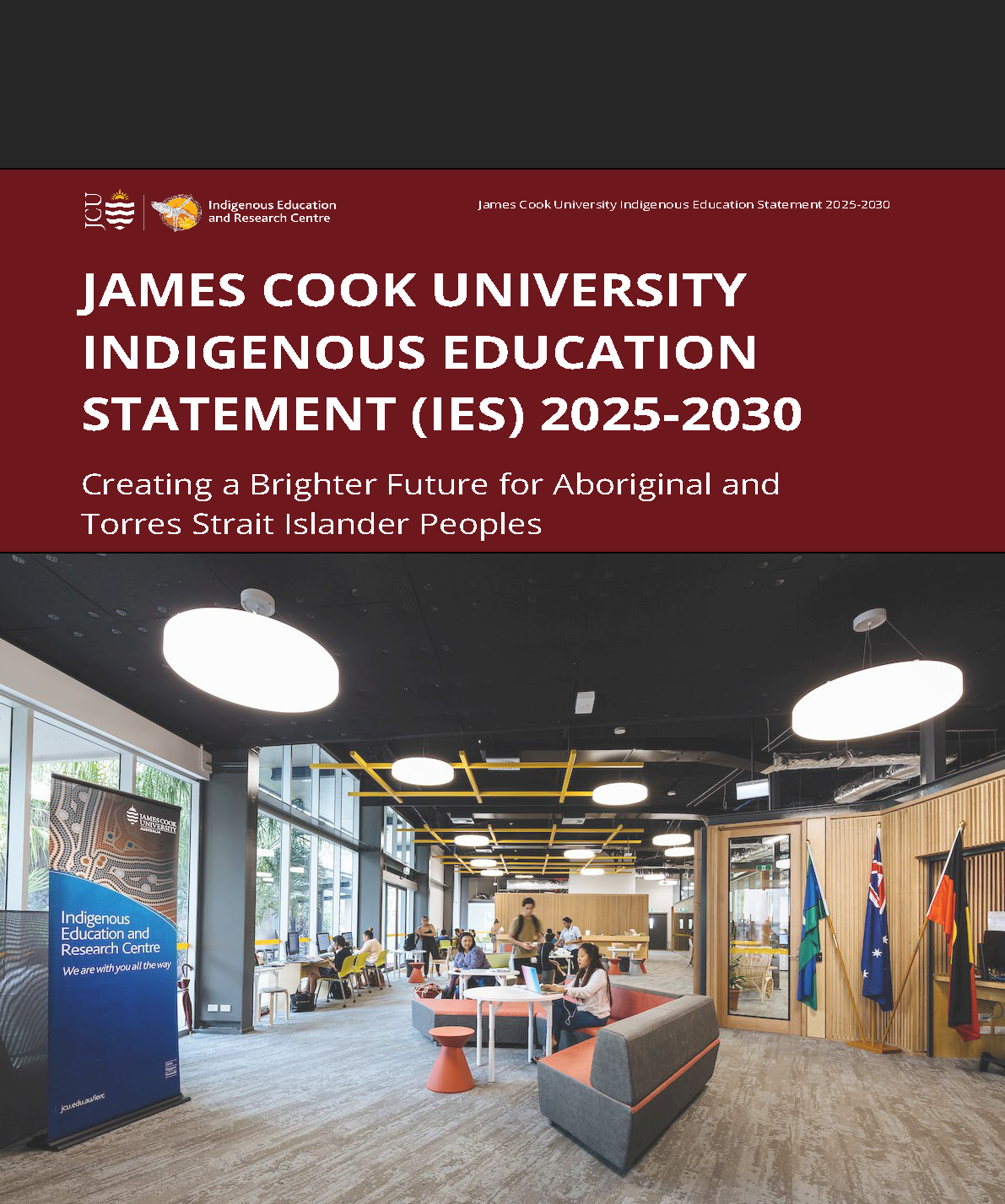
Indigenous Education Strategy
JCU’s Indigenous Education Strategy strengthens our role as a national leader by embedding Aboriginal and Torres Strait Islander priorities across Our People, Our Place, Our Education, and Our Research. With clear goals for growing Indigenous student enrolments and academic staff, the strategy ensures Indigenous knowledge systems remain central to JCU’s identity as a university for the tropics and beyond. Click the link or image to read the James Cook University Indigenous Education Strategy 2025-2030.
JCU’s Indigenous Education Strategy is designed to improve access, participation, and success for Aboriginal and Torres Strait Islander students. It also ensures that Indigenous knowledge, perspectives, and cultures are embedded across the university’s teaching, research, and engagement.
Key Priorities
JCU’s Indigenous Student Success Program (ISSP) supports Aboriginal and Torres Strait Islander students through scholarships, academic support, engagement activities, and Indigenous leadership. In 2025, ISSP funding was directed to scholarships that reduce financial barriers, tutoring and wellbeing services that strengthen retention and completion, and engagement programs that build community and university pathways. JCU also invests in employing Indigenous staff and partnering with Indigenous organisations to ensure programs remain culturally grounded and community-led.
These commitments align with JCU’s broader goals of:
- Increasing Indigenous student enrolments, progression, and completions.
- Embedding Indigenous knowledge and perspectives across courses via our undergraduate subjects as well as post graduate coursework and higher degrees by research.
- Delivering sense-of-belonging activities that build cultural connection across campuses.
- Maintaining accountability through measurable targets and transparent reporting.
By fostering Indigenous leadership and embedding Indigenous knowledge systems throughout education, JCU continues to strengthen student success and lead as a university for the tropics and beyond.
Indigenous Governance Mechanism
Strong Indigenous governance underpins all ISSP activities at JCU. Decisions are guided by Aboriginal and Torres Strait Islander leadership across the university and in partnership with community, ensuring priorities reflect the voices and aspirations of our people.
Indigenous Education and Research Centre
| Professor Martin Nakata |
| Associate Professor Sana Nakata |
| Associate Professor Kyly Mills E: kyly.mills@jcu.edu.au |
| Manola Chong |
| Tupoa Guligo |





How we support students with ISSP funding
Through the Indigenous Student Success Program (ISSP), JCU provides scholarships that remove financial barriers and support Aboriginal and Torres Strait Islander students to thrive in higher education.
In 2025, 12% of ISSP funding was allocated to scholarships, supporting students through education cost, accommodation, and reward scholarships that assist with study expenses, housing needs, and the recognition of academic achievement.
The IERC’s dedicated Fees and Financial Support webpage outlines the range of assistance available for students, with ISSP scholarships complementing JCU’s broader equity programs to help students focus on their success.
The IERC provides targeted academic and cultural support designed to strengthen Indigenous student retention, progression, and completion.
In 2025, 15% of ISSP funding was allocated to tutoring and related support, including supplementary tutorial assistance, safe and culturally affirming study spaces, personal wellbeing support, and professional guidance from dedicated Indigenous staff.
Learn more about student services and support via our Student Support Staff and Services webpage.
Engagement activities ensure Aboriginal and Torres Strait Islander students are connected, supported, and inspired throughout their studies. These activities also build pathways for future students and strengthen cultural connection across the university.
Funding and Focus:
In 2025, ISSP funding supported outreach, engagement, and cultural competency activities, including school and community programs such as Aboriginal and Torres Strait Islander in Marine Science, Winter School, and Summer School, which strengthen university pathways. Funding also supported Orientation and Welcome Days, community-building events like student lunches and awards nights, and re-engagement initiatives that help students return to study.
JCU prioritises Indigenous leadership and knowledge by employing Aboriginal and Torres Strait Islander staff and engaging Indigenous-owned organisations to deliver ISSP-funded activities.
Commitments:
- Employing Indigenous learning support staff to ensure culturally relevant academic support. Examples include our Student and Academic Support Advisors as well as our Indigenous Student Ambassadors. Our Indigenous Student Ambassadors play an integral role in promoting our programs (e.g., Winter School, Summer School and Open Days) while connecting with people who may not have considered tertiary education. Around 70% of total ISSP expenditure was invested in these salaries.
- Staff are supported to participate in national events such as the National Indigenous Learning Support Conference (NILSC) in partnership with the National Indigenous Learning Support Network.
- Partnering with Indigenous organisations to deliver outreach and cultural activities.
- Embedding Indigenous expertise across programs to strengthen quality and accountability.
This commitment ensures ISSP programs remain Indigenous-led and responsive to community priorities.
ISSP builds on previous Indigenous education initiatives to ensure there is no gap in services for students.
Commitments:
- Maintaining continuity in academic, cultural, and wellbeing supports previously funded under earlier programs.
- Strengthening proven models of success, such as JCU’s evidence-based learning response platform, which raised Indigenous pass rates to 81% in 2024.
- Expanding effective programs across the sector, with 16 universities now adopting elements of JCU’s model.
Through these arrangements, JCU aims to provide uninterrupted and expanding support for Aboriginal and Torres Strait Islander student success.

Pullman Cairns International
ISSP reports
- Indigenous Student Success Program (ISSP) 2024 Performance Report
- Indigenous Student Success Program (ISSP) 2024 Financial Acquittal
- Indigenous Student Success Program (ISSP) 2023 Performance Report
- Indigenous Student Success Program (ISSP) 2023 Financial Acquittal
- Indigenous Student Success Program (ISSP) 2022 Performance Report
- Indigenous Student Success Program (ISSP) 2022 Financial Acquittal
- Indigenous Student Success Program (ISSP) 2021 Performance Report
- Indigenous Student Success Program (ISSP) 2021 Financial Acquittal
- Indigenous Student Success Program (ISSP) 2020 Performance Report
- Indigenous Student Success Program (ISSP) 2020 Financial Acquittal
- Indigenous Student Success Program (ISSP) 2019 Performance Report
- Indigenous Student Success Program (ISSP) 2019 Financial Acquittal
- Indigenous Student Success Program (ISSP) 2018 Performance Report
- Indigenous Student Success Program (ISSP) 2018 Financial Acquittal
Have a question?
If you have any questions about how we use ISSP funding or want to know more about our programs, please don't hesitate to reach out.