
Current Students The Learning Centre Assignments
Assignments
- Future Students
- JCU Global Experience
- International Students
- Student experience
- Open Day
- How to apply
- Pathways to university
- Living on Campus
- Courses
- Publications
- Mature students
- Scholarships
- Entry options
- JCU Families
- JCU Heroes Programs
- Aboriginal and Torres Strait Islander in Marine Science
- Elite Athletes
- Defence
- Capability.Co
- AI@JCU
- AALL
-
Current Students
- Current International students
-
Enrolment
- Enrol online
- New students enrol
- Course Enrolment Planners
- Change course (Variation to Study)
- Return to study (Variation to Study)
- Transfer campus (Variation to Study)
- Withdraw from subjects or your course
- Applying for Credit
- Student Centre and Enrolment Team Contacts
- Enrolment Terminology
- JCU Flex FAQs
-
Fees & Financial Support
- Domestic undergraduate subject fees
- Financial support
- Defer your fees
- Pay your fees
- Student Services and Amenities Fee (SSA Fee)
- Postgraduate subject fees
- Commonwealth Prac Payment
- Refunds and withdrawal under special circumstances
- Penalties for unpaid fees and late withdrawals
- Incidental & Administration Fees
- Eligibility Conditions for Commonwealth Assistance
- Unique Student Identifier (USI)
- Class Registration
- Assessment and results
- Support
- Academic Calendars
- Student Life
- Learning Online
- The Learning Centre
- Forms
- Safety
- Student Ambassador Program
- New students
- JCU Orientation
- LearnJCU
- Placements
- EDQS
- Unicare Centre and Unicampus Kids
- Graduation
- Off-Campus Students
- JCU Job Ready
- Safety and Wellbeing
- JCU Prizes
- Professional Experience Placement
- Employability Edge
- Art of Academic Writing
- Art of Academic Editing
- Careers and Employability
- Health, Wellbeing and Belonging
- Career Ready Plan
- Careers at JCU
- Partners and Community
- School Outreach and Widening Participation
- Alumni
- International partnerships
- About JCU
- Reputation and Experience
- Chancellery
- Governance
- Celebrating 50 Years
- Academy
- Indigenous Engagement
- Education Division
- Research festival
- Graduate Research School
- Research Division
- Research and Innovation Services
- CASE
- College of Business, Law and Governance
- College of Healthcare Sciences
- College of Medicine and Dentistry
- College of Science and Engineering
- MPE
- Anthropological Laboratory for Tropical Audiovisual Research (ALTAR)
- Rural Remote and Tropical Health Systems
- Agriculture Technology and Adoption Centre (AgTAC)
- Advanced Analytical Centre
- AMHHEC
- Aquaculture Solutions
- AMHRA
- JCU Digital Wellbeing Group
- ARCSTA
- Lions Marine Research Trust
- Australian Tropical Herbarium
- Australian Quantum & Classical Transport Physics Group
- Boating and Diving
- Clinical Psychedelic Research Lab
- Centre for Tropical Biosecurity
- Centre for Tropical Bioinformatics and Molecular Biology
- CITBA
- CMT
- Centre for Disaster Solutions
- CSTFA
- Cyclone Testing Station
- The Centre for Disaster Studies
- Daintree Rainforest Observatory
- Fletcherview
- JCU Eduquarium
- JCU Turtle Health Research
- MARFU
- Orpheus
- TESS
- JCU Ideas Lab
- CADSI
- CNL
- TARL
- eResearch
- Indigenous Education and Research Centre
- Past Course and Subject Handbooks
- Estate
- Work Health and Safety
- Staff
- Discover Nature at JCU
- Cyber Security Hub
- Association of Australian University Secretaries
- Services Division
- Environmental Research Complex [ERC]
- Foundation for Australian Literary Studies
- Gender Equity at JCU
- Give to JCU
- Indigenous Legal Needs Project
- Inherent Requirements
- IsoTropics Lab
- IT Services
- JCU Webinars
- JCU Events
- JCU Motorsports
- JCU Sport
- Library
- Mabo Decision: 30 years on
- Marine Geophysics Laboratory
- Office of the Vice Chancellor and President
- Outstanding Alumni
- Policy
- PAHL
- Queensland Research Centre for Peripheral Vascular Disease
- Rapid Assessment Unit
- RDIM
- Researcher Development Portal
- Roderick Centre for Australian Literature and Creative Writing
- Contextual Science for Tropical Coastal Ecosystems
- State of the Tropics
- Strategic Procurement
- Student profiles
- SWIRLnet
- TREAD
- TropEco for Staff and Students
- TUDLab
- VAVS Home
- WHOCC for Vector-borne & NTDs
- Media
- Copyright and Terms of Use
- Australian Institute of Tropical Health & Medicine
- JCU Respect
- Pay review
- Research
What is Academic Writing?
JCU lecturers discuss academic writing at university
Academic writing differs from discipline to discipline. How the writing is structured, and what counts as evidence depends on the discipline or field, such as history, zoology or physics. Use the resources on this page to assist you with writing your assignments.
The resources below have been developed to help you understand the writing process. Read them in order to start planning your next assignment.
Tell me on one page:
- Assignment Planning Quick Guide (PDF, 202 KB)
- Four steps to unpack your assessment Quick Guide (PDF, 300 KB)
- How to efficiently search library databases Quick Guide
(PDF, 188 KB) - Finding readings and references using Boolean Operators Quick Guide (PDF, 267 KB)
Tell me in more detail:
- Assignment Planning Guide (PDF, 181 KB)
- Four steps to unpack your assessment (PDF, 300 KB)
- How to understand essay task words (PDF, 220 KB)
- Building an argument in an essay (PDF, 201 KB)
- 10 features of academic writing style (PDF, 165 KB)
- Most common words in academic writing - Academic Word List (PDF, 134 KB)
Assignment Guides
We've developed the following downloadable guidelines to assist you with your university assignments.
- How to write a Critical Essay (PDF, 144 KB)
- Student Sample Paper: Critical Essay (PDF, 1563 KB)
- How to write a Reflective Essay (PDF, 101 KB)
- How to write a Critical Review (PDF, 61 KB)
- How to write an IMRaD Style Laboratory Report (PDF, 258 KB)
- How to write a Laboratory Report (PDF, 90 KB)
- How to write a Literature Review (PDF, 196 KB)
- How to write a Business Report (PDF, 120 KB)
- How to write a Science Essay (PDF, 74 KB)
- How to write a Scientific Report (PDF, 74 KB)
- How to write an Annotated Bibliography (PDF, 117 KB)
- How to upload, edit, and share a Video Presentation on YouTube_ (PDF, 434 KB)
- How to create audio or video media (PDF, 93 KB)
- How to create a video assessment in Panopto
- How to use Research Rabbit (PDF, 1174 KB)
It is important to reference any idea that is not your own. This is one of the key principles of Academic Integrity.
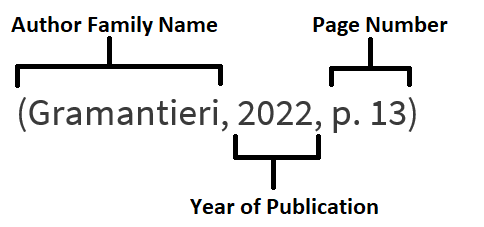
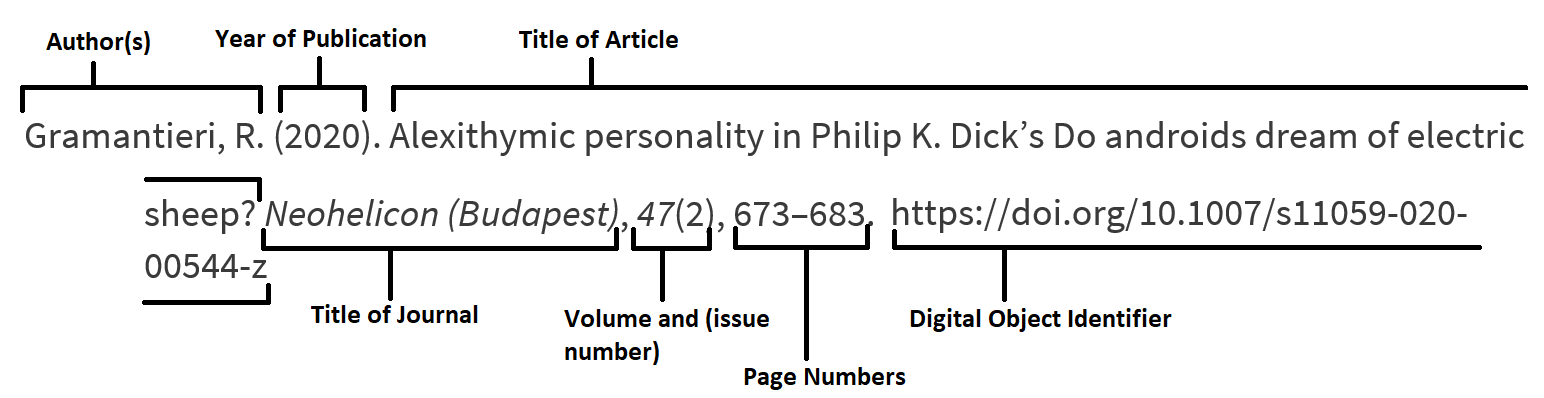
The most commonly used referencing style is APA referencing. This is known as an 'author-date' style. There are two parts to referencing. The first is called in-text referencing, which is where you reference ideas within your writing in a short form. The second is at the end of the text where you reference in a full form. The reference list begins on a new page at the end of the document and is in alphabetical order.
In APA 7th the short form looks like this:
In APA 7th the long form for a journal article looks like this:
For more assistance with APA 7th referencing style:
APA Style Common Reference Examples
Referencing Quick Guide Video from the JCU Library
For JCU Library APA guides and all other styles use the Library Referencing Guide
Essay Writing Basics
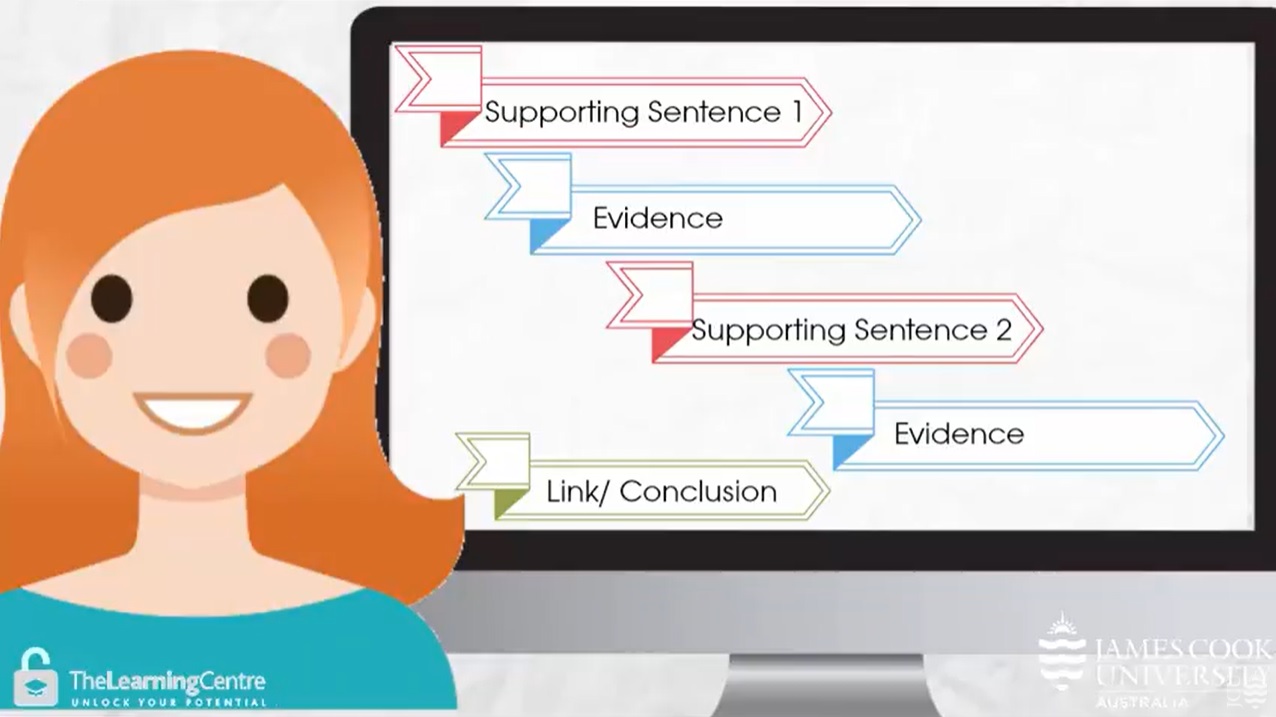
There are some common features of academic essay writing. Essay Writing Basics contains five short videos that explain the core elements of essay writing. They introduce the basics, and give you an idea of the main elements of an essay, including how to respond to an essay question, and how to write a Thesis Statement (the sentence that contains your main point), and Topic Sentences (which start each new paragraph).
How do you prepare for Academic Writing?
JCU students discuss how to prepare for academic writing at university
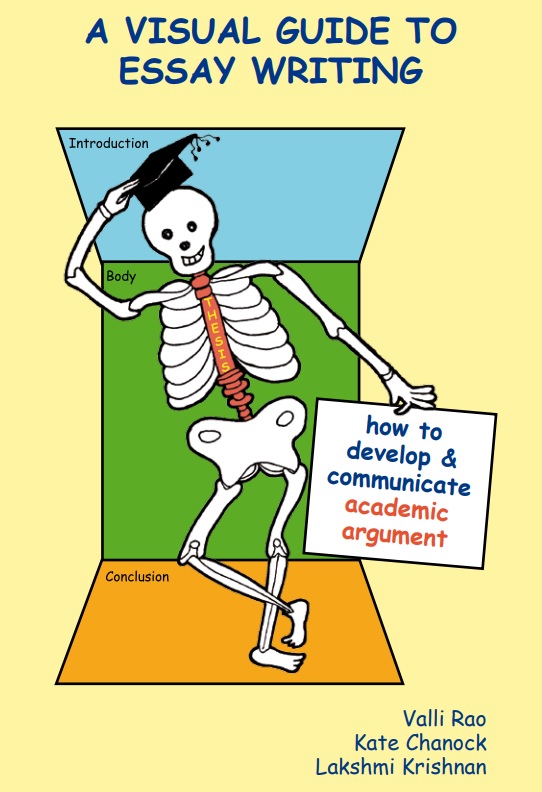
A Visual Guide to Essay Writing
Dr Valli Rao, Associate Professor Kate Chanock, and Dr Lakshmi Krishnan use a visual approach to walk students through the most important processes in essay writing for university: formulating, refining, and expressing academic argument. Download the pdf guide by clicking the image.